Author: Tom Ward

  • How to tell Smaller Cat’s-tail (Phleum bertolonii) from Timothy (Phleum pratense)

    How to tell Smaller Cat’s-tail (Phleum bertolonii) from Timothy (Phleum pratense)

    How small is smaller? Is it just the hot weather? Is it the shade?

    *Beads of sweat appear on your forehead*

    During our Worcestershire Flora Group meeting at Alfrick, I collected a suspected smaller cat’s-tail Phleum bertolonii to measure back at home, tea in hand. Attendee Sam Groves kindly curated some typical Timothy Phleum pratense, so I took both back for comparison. As we suspected, we had both species.

    This was a fun learning experience, so I’ll leave it here for future use, for a sweaty-browed botanist somewhere…

    Comparison of Phleum bertolonii and Phleum pratense

    In principal, P. bertolonii is smaller in all parts and stature (10-50cm) than P. pratense. It’s important to sample and measure many of the floral parts to make a true determination.

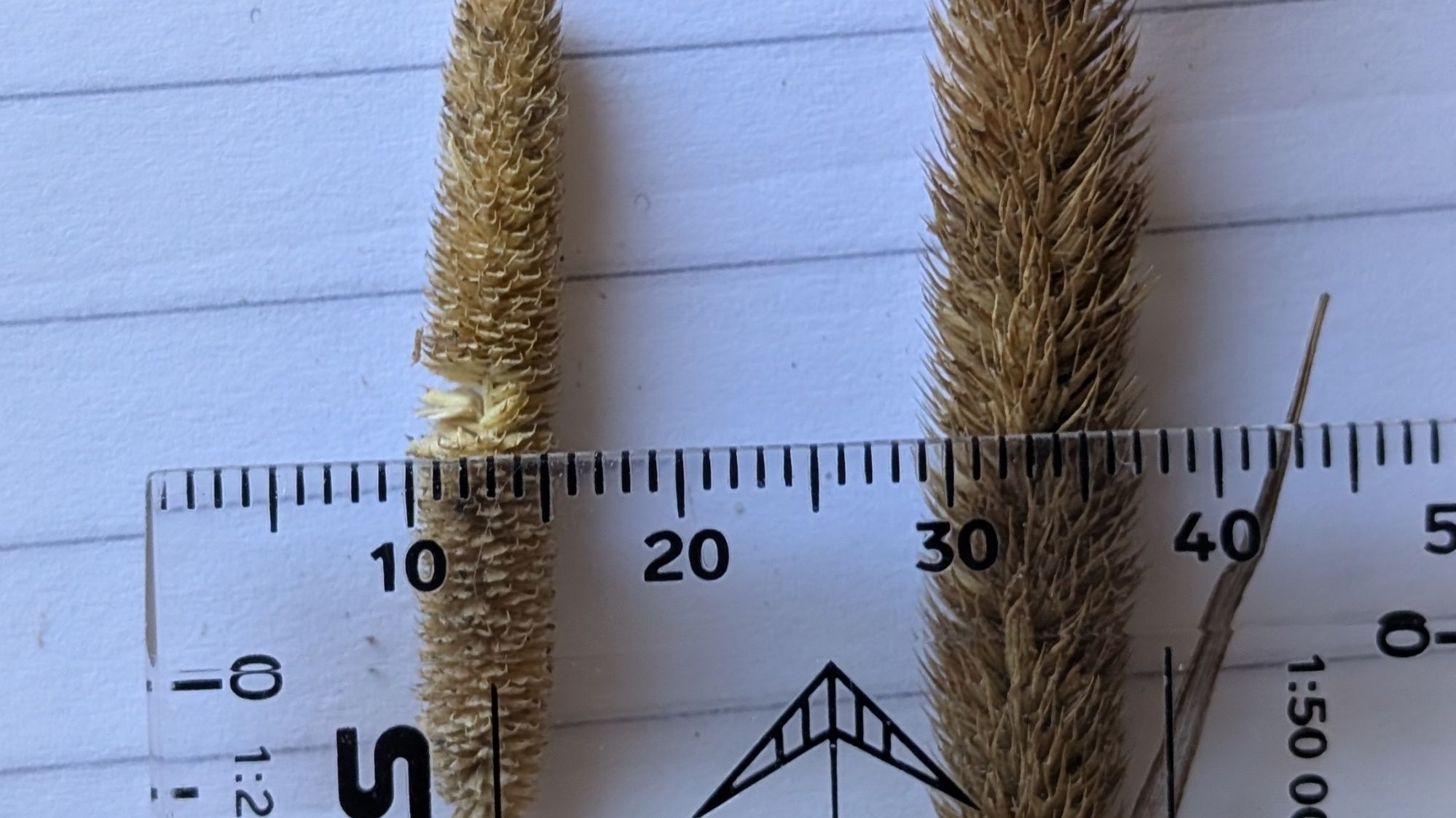
    In the simplest terms, if a plant is short, has spikelets (including awns) less than 3.6mm long, panicles 3-6mm wide and leaves 2-6mm wide, you have P. bertolonii. Below, I’ve provided the differences as listed by Stace, the measurements of our specimens and photo comparisons. Enjoy!

    P. bertoloniiP. pratense
    1. Spikelet and awn lengths2-3.6 (3.8)mm including awns 0.2-1 (1.2)mm(3.5)4-5.5mm including awns (0.8) 1-2mm
    2. Panicle width3-6 (6.7) mm5-10mm
    3. Leaf width2-6mm3-9mm
    4. Ligule shape (usually)AcuteObtuse

    Our specimens of P. bertolonii had:

    • Spikelets around 2-2.5mm, with a short awn around 0.5mm.
    • Panicle width of ~ 5mm
    • Leaf width of 2mm

    By comparison, our specimen of P. pratense had:

    • Spikelets ~ 5mm, with a longer awn around 1.5-2mm
    • Panicle width of ~8mm
    • Leaf width of 6mm

    Comparison Photos

    Spikelet and awns

    Left: P. bertolonii 2-2.5mm, short awn c. 0.5mm. Right: P. pratense 5mm, longer awn

    Panicle width

    Left: P. bertolonii, 5mm wide. Right: Phleum pratense ~8mm wide.

    Leaf width

    Left: P. bertolonii leaf width of 2mm. Right: P. pratense leaf width of 6mm

    All of which fit well within the specifications given in Stace.
  • What’s Flowering? July 6th – July 19th (Weeks 28, 29) – Heatwave / Drought

    What’s Flowering? July 6th – July 19th (Weeks 28, 29) – Heatwave / Drought

    Upright Hedge-parsley above the Severn – Common Valerian – Bristle club-rush, creaky knees – Silver-washed Fritillary – Common Fleabane – Saw-wort, Wyre – Round-leaved Fluellen, Kemerton – Happy Sammy – Tall Melilot ID – Purple loosestrife – Blue Fleabane – Clustered Bellflower – Square-stalked St. John’s-wort – Bell Heather & Bracken

    North Worcestershire is a tinderbox.

    That’s a bit dramatic, but living on the sandlands, it has become incredibly xeric over the past couple of hot, dry weeks (c. 27-32 degrees Celcius, with no rain). Flowers are still to be found, but they take a little more seeking out than they would otherwise.

    The cooler climes of the oak-bracken-bramble woods in north-west Worcestershire (Ribbesford, Wyre Forest) still have a reasonable amount of interest along the damper rides, such as Common Valerian Valeriana officinalis, Common Fleabane Pulicaria dysenterica, Hemp Agrimony Eupatorium cannabinum and Saw-wort Serratula tinctoria. Even Bristle Club-rush Isolepis setacea can be seen in damp pockets, visible only to those who crouch down low enough.

    On Saturday the 18th, we headed south with the Worcestershire Flora Group to Kemerton Lake Nature Reserve, where we were pleasantly surprised by how many plants were still in flower. I was especially pleased to see Clustered Bellflower Campanula glomerata, a first for me.

    Pathway through Valerian. Ribbesford Woods. 11.07.26.

    Week 28 – 6th – 12th July

    1. Upright Hedge-parsley Torilis japonica on the sandy cliffs. Above the River Severn near Coney Green, Worcestershire. 10.07.26.
    2. Common Valerian Valeriana officinalis standing proud along a damp ride. Ribbesford Woods, Worcestershire. 11.07.26.
    Excuse the photo; my knees were creaking. 3. Bristle Club-rush Isolepis setacea along the trampled edges of a muddy puddle. Ribbesford Woods, Worcestershire. 11.07.26.
    4. BONUS BUTTERFLY. A Silver-washed Fritillary (I think?) on Hemp Agrimony Eupatorium cannbinum. Longdon Orchard, Wyre Forest, Shropshire. 12.07.26.
    5. Common Fleabane Pulicaria dysenterica spilling out from the shallow ditch following the forestry track. Wimperhill Wood, Wyre Forest, Shropshire. 12.07.26.
    6. Saw-wort Serratula tinctoria is a delicate member of the thistle tribe ‘Cardueae‘ seen here braving the Bracken. Longdon Orchard, Wyre Forest, Shropshire. 12.07.26.

    Week 29 – 13th – 19th July

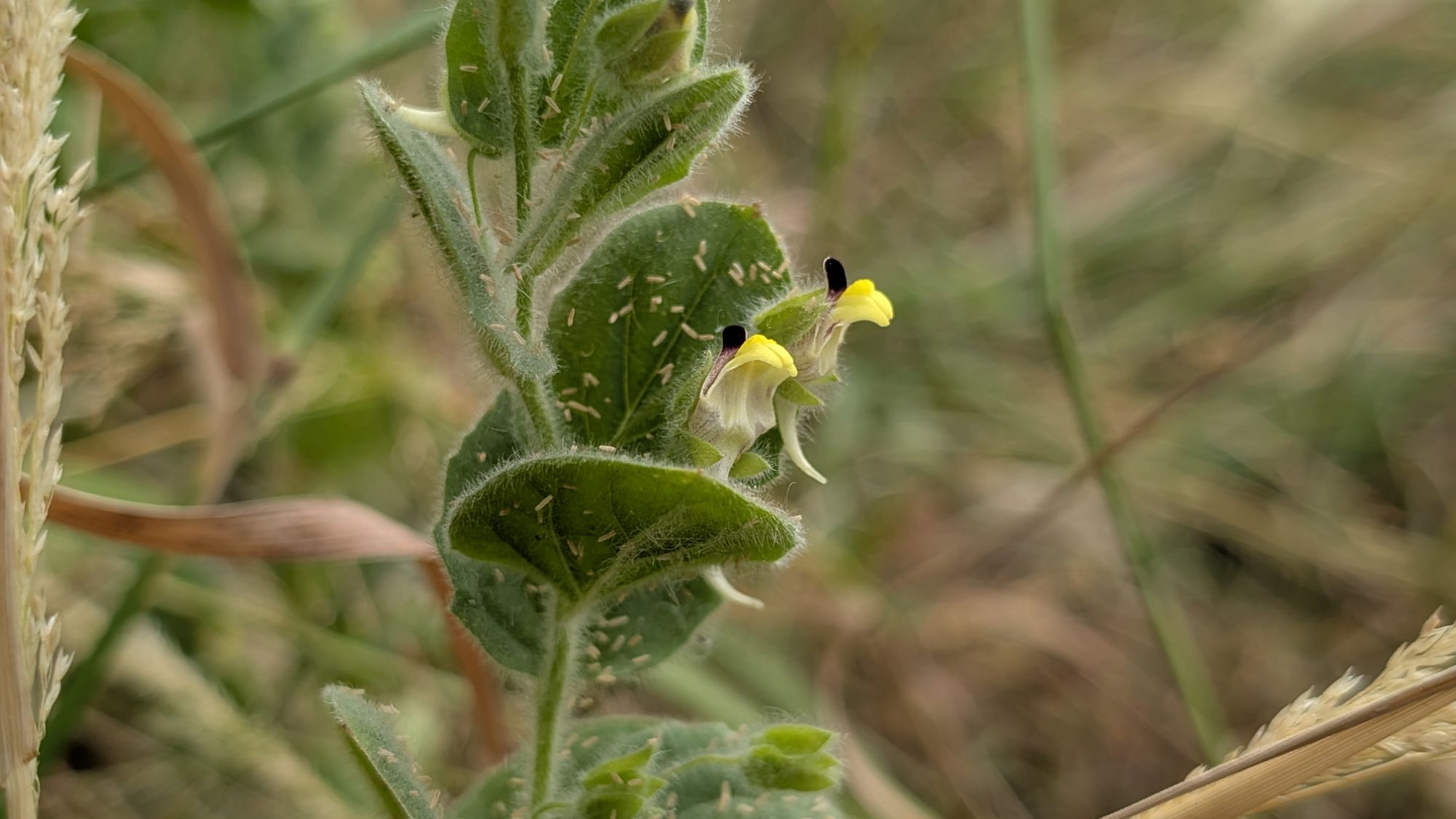
    Check out those spuuuuuurias. 7. Round-leaved Fluellen Kickxia spuria still flowering well at Kemerton Nature Reserve, in the arable field. 18.07.26.
    8. Happy Sammy. Sam Groves gleefully pointing out his Tall Melilot Melilotus altissimus at Kemerton Nature Reserve. 18.07.26.
    9. Tall Melilot Melilotus altissimus Fruits >5mm, mostly 2-seeded, black when ripe, hairy; keel more or less equalling wings
    10. Purple loosestrife Lythrum salicaria. Marginal wetlands, Kemerton Lake. 18.07.26.
    11. The adorable Blue Fleabane Erigeron acris growing in disturbed calcareous ground at Kemerton Lake NR. 18.07.26
    12. Clustered Bellflower Campanula glomerata was locally frequent at Kemerton Nature Reserve, occupying parched calcareous waysides with Ploughman’s Spikenard. 18.07.26.
    13. Square-stalked St. John’s-wort Hypericum tetrapterum, Ribbesford Woods. Glabrous, black glands present, even square stalk. 19.07.26.
    14. The first spikes of Bell Heather Erica cinerea making a welcome appearance from beneath the autumnal-looking Bracken. Ribbesford Woods. 19.07.26.
  • What’s Flowering? June 29th – July 5th (Week 27)

    What’s Flowering? June 29th – July 5th (Week 27)

    Common Centaury – Creeping Thistle and a lady – Gatekeeper Bracken – Stachys star jumps – Rosebay Wiggleherb – Wood Sage in dune woods – Buttonweed & Sea-heath on the tidal floodplain – Lesser Centaury – Rock Samphire

    1. Common Centaury Centaurium erythraea and Common Bent Agrostis capillaris Pound Green Coppice, Wyre Forest. 04.07.26.
    2. Painted Lady on Creeping Thistle Cirsium arvense. Pound Green Coppice, Wyre Forest. 04.07.26.
    3. Gatekeeper on Bracken Pteridium aquilinum at Pound Green Coppice, Wyre Forest. 04.07.26.
    4. Betony Betonica officinalis doing star-jumps along the edges of the W10 Oak-Bracken-Bramble woodland. Pound Green Coppice, Wyre Forest. 04.07.26.
    5. Rosebay Willowherb Chamaenerion angustifolium has become conspicuous this last week or so, picking out the disturbed ground along road verges and waysides alike. Leapgate Old Railway, Wilden. 05.07.26.
    6. Wood Sage Teucrium scorodonia making a living in the well-drained soils along the sandy woodland edges near Merthyr Mawr NNR, Glamorganshire. 03.06.26.
    7. Buttonweed Cotula coronopifolia occupying shallow, muddy depressions on the brackish floodplain of the River Ogmore, near Merthyr Mawr NNR. 30.06.26.
    7b. Buttonweed Cotula coronopifolia in habitat on exposed mud of the brackish tidal floodplain of the River Ogmore, Glamorganshire. 30.06.26.
    8. Sea-heath Frankenia laevis along a sandy trackside on the strandline between the dunes and the tidal floodplain of the River Ogmore near Merthyr Mawr NNR 30.06.26.
    8b. Sea-heath Frankenia laevis River Ogmore near Merthyr Mawr NNR 30.06.26.
    9. The sweetest plant – Lesser Centaury Centaurium pulchellum along sandy trackside near the dunes at Merthyr Mawr NNR. 02.07.26. [Keyed using Stace and noted the following: with flower stalks 2.5mm (within the 1-4mm range) with the main stem having only 3 internodes before branching].
    10. Rock Samphire Crithmum maritimum seemingly growing straight out of the rocks at Ogmore Beach, Glamorganshire. 02.07.26.

    Notes: I was fortunate to be working in Glamorganshire this week near the Merthyr Mawr NNR. I referred to myself to my colleague Luke as a ‘landlocked botanist’, so I was hyped to see both Sea-heath and Buttonweed for the first time.

    Other observations… Grasses are finishing up in lowland Worcestershire, with the countryside turning crispy and golden. Ragwort and Rosebay Willowherb create a perfect pairing, butterflies are loving life, and woodlands have become a sanctuary, especially the western Wyre Forest / Ribbesford.

  • What’s Flowering? June 1st – June 7th (Week 23)

    What’s Flowering? June 1st – June 7th (Week 23)

    Heath bedstraw & Sheep Sorrel – Bladder Campion – Grey Hair-grass – Dyer’s Greenweed – Great Burnet at Upton Ham – Brown Sedge lawns – Common Meadow-rue – Water Purslane – Heath-grass – Dactylorhiza – Pushing Daisies – Tower Mustard on the verge – Creeping Forget-me-not – Common Yellow-sedge – Heath Rush – Ivy-leaved Crowfoot – Moonwort

    1. Acid associates: Heath bedstraw Galium saxatile amongst the Sheep Sorrel Rumex acetosella. Lowland dry acid grassland, Hartlebury Common. 01.06.26
    2. Bladder Campion Silene vulgaris reaching out of a bramble thicket. Burlish Top, Worcestershire. 01.06.26.
    3. Grey Hair-grass Corynephorus canescens habitat on disturbed patches of sandy soil where Gorse had been cleared. Burlish Top, Worcestershire. 01.06.26.
    Tom & Scott – Two happy and very soggy botanists and the Grey hair-grass in habitat. Burlish Top, Worcestershire. 01.06.26.
    4. Dyer’s Greenweed Genista tinctoria on the margins of the acid grassland and lowland heathland at Burlish Top, Worcestershire. 01.06.26.
    5. Great Burnet Sanguisorba officinalis, a core constituent of floodplain meadow (g3a5/MG4) at Upton Ham SSSI. 02.06.26
    6. Brown Sedge Carex disticha covers a fairly large area where the water levels fluctuate. Upton Ham, Worcestershire. 02.06.26.
    7. Common Meadow-rue Thalictrum flavum stand at Upton Ham. 02.06.26.
    8. Narrow-leaved Water-dropwort Oenanthe silaifolia, Upton Ham SSSI. For more information, see this post. 02.06.26
    9. Water Purslane Lythrum portula (Yes, it’s in flower) in a muddy puddle surrounded by acid grassland at Castlemorton Common. 02.06.26.
    10. The chunky spikelets of Heath-grass Danthonia decumbens, acid grassland at Castlemorton Common. 02.06.26
    11. Dactylorhiza and Ragged Robin Silene flos-cuculi in wet pasture at Castlemorton Common. 02.06.26.
    12. ‘Pushing Daisies’ Ox-eye Daisy Leucanthemum vulgare at sunset. All Saints Church, Wilden, Worcestershire. 02.06.26.
    13. Tower Mustard Turritis glabra is a nationally scarce species whose red list status has recently been updated from ‘Endangered’ to ‘Near Threatened’ on the GB red list (Stroh et al., 2025). Although populations fluctuate, we’re lucky to have it growing along the road verges of Hartlebury Common and in a few other spots in Worcestershire. 04.06.26.
    14. Creeping Forget-me-not Myosotis secunda in a wet flush on the side of Titterstone Clee Hill, Shropshire. Spreading hairs on the lower stem. 06.06.26
    15. Common Yellow-sedge Carex viridula subsp. odeocarpa, the ‘least fussy’ of the yellow sedges. In an acid flush on the side of Titterstone Clee Hill, Shropshire. 06.06.26.
    16. Heath Rush Juncus squarrosus in upland fringe acid grassland. Titterstone Clee Hill, Shropshire. 06.06.26.
    17. Ivy-leaved Crowfoot Ranunculus hederaceus happy as a pig in s**t. Wet trackway on the floor of Titterstone Clee Quarry. 06.06.26
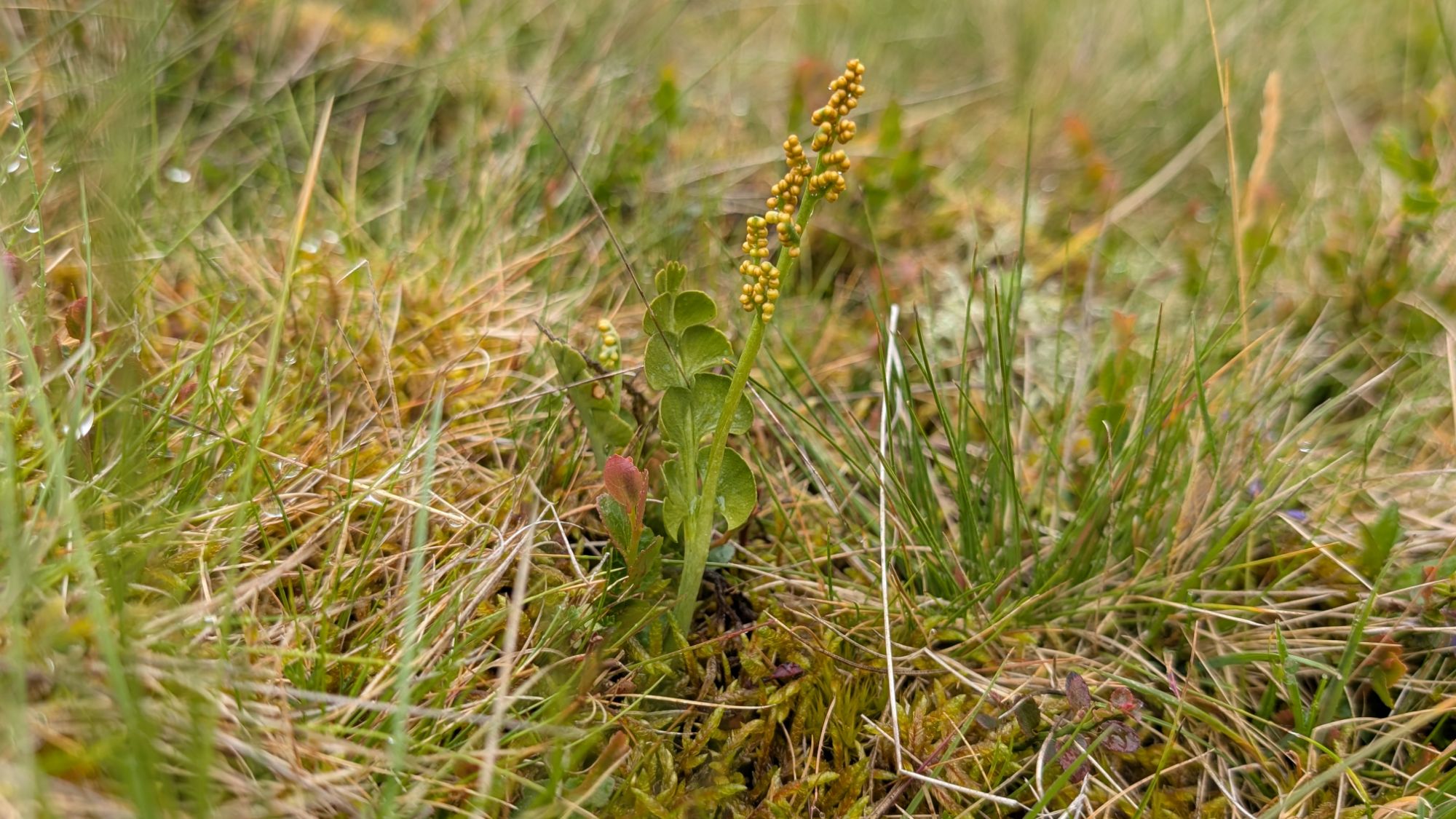
    18. A single spike of Moonwort Botrychium lunaria at Titterstone Clee Quarry. It’s fascinating that these special plants now occur on the floor of the old quarry, almost 100 years after it’s closing. 06.06.26.

  • What’s Flowering? May 25th – 31st (22)

    1. A single spike of Southern Marsh-orchid Dactylorhiza praetermissa in damp grassland, along the towpath of the Staffordshire and Worcestershire Canal, near the Oldington No. 10 bridge. 25.05.26
    2. Dittander Lepidium latifolium along the banks of the River Salwarpe at Droitwich Community Woods. 26.05.26.
    3. Smooth Cat’s-ear Hypochaeris glabra in the lowland dry acid grassland (U1 Fescue-Agrostis-Rumex grassland) on Hartlebury Common. 27.05.26.
    4.Wild Mignonette Reseda lutea at Burlish Meadows, Worcestershire. Wild Mignonette has divided leaves, whereas the similar Weld Reseda luteola has linear, undivided leaves. 27.05.26.
    5. Ox-eye Daisy Leucanthemum vulgare never fails to lighten the heart. Seen here dominating the early successional grassland at Burlish Meadows, Worcestershire. 27.05.26.
    6. Hare’s-foot Clover Trifolium arvense growing in the gravely trackway on the sandstone viaduct over Wilden Marsh. Old Leapgate Railway. 28.05.26.
    7. Small balsam Impatiens parviflora forms small stands in shaded places along the Old Leapgate Railway and in the oak woods of Burlish Top. Introduced. 28.05.26.
    8. Slender Thistle Carduus tenuiflorus. Note the shape of the cylindrical/oblong flower heads, and the spines right up to the flowers – this helps split this species off from Welted Thistle Carduus crispus. ‘The Finney’ near Harvington, Worcestershire. 29.05.26.
    Welted Thistle Carduus crispus for comparison. See the globose/ bell-shaped outline of the capitulum (flower head). Clun, 2024.
    9. Common Milkwort Polygala vulgaris has alternate leaves the whole way down to the base of the stems. ‘The Finney’, Harvington, Worcestershire. 29.05.26.
    10. Pepper-saxifrage Silaum silaus is one of the few yellow-flowered Apiaceae. I’m always happy to come across this species, as it’s often in lovely species-rich meadows; this plant being found at Eades Meadow NNR. 29.05.26.
  • How to Identify Narrow-leaved Water-dropwort (Oenanthe silaifolia)

    How to Identify Narrow-leaved Water-dropwort (Oenanthe silaifolia)

    I was super excited to come across Narrow-leaved Water-dropwort Oenanthe silaifolia yesterday whilst doing a recce for our in-house floodplain meadow training at Upton Ham.

    Narrow-leaved Water-dropwort Oenanthe silaifolia at Upton Ham, Worcestershire. 02.06.26.

    This species is nationally scarce, and we’re lucky to have a few good populations on the Worcestershire floodplains or ‘Hams’ along the River Severn. The Oenanthe genus can be scary, but Narrow-leaved Water-dropwort does what it says on the tin, and can be identified by checking for the following:

    🌿 Are the peduncles longer than the rays? Yes. This step rules out O. aquatica and O. fluviatilis


    🌿 Leaves – are they all made up of linear leaflets? Yes. Be sure to rummage around the base, to be extra certain that the basal leaves are also linear. This rules out any broader leaved species such as O. crocata.


    🌿 Leaflet / petiole ratio – is the divided part of the leaf longer than the petiole? Yes. This rules out O. fistulosa, whose petiole is longer than the divided part.


    🌿 Are the umbels separate from each other in fruit – with gaps between each? Yes. This rules out O. pimpinelloides, whose heads are dense and flat-topped in fruit.


    🌿 Bracts – are there 0-1 bracts? Yes. This distinction rules out O. lachenalii, which has several bracts and is most likely to be confused with O. silaifolia.

    Kerching, you have found Narrow-leaved Water-dropwort Oenanthe silaifolia, please report to the LERC for your free lollipop!

    #Botany #SpeciesIdentification #Worcestershire #Oenanthe

  • This Week in Photos 11th – 24th May (20, 21)

    This Week in Photos 11th – 24th May (20, 21)

    Week 20 – 11th-17th May

    Bluebell Ffridd – Lousewort Upper Gam – Bird Cherry – Malvern View – Brassica

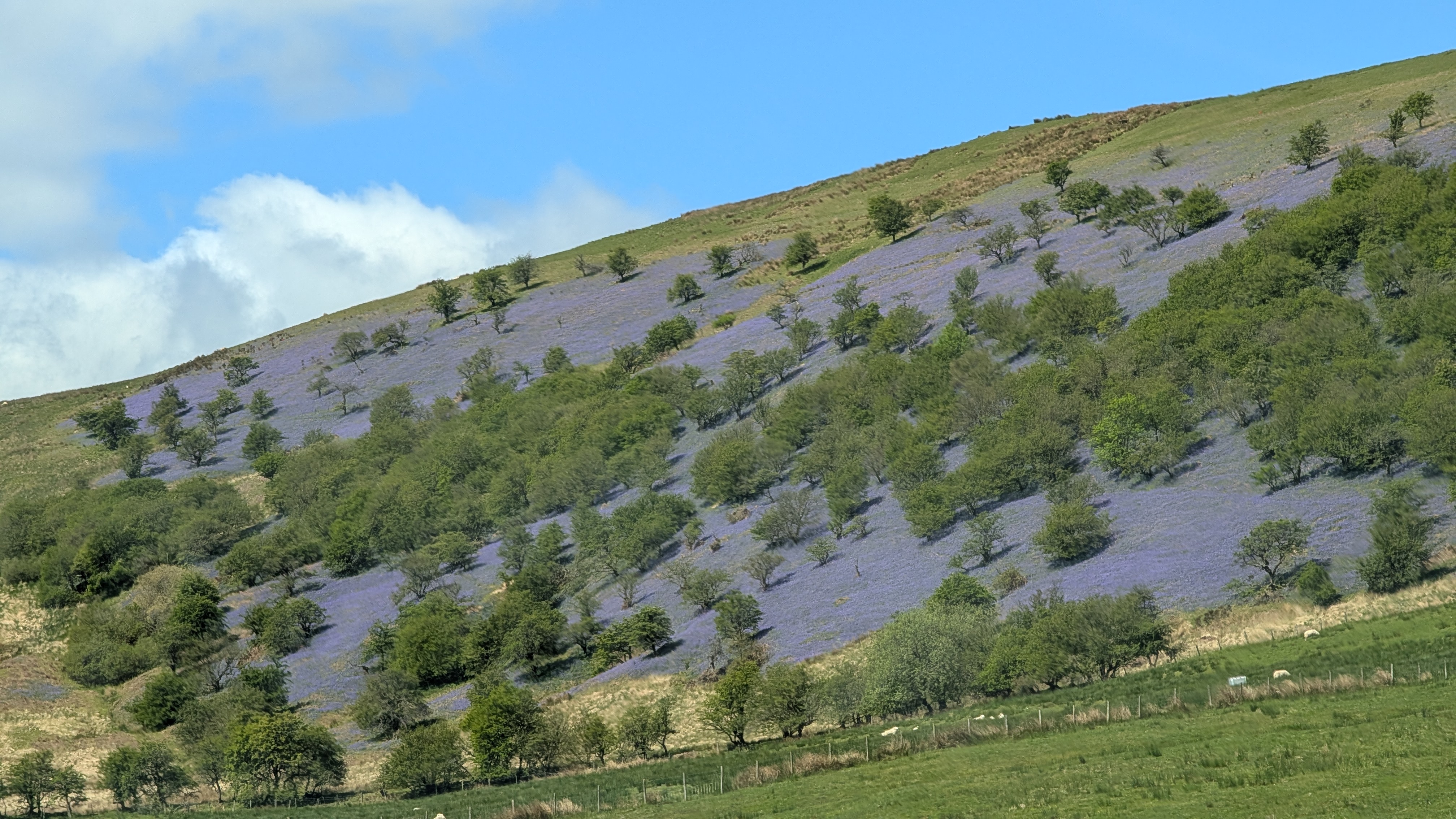
    1. Bluebell Ffridd, Prys Gwyn Gwyll, Powys. 11.05.26. Interesting to see this ancient hillside, covered in bluebells still in their prime, weeks after those in the lowlands were over.
    2. Lousewort Pedicularis sylvatica is a hemi-parasite (a parasite capable of photosynthesis) that taps into the roots of nearby grasses and more. Ty Newydd, Cledan, Powys. 11.05.26
    3. Bird Cherry Prunus padus is a native shrub / small tree that can be found in shaded river valleys and stream sides. Seen here on the Ty Newydd, Cledan, Powys. 11.05.26.
    4. Malvern Hills viewed from Hartlebury Common. 11.05.26.
    5.  Oh no, a Brassica!? Note how the buds of the unopened flowers are held beneath those in flower. I keyed this out to Turnip Brassica rapa, more details to follow. Mitton Marsh, 15.05.26.

    Week 21 – 18th-24th May

    Sheep sorrel carpet – Meadow foxtail medley – Wild strawbs – Herb paris paradise – Common Spotted Orchids

    6. Sheep Sorrel Rumex acetosella turning the lowland dry acid grassland sward red. Hartlebury Common. 19.05.26.
    7. Meadow Foxtail Alopecurus pratensis is so conspicuous at this time of year. Martley Millennium Green. 20.05.26.
    8. Wild Strawberry Fragaria vesca scattered across the woodland floor at Penny Hill Quarry, Worcestershire. 21.05.26.
    9. The most Herb Paris Paris quadrifolia that I’ve ever seen! Penny Hill woods. 21.05.26.
    10. Common Spotted Orchid Dactylorhiza fuchsii making its way out of the hedgerow and into the newly regenerating grassland, west of Penny Hill Quarry. 21.05.26.

    Notes

    These last two weeks have really seen the grasses explode into flower. Early flowers include the meadow grasses Poas, the fescues Festuca, the bromes Bromus, foxtails Alopecurus, the rye grasses Lolium. Holcus, and Arrhenatherum are also on their way, with the latter being mostly out by now. Of course we’re yet to see any bent grasses Agrostis.

  • This Week in Photos: May 4th – 10th (19)

    This Week in Photos: May 4th – 10th (19)

    Cow Parsley bridge – Pink Hawthorn – Hybrid Campion – Small-flowered Crane’s-bill – Red Sheep Sorrel – Green Hairstreak

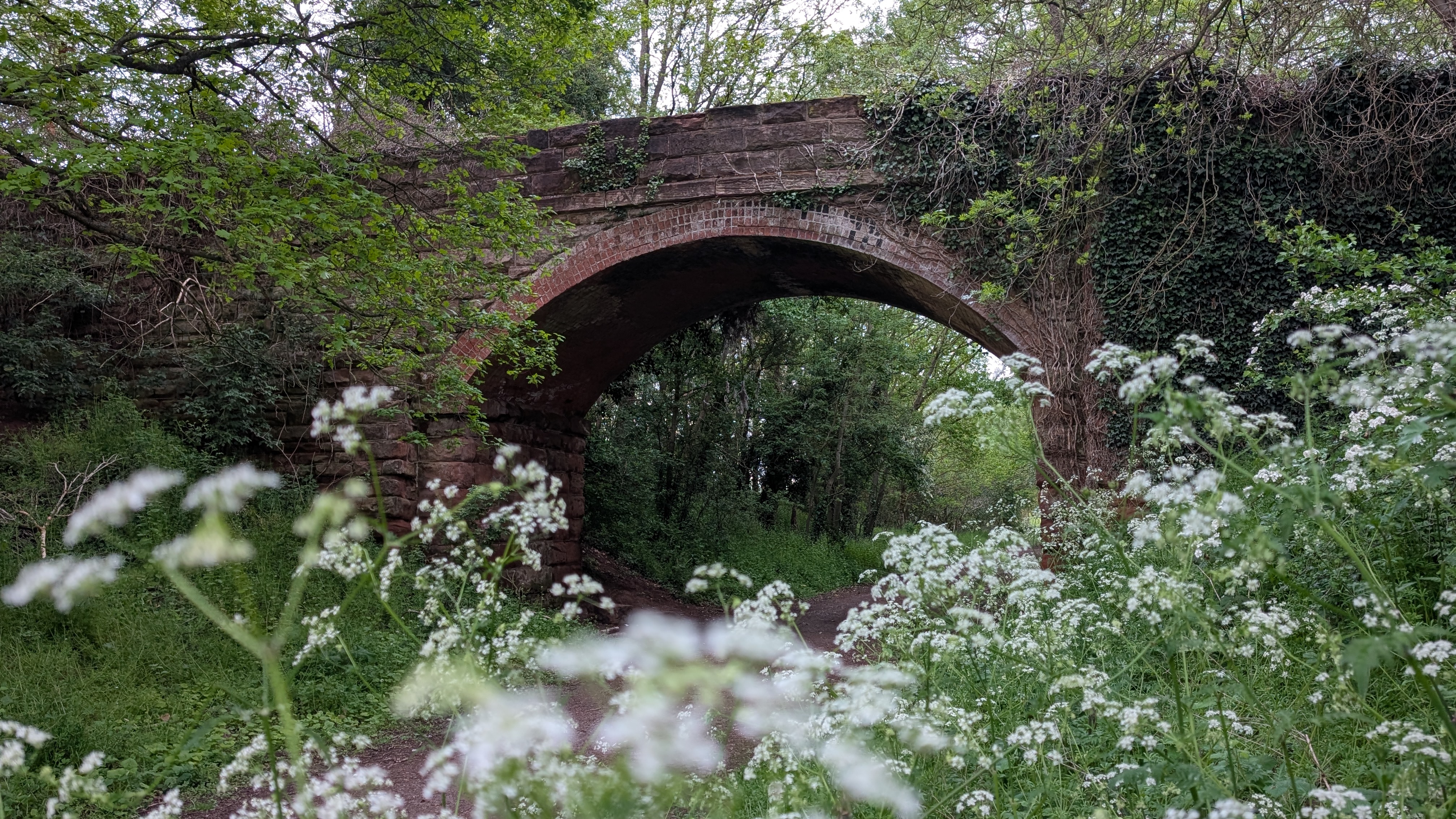
    1. Cow Parsley bridge. Leapgate Old Railway Line. 04.05.26.
    2. Pink Hawthorn blossom along Titton Lane, Hartlebury. 04.05.26.
    3. Candidate for Hybrid Campion Silene x hampeana on Titton Lane, Worcestershire. This strikingly large plant with whitish pink flowers made me stop my bike and shout HYBRID!? 04.05.26.
    4. Small-flowered Crane’s-bill Geranium pusillum on the summer-dry grasslands of Hartlebury Common. 08.05.26.
    5. Sheep’s Sorrel Rumex acetosella turning the acid grassland between the lowland heathland red. Hartlebury Common. 08.05.26.
    6. Green Hairstreak hiding in heather. Hartlebury Common. 08.05.26.

    Notes

    A limited selection from a couple of outings last week, as we get closer to our wedding. Happy to see the Hybrid Campion and Green Hairstreak!

  • This Week in Photos: April 27th – May 3rd – French Alps Edition (18)

    This Week in Photos: April 27th – May 3rd – French Alps Edition (18)

    Buildings of Quai de l’Évêché in Annecy. 27.04.26.
    Boating on the Canal du Vassé, Annecy. 27.04.26.
    Alpine views en route to Chamonix on the N205 at Les Houches, heading east. 28.04.26
    Which way to the top? Buvette du Plan de l’Aiguille, Mont Blanc. 28.04.26
    Buvette du Plan de l’Aiguille. 28.04.26.
    ‘Espresso and beer, please.’ Buvette du Plan de l’Aiguille. 28.04.26.
    On the edge of the known world. Buvette du Plan de l’Aiguille. 28.04.26.
    Yellow-billed Chough looking for a bite to eat. Buvette du Plan de l’Aiguille. 28.04.26.
    ‘Definitely that way’. Buvette du Plan de l’Aiguille. 28.04.26.
    Casino Royale, Chamonix. 28.04.26.
    Paragliders over La Tournette, viewed from Roc de Chère. 29.04.26.
    Meadow Cabin, Réserve Naturelle du Roc de Chère. This meadow was outstanding, and I’ll post more about the species found here in another plant-dedicated post. 29.04.26
    Crocus emerging from the melting snowbeds. Semnoz. 30.04.26.
    A red kite soars at Semnoz with views of the Alps, looking south-east. 30.04.26.
    Pont de la Caille between Annecy and Geneva is a suspension bridge that crosses the river Usses, built in 1839. 30.04.26.

    Notes

    This week saw me exploring Annecy, Chamonix and the French Alps as part of my stag-do.

  • How to tell Wood-sedge (Carex sylvatica) from Thin-spiked Wood-sedge (Carex strigosa)

    How to tell Wood-sedge (Carex sylvatica) from Thin-spiked Wood-sedge (Carex strigosa)

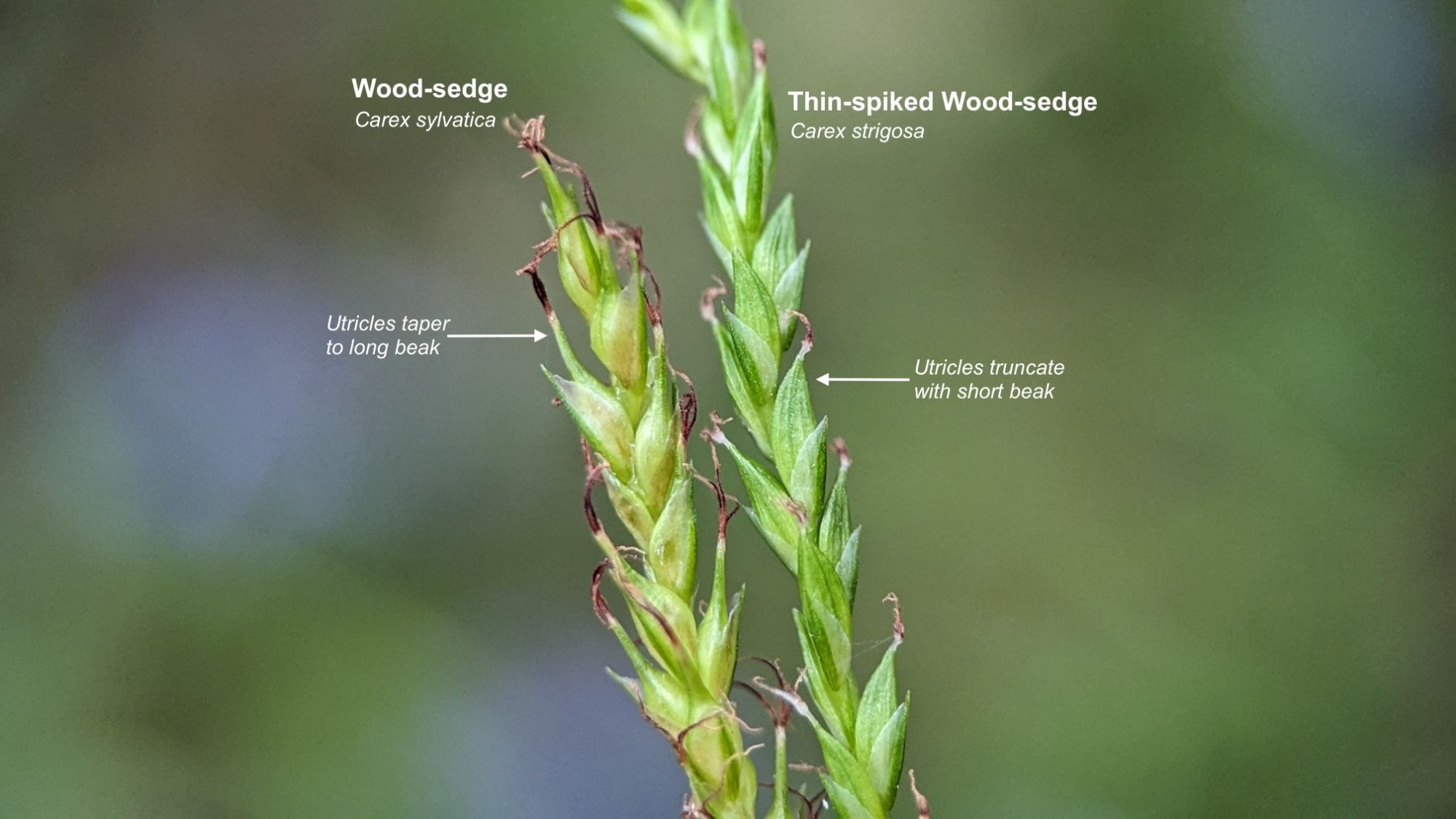
    Two similar sedges to look out for in woodlands in May are Wood-sedge Carex sylvatica and Thin-spiked Wood-sedge Carex strigosa. They sometimes grow together, even side-by-side (Shrawley Woods) but are relatively straight-forward to tell apart.

    Left: Wood-sedge Carex sylvatica
    Right: Thin-spiked Wood-sedge Carex strigosa. Note the ‘floppy’ appearance of C. strigosa

    Wood sedge Carex sylvatica
    has utricles which gradually taper to a long beak, has narrower, more ridged leaves and the ligule is symmetrical.

    Thin-spiked wood-sedge Carex strigosa
    has a thinner female spike (who would have thought?) has stubby utricles with a short beak, floppier, broader leaves and has an asymmetric ligule (see Plant Crib).

    Assignment
    Challenge yourself to find some Thin-spiked Wood-sedge this week, it’s overlooked and could be lurking in a woodland waiting for you to find it! If you want to see them both side-by-side, Shrawley Woods is a good spot to visit.
    #carex #botany #worcestershire