Bluebells at Pound Green – Bitter-vetch – ‘Wonky Horns’ – Annual knawel leaves – Ducklings – Teesdalia habitat – Pudford Sunset – Stork’s-bill on the verge
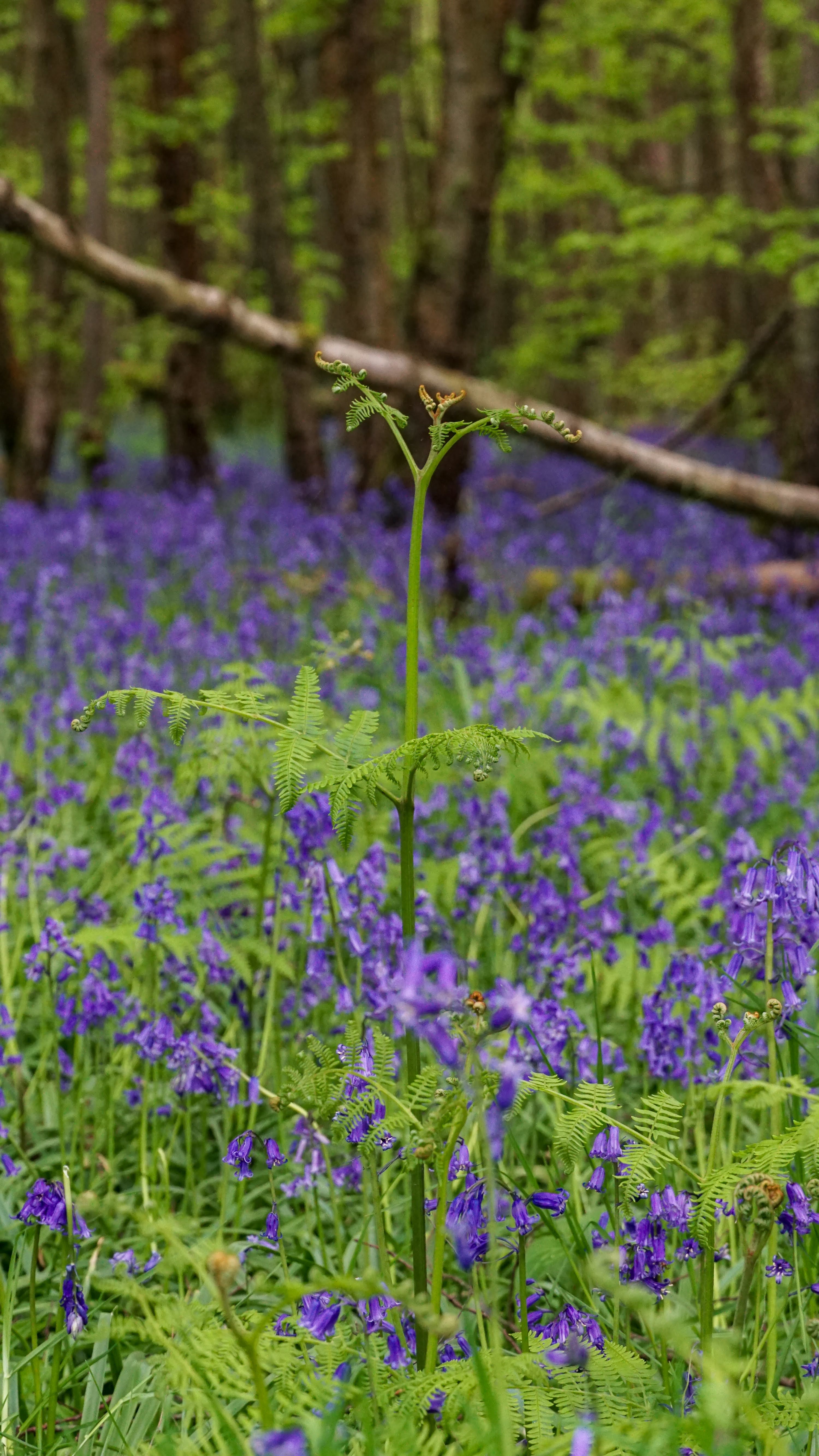
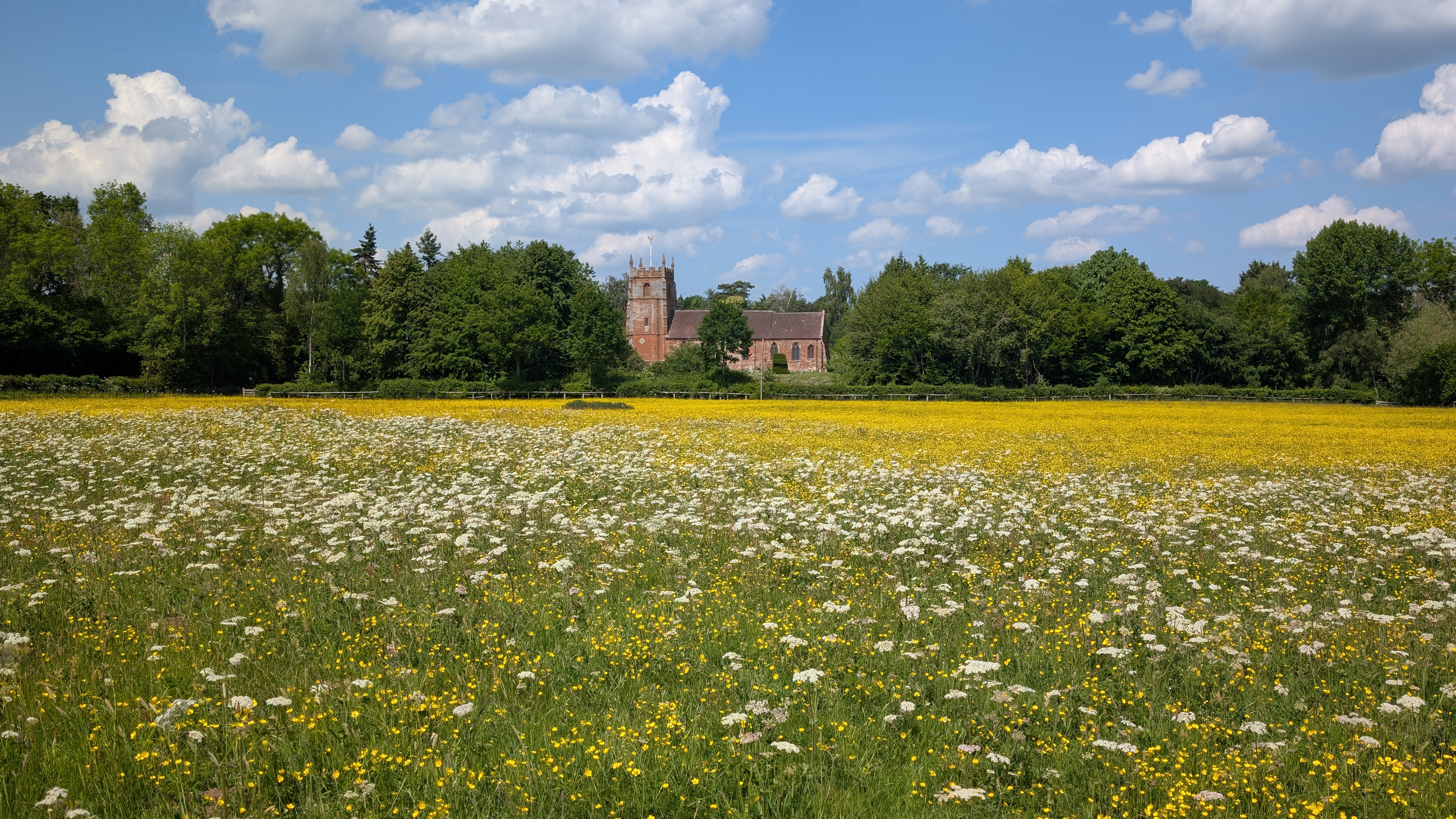
Pathway through the Bluebells at Pound Green Coppice, Wyre Forest. 22.04.26.Bitter-vetchLathyrus linifolius in flower on a scrubby woodland bank in Blackgraves Copse, Wyre Forest. 22.04.26.‘Wonky Horns’ is one of my favourite Long Horns roaming Hartlebury Common. She is unique in having offset horns. She recently featured on the cover of Worcestershire Biodiversity Duty Report, too. 23.04.26. Annual KnawelScleranthus annuus is an annual of disturbed sandy soils, so it’s no surprise that it is present on Hartlebury Common. This photo shows the fused opposite leaves, characteristic of the genus.A mother mallard and her ducklings, swimming in water that will be gone by the summer. The Bog, Hartlebury Common. 23.04.26.Typical habitat for Shepherd’s cressTeesdalia nudicaulis which thrives on the disturbed loose sand of Hartlebury Common. 23.04.26Sunset views north-west over the Teme Valley and towards Titterstone Clee Hill, from Pudford Hill. 23.04.26.Common stork’s-billErodium cicutarium blanketing the sandy, infertile road verge on Mill Road, Stourport-on-Severn.
Notes
This week, St. Mark’s Flies have taken to the skies coinciding nicely with the start of the hawthorn blossom. The docile flight of St. Mark’s Fly seems to make them the perfect snack for an acrobatic house sparrow, a behaviour that I’ve observed for the first time in the garden this week.
Shrawley Woods SSSI is one of the finest ancient woodlands in the county for bluebells.
Shrawley Woods – Park at the New Inn, and use the honesty box or have a pub lunch afterwards.
Chaddesley Woods (NNR)
Tiddesley Woods
Clent Hills
Pepper Wood
Grafton Woods
Swinyard Hill, Malvern – Park at Swinyard Carpark, combine with a walk through the woodlands around Gullet Quarry, north to Swinyard hill and back again.
Knapp and Papermill
Wyre Forest (NNR)
Lickey Hills
Areas on the Clent Hills support vast swathes of bluebells before the bracken closes over. North of Deep Wood at SO93198010A ‘ghost woodland’ marked out by bluebells on the eastern side of Swinyard Hill, Malvern at SO76303875.
About
This is a draft list with specific details, such as parking, maps and photos to follow. I’m not saying these are the best places, (although Shrawley probably is) but they provide a spring board to get outside, and into an adventure.
If you know any other super spots for bluebells in Worcestershire, please feel free to drop a comment.
Rapeseed sunset – Jack-by-the-hedge – Bluebells at Shrawley – Apple Blossom – Lords-and-ladies – Small nettle vs. Common nettle
Rapeseed by Sunset, Torton. 14.04.26.Jack-by-the-hedge Alliaria petiolata, Leapgate Railway Line, 15.04.26.Bluebells Hyacinthoides non-scripta at Shrawley Woods. 18.04.26.Apple Blossom fills the air with the sweet scent of roses. Hartlebury Common. 19.04.26.Lords-and-ladies Arum maculatum. Hartlebury Common. 19.04.26.Comparison of Small nettle Urtica urens (foreground) with Common Nettle Urtica dioica behind it. Near Ingon, Warwickshire. 14.04.26.
Notes
I haven’t managed to capture as much as I’d have liked to this week, but Week 16 has felt like the true start of spring.
Apple blossoms are fully out, cow parsley is starting, but the most obvious features of the countryside that have stood out have been the rapeseed fields, the bluebell woods, and Jack-by-the-hedge. A lot has recently come into flower on Hartlebury Common, too, including many smaller acid grassland flowers.
Woodlands often hold our attention at this time of year, but before the parching heat of the summer, acid grasslands are also wonderful spots to botanise.
This week, the minute plants of sandy grasslands and disturbed areas of Hartlebury Common have woken up. With the turf littered with little botanical gems, here is a quick rundown of what I saw flowering this week…
Spring vetch Vicia lathyroidesWall Speedwell Veronica arvensisLittle mouse-ear Cerastium semidecandrumCommon stork’s-bill Erodium cicutariumShepherd’s Cress Teesdalia nudicaulis, just finishing up with many plants in fruitDove’s-foot Crane’s-bill Geranium molle (flowering), mingled with Small-flowered Crane’s-bill Geranium pusillum (non-flowering)Petiole hairs can be used to tell Small-flowered Crane’s-bill (L) from Dove’s-foot Crane’s-bill (R)Early forget-me-not Myosotis ramosissimaChanging forget-me-not Myosotis discolor
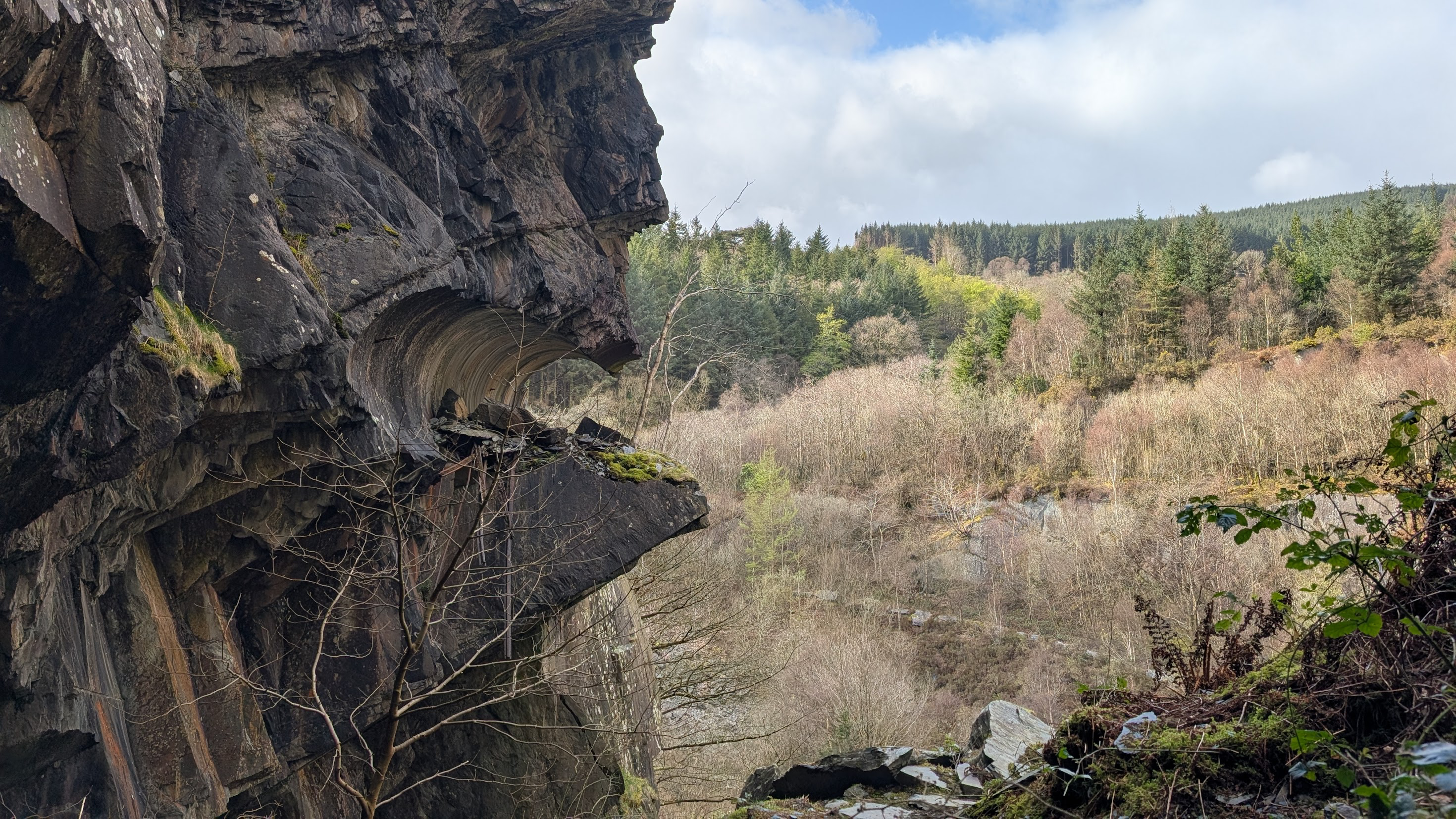
Nestled in the trees by golden hour. Arthog, 29.03.26.Sunset over the Mawddach Estuary, viewed from the Arthog side. 29.03.26.The ‘Binoculars’ at Abercwmeiddaw Quarry, Corris, were created by an experimental steam-powered tunnelling machine in 1864. Gwynedd. 30.03.26.A slate-slip and a portal. In the tunnels at Abercwmeiddaw Quarry, Corris, Gwynedd. 30.03.26.Slate was so readily available as a local resource that in Corris, it is used as stock fencing. 30.03.26.‘Little Italy’ is a model village near Corris, built over decades by local resident Mark Bourne. 30.03.26.1864 was a good year for steam power. The same year that the test tunnels were being drilled over at Corris, construction on the Barmouth Bridge began. 31.03.26Marsh Marigold Caltha palustris brightening the wet alder woodland at Hillditch Coppice, Worcestershire. 01.04.26.
At this time of year, we have more in common with plants than you think. The warmth of the spring sunshine feels like it brings us to life after a long winter, as much as it does them. Amongst the first wildflowers that catch the eye, in striking purple, are the violets.
There are around 14 different species of violet in Britain (Stace, 2019), but one of the first to flower is Sweet Violet Viola odorata. The other early emerger is the aptly named Early Dog-violet Viola reichenbachiana.
But how do you separate a Sweet Violet from a Dog-violet?
Sweet Violet vs. Dog-Violets
It’s really quite easy, and we do this by looking at the sepals.Study the photo below for a quick overview of violet flower anatomy before reading on.
Violet flower anatomy showing the spur, sepal and sepal appendage.
If you study the sepals in the photos below, you will see that Sweet Violet Viola odorata has blunt sepals, much like the end of your thumb. Whereas Dog-violets Viola spp. have pointed sepals, like a dog’s tooth.
1. Sweet Violet Viola odorata has blunt sepals, much like the end of your thumb.2. Dog-violets Viola spp. have pointed sepals, like a dog’s tooth.
Variations of Sweet Violet
Now that we can confidently separate sweet from the dogs, let’s have a look at some common colour varieties of Sweet Violet that I’ve recorded this spring. I have started by listing varieties I have seen and photographed, and then put additional varieties of that colour type in bullet points below.
Pink form Viola odorata var. subcarnea. Tontine, Stourport-on-Severn. 19.03.26.
Checklist
var. dumetorum (white, hair tufts)
var. imberbis (white, no hair tufts)
f. lilacina (white with violet veins)
var. ‘leucoium’ as per A.C. Leslie (Porter and Foley, 2017)
var. subcarnea (pink/red, no hair tufts)
var. odorata (typical form, as above)
var. praecox (closed flowers, violet)
var. sulfurea (apricot/yellow flowers)
Much of the information below is based on the ‘Violas of Britain and Ireland‘ by Michael Porter and Michael Foley. If you enjoy Violet hunting, then be sure to grab yourself a copy to support the authors.
White Varieties
Viola odorata var. dumetorum
The most frequently encountered variety near me is one of the white forms, named Viola odorata var. dumetorum. It has a white corolla and a purple spur. There are also small tufts of hair on the inside edge of the lateral petals (below right). St. Peter’s Church, Martley.
Viola odorata var. dumetorumViola odorata var. dumetorum
Viola odorata var. imberbis
Another white form, which I encounter less frequently, is Viola odorata var. imberbis. According to Violas of Britain and Ireland, this variety is more typically found on calcareous soils. I’ve mostly encountered it at the base of trees! This variety has a white corolla, a pinkish spur and lacks the tufts of hairs on the lateral petals. Entrance to Hartlebury Castle, Hartlebury. 14.03.26.
Viola odorata var. imberbisViola odorata var. imberbis
Other white-coloured varieties:
var. ‘leucoium’ as per A.C. Leslie (Porter and Foley, 2017)
f. lilacina (white with violet veins)
Pink Varieties
Viola odorata var. subcarnea
I’ve only come across one pink coloured Sweet Violet, and that was Viola odorata var. subcarnea. This variety is thought to be a pink form of var. imberbis. It has a pink corolla with a violet spur, and lacks the hairs on the lateral petals. Seen at the base of an old cherry, near the Tontine in Stourport-on-Severn.
Where I found it, it was growing with var. imberbis at the base of a cherry tree, and some plants were intermediate in character, and showed a mixed colouration to the petals (below).
Viola odorata var. subcarneaViola odorata var. subcarneaLeft: var. imberbis | Right: var. subcarneaIntermediate form of var. subcarnea / var. imberbis. Tontine, Stourport-on-Severn. 19.03.26.
Violet Varieties
Viola odorata var. odorata
This is the typical violet-coloured Sweet Violet. Surprisingly, I seem to see this the least! Maybe I am not looking hard enough. Both the corolla and spur of this variety come in many shades of violet (as below), and it has tufts of hair on the lateral petals. Seen at St. Peter’s Church, Martley and Charlton Mill, Hartlebury.
Other violet coloured varieties
var. praecox (flowers mostly closed)
Yellow Varieties
Viola odorata var. sulfurea
Unfortunately, I haven’t been able to find any of the yellow V. odorata var. sulfurea yet…
This variety has apricot-yellow corollas with a pink spur and usually has tufts of hairs on the lateral petals (Porter and Foley, 2017). If I find any after the publication of this post, I will return and update with the photos and location.
If you have seen any yellow or apricot forms of Sweet Violet, I would love to hear from you!
This post has been super fun to put together, checking out the different violets on my hands and knees, looking for tufts of hair, and getting excited over a species so ubiquitous has been a lovely way to start off the season. I hope this encourages you to go out and look more closely at your local violets, in churchyards, hedgerows, gardens and lanesides.
Happy Violet Hunting,
Tom
References
Porter, M. and Foley, M. (2017) Violas of Britain and Ireland. Bristol: Botanical Society of Britain and Ireland.
Stace, C.A. (2019) New Flora of the British Isles. 4th edn. Middlewood Green: C & M Floristics.
Shelsley Walsh church – Pink Vinca – Wild daffodils – White sweet violet – First wood anemone – Spring lambs – Black phesant – Vine farm pools
St. Andrew’s Church, Shelsley Walsh. This church, nestled in the Teme Valley has a unique atmosphere. It was built mostly from Tufa from the nearby Southstone Rock in the 12th-century. 14.03.26. An interesting pink and white form of Lesser Periwinkle Vinca minor, growing from a hedge. St. Andrew’s Church, Shelsley Walsh. 14.03.26Wild DaffodilsNarcissus pseudonarcissus subsp. pseudonarcissus is our native daffodil, seen growing in abundance at St Mary’s Church, Stanford. 13.03.26.‘Pushing daffodils’. St Mary’s Church, Stanford. 13.03.26.White Sweet Violet Viola odorata var. dumetorum. St Peter’s Church, Martley. 12.03.26. More on Sweet Violet variations coming up in a future article.My first Wood Anemone Anemone nemorosa of this year. On a verge near St. Michael and All Saints Church, Great Witley. 14.03.26.Lambs in spring sunshine. Shelsley Walsh, Worcestershire. 14.03.26.A dashing melanistic black Phesant. Nineveh, Worcestershire. 12.03.26Attenuation features I recently delivered in my role at Severn Rivers Trust. Vine Farm, Nineveh. 12.03.26. See Week 10, for the Pied Wagtail that found them on the same day.
They reckon your brain works better after a walk in nature, and I agree. Every day I spend at the office, I go on a short walk. Hopehouse Farm to St. Peter’s Church via Hopehouse Lane.
This blog explores the botanical delights encountered during that walk, proving that all you need is one short walk a day to appreciate your local flora.
At the end of the blog, there is a list of all the species encountered, organised by month. Why not try ticking some off this spring?
The Route
Observations
Whilst lanes might seem unremarkable in comparison with a species-rich grassland or upland flush, it’s often in the waysides, the remnants of countryside, that many of our native plants can be found. Here, they are poised and waiting for their moment to return to the wider landscape.
Greater stitchwort, Hopehouse Lane. 09.04.25
Along Hopehouse Lane, the bases of the hawthorn hedgerows are scattered with plants typically associated with ancient woodland, such as Greater StitchwortStellaria holostea and Dog’s MercuryMercurialis perennis. These hedgerows represent a small snapshot of the woodlands that once would have been widespread in the area before being cleared in times gone by, or as Wordsworth put it…
“These hedgerows, hardly hedgerows, little lines of sportive wood run wild”
Dog’s mercury, Hopehouse Lane. 12.03.25.
A particularly interesting find, which was only yards from the office, was Dwarf ElderSambucus ebulus (below). This locally scarce species is an archeophyte, and is thought to have naturalised in Britain between the Neolithic period and 1500 AD.
Dwarf elder Sambucus ebulus on Hopehouse Lane. 29.04.25
Between the lane and the hedgerow is rough grassland. This linear belt, sandwiched between the tarmac and the hedgerow, is the last stand for a suite of grassland and woodland edge species. Here, species such as Common CenturyCentaurium erythraea, PrimrosePrimula vulgaris, CowslipPrimula veris, and even their hybrid, the False Oxlip Primula x polyantha can be found.
Primrose, Hopehouse LaneCowslip, Hopehouse LaneFalse oxlip, Hopehouse Lane
Down the lane in St. Peter’s churchyard. Here, it’s unlikely that the grasslands have been extensively treated with pesticides. Therefore, they still support meadow indicators such as Sweet vernal-grassAnthoxanthum odoratum, Bulbous ButtercupRanunculus bulbosus and Rough Hawk’s-bitLeontodon hispidus. This suite of species affords us a glimpse into the past, to the kinds of grasslands that once would have been widespread in this part of the county.
Sweet Vernal-grass Anthoxanthum odoratum. St. Peter’s Church, Martley. 09.04.25.South St. Peter’s Churchyard, laden with Ox-eye Daisy Leucanthemum vulgare. 20.05.25
At the Millennium Green, there is a tall, busy grassland which is a cacophony of crickets on a warm June day. In the centre, there is a linear wetland that supports species that like their feet wet, such as Flag IrisIris pseudacorus, Lesser Pond-sedgeCarex acutiformis and BullrushTypha latifolia and Great WillowherbEpilobium hirsutum.
Flag iris, bullrush, great willowherb, and nettle swamp. Millenium Green, 20.05.25.
The grassland surrounding the pond is dominated by False oat-grassArrhenatherum elatius with spatterings of HogweedHeracleum sphondylium and Meadow Crane’s-bill Geranium pratense (for the ecologist; MG1 in NVC, g3c5 in UKHab).
Around the fringes of the green are beautiful perry pear trees (don’t ask me what variety), which were in full blossom by early April. I foolishly took a pear in the autumn, and bit into it, it dried my mouth out like cotton wool – you win some, you lose some.
Meadow Crane’s-bill Geranium pratense 17.06.25Perry Pear Pyrus sp. in full blossom. 09.04.25.
That concludes the descriptions of the different areas along the walk, the route and a full list of flowers seen is provided below. Let me know if you see any of these next spring!
List of Flowers by Month
These species are listed by the month that I first recorded them flowering on the walk; this is just a rough guide, and these flowers can be found outside of these months too.
March
Barren Strawberry Potentilla sterilis Occasional on shady steep verge and in churchyard
Colt’s-foot Tussilago farfara Rare along lane
Common Field-speedwell Veronica persica Occasional in churchyard
Daffodil Narsiccus sp. Introduced, verge near Hopehouse Farm
Dandelion Taraxacum agg. Occasional along lane.
Dog’s Mercury Mercurialis perennis Frequent along the length of lane
Dwarf Elder Sambucus ebulus
Early Dog-violet Viola reichenbachiana in gravel to RHS behind church
Daisy Bellis perennis Frequent in churchyard, and verge opposite farm entry
False Oat-grass Arrhenatherum elatius Millenium Green
Field Bindweed Convolvulus arvensis
Hogweed Heracleum sphondylium Millenium Green , lane
Lesser Pond-sedge Carex acutiformis pond, Millenium Green
Lesser Trefoil Trifolium dubium churchyard
Meadow Crane’s-bill Geranium pratense Millenium Green
Meadow Vetchling Lathyrus pratensis lane
Meadowsweet Filipendula ulmaria lane
Pineappleweed Matricaria discoidea arable gate
Ragged Robin Silene flos-cuculi pool millennium green
Rough Hawkbit Leontodon hispidus churchyard
Smooth Sow-thistle Sonchus oleraceus lane
Spindle Euonymus europaeus
Tufted Vetch Vicia cracca lane?
Wild Radish Raphanus raphanistrum arable gate
Yarrow Achillea millefolium Millenium Green
Yellow Iris Iris pseudacorus Millenium Green
Yellow-rattle Rhinanthus minor Millenium Green
And with that, my total count was 79. And that’s just the beginning; there are dozens more that I didn’t record, as I was only focusing on flowers this time. Let me know if you see any of these plants this spring!
Gateway to Heaven – Plough by sunset – This could be anywhere in the world – Early Dog-violet – Coltsfoot Rock – Old ant hills – Pied wagtail pond – Greenfinch vs Siskin
Gateway to Heaven. A farm track by sunset, heavy with the scent of the cherry plum blossom. The lighter evenings are here. Dunley, Worcestershire. 04.03.26.Ploughing by sunset and the Abberley Hills. Dunley, Worcestershire. 04.03.26.‘This could be anywhere in the world‘ (but it is a sunset in Dunley, Worcestershire). 04.03.26.The first clutch of Early Dog-violet Viola reichenbachiana flowers. St. Peter’s church, Martley. 04.03.26.Colt’s-foot Tussilago farfara was once used to flavour a type of medicinal sweet known as Coltsfoot Rock. Hopehouse Lane, Marley. 04.03.26.Ant hills creating valuable niches and micro-habitats in grassland. They are often a sign of old, unimproved grassland, being intolerant of heavy grazing and excessive disturbance. Nineveh, Worcestershire. 02.03.26.A pied wagtail finds our day-old wetland at Vine Farm, Nineveh. 02.03.26.Greenfinch (L) and Siskin (R) share the feeder. Hartlebury Common, Worcestershire. 02.03.26.
Notes: It has recently become the time of year when you can wake up to daylight and even squeeze a short walk in after work, racing the setting sun. Three photos from the same spot this week (Dunley), but it’d be a shame not to share these golden hour shots. 08.03.26.
The verdant bus – Lesser Celandine – First blossom – Searching Stanner Rocks – Grassland vs wet woodland
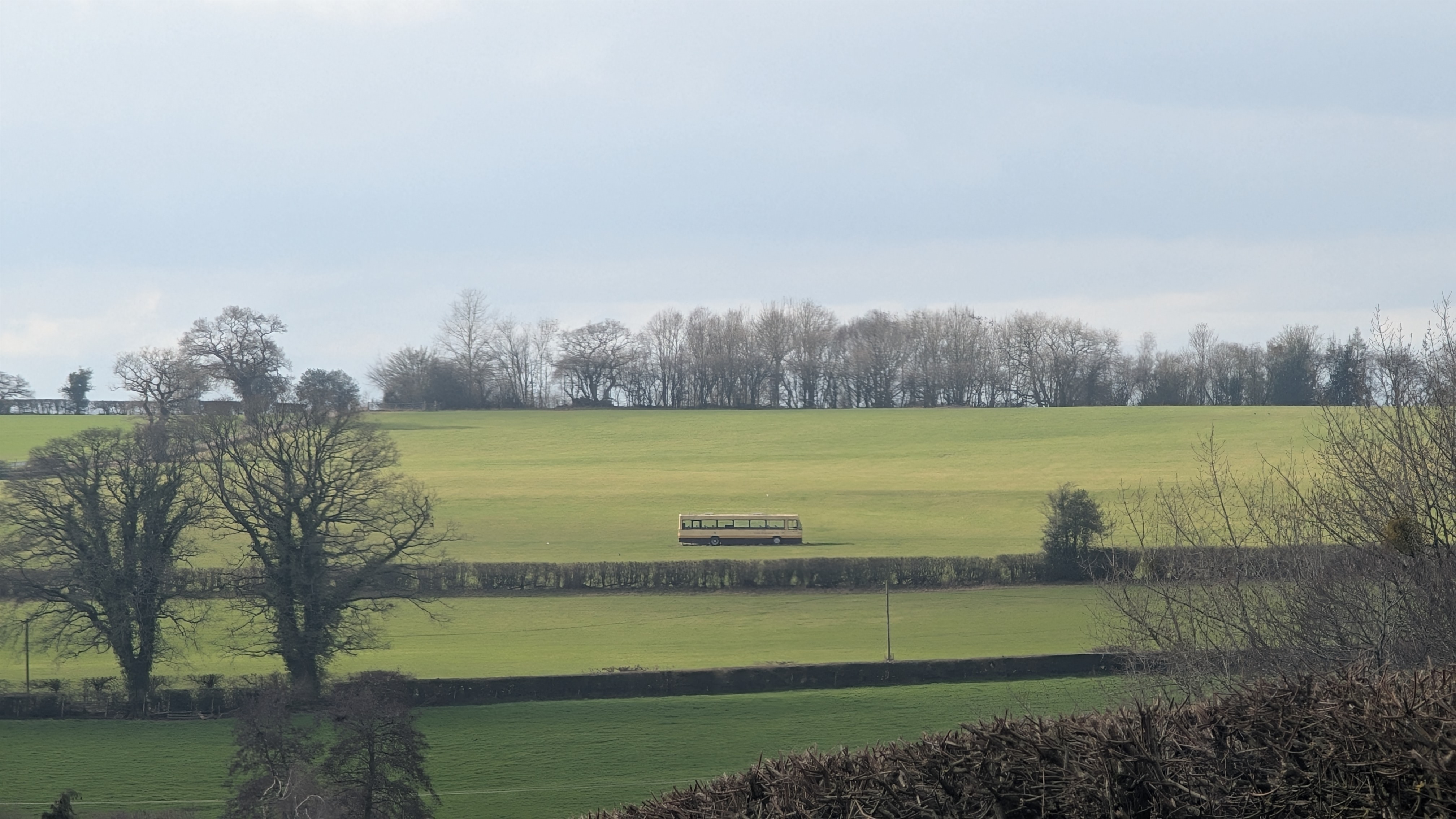
The Verdant Bus. This scene always makes me chuckle when passing through Wolferlow, Teme Valley. 25.02.26.Lesser Celandine Ficaria verna has started flowering, brightening waysides far and wide with its sunny yellow blooms. Hopehouse Lane, Martley. 23.02.26.Cherry Plum Prunus cerasifera is currently in full blossom in a hedgerow near you! This species is different from Blackthorn, which flowers later, has brown twigs and spines (more on this later). Stourport-on-Severn, 26.02.26.Searching for Early Star-of-Bethlehem Gagea bohemica at Stanner Rocks NNR, Radnorshire. Scott and I found lots of plant tags, but failed to relocate them. 28.02.26.What is, versus what could be. Improved grassland contrasted with wet woodland of a different ownership. Floodplain of the River Severn, Astley Burf via Shrawley brickpits. 01.03.26.
Notes: The thing that doesn’t show in these photos is the birdsong. Everywhere I’ve been, the birdsong has been omnipresent. A stark contrast from the previous months, and along with the spring sunshine, is very welcome indeed.