Snow above the Teme – Wood Ant Seedlings – Ponds in Kyre – First Frogspawn – First Bumblebees
Snowy views, looking west over the Teme Valley. Stanford Bridge. 19.02.26.Garlic Mustard Alliaria petiolataseedlings getting a headstart on a Wood Ant Formica rufa nest. Ribbesford Woods. 22.02.26.Ribbesford Church on Fujifilm. 22.02.26.Before and After. 24 hours after this attenuation feature was created it almost filled, following a high rainfall event. Kyre, Tenbury Wells. 18-19.02.26.First frogspawn of the year. Garden Pond, Stourport-on-Severn. 21.02.26.Bumblebees out in force on a south-facing, ornamental Winter Heath Erica carnea. Ribbesford Church. 22.02.26
Mostly a small collection of phone photos for this week. It has definitely felt spring-like, with the arrival of the frogspawn and seeing bees and wood ants emerging. Roll on spring!
A slightly different taste this week, as we were in Andalucía, chasing sunshine. It always amazes me how much there is to see in Spain in February. I’ve tried to distil our trip into a series of galleries, roughly for each day or place. For a more in-depth look at the botanical finds from the trip, see This Week in Plants (7) – Bonus Spanish Edition
We arrived in the dark on Tuesday 10th of February. After waking to a beautiful view of Pico Castellejos, we headed for our first hike of the trip. We passed the famous ‘Skull Rock’ near El Chorro, before setting off on the Sendero Escalera Árabe SL-A 207, accompanied by Iberian Ibex, Griffon Vultures and Peregrine Falcons!
Pico Castillejos (1074m) viewed from our apartment, situated north-east of Coín (Foreground), Málaga province. 11.02.26.The weathered limestone of Skull Rock on the MA-5403, El Chorro, provides a brilliant photo opportunity. 11.02.26.Iberian Ibex blend seamlessly into the cliff sides beneath peregrine falcons and griffon vultures. Escalera Árabe SL-A 207, El Chorro. 11.02.26.
Escalera Árabe SL-A 207
Sendero Escalera Árabe SL-A 207, El Chorro, Malaga Province. This is an easy, alternative 3.7km loop near the famous Caminito del Rey (and it doesn’t require booking, unlike Caminito del Rey). 11.02.26.
Álora
Álora is a small, whitewashed town, or ‘Pueblo blanco’, situated along the Guadalhorce River, north of Coín. It has a distinctively local feel. Álora is home to a castle (Castillo de las Torres), which was built in the 9th century by the Moorish state of Córdoba. 11.02.26.
Marbella Old Town
12.02.26
Sierra Negra & de Matagallar
Parking at the start of the Sendero Camino de la Fuente. We took a circular route through the pinewoods, which were tantalisingly located only 15 minutes south of our apartment in clear view (Below).
The view of the Sierra Alpujata range from our apartment in Coín.
We followed the SL-A 59 Nacimiento – Cerro Alaminos and saw a suite of species we have become quite familiar with over the past few years. For more information on the botanical finds from this area, see This Week in Plants (7) – Bonus Spanish Edition. 13.02.26
Views of Sierra de Mijas through the pines, from the SL-A 59 Nacimiento – Cerro Alaminos. 13.02.26.
Frigiliana
Before flying back, we headed to Frigiliana, which the Rough Guide for Andalucía describes as ‘a pretty Moorish hill village clinging to the lower slopes Monte El Fuerte’. It didn’t disappoint and had that distinctive Mediterranean feel. And doors, so many beautiful doors! 14.02.26.
Everybody that has been on a walk with me will have witnessed this moment.
The moment I drop to the ground, making excited noises. Because yes, I’ve spotted yet another ‘cool plant’.
From the limestone cliffs of El Chorro, to the pine forests and matorral scrublands of Sierra Negra. Here are ten finds from my February trip to the Málaga Province.
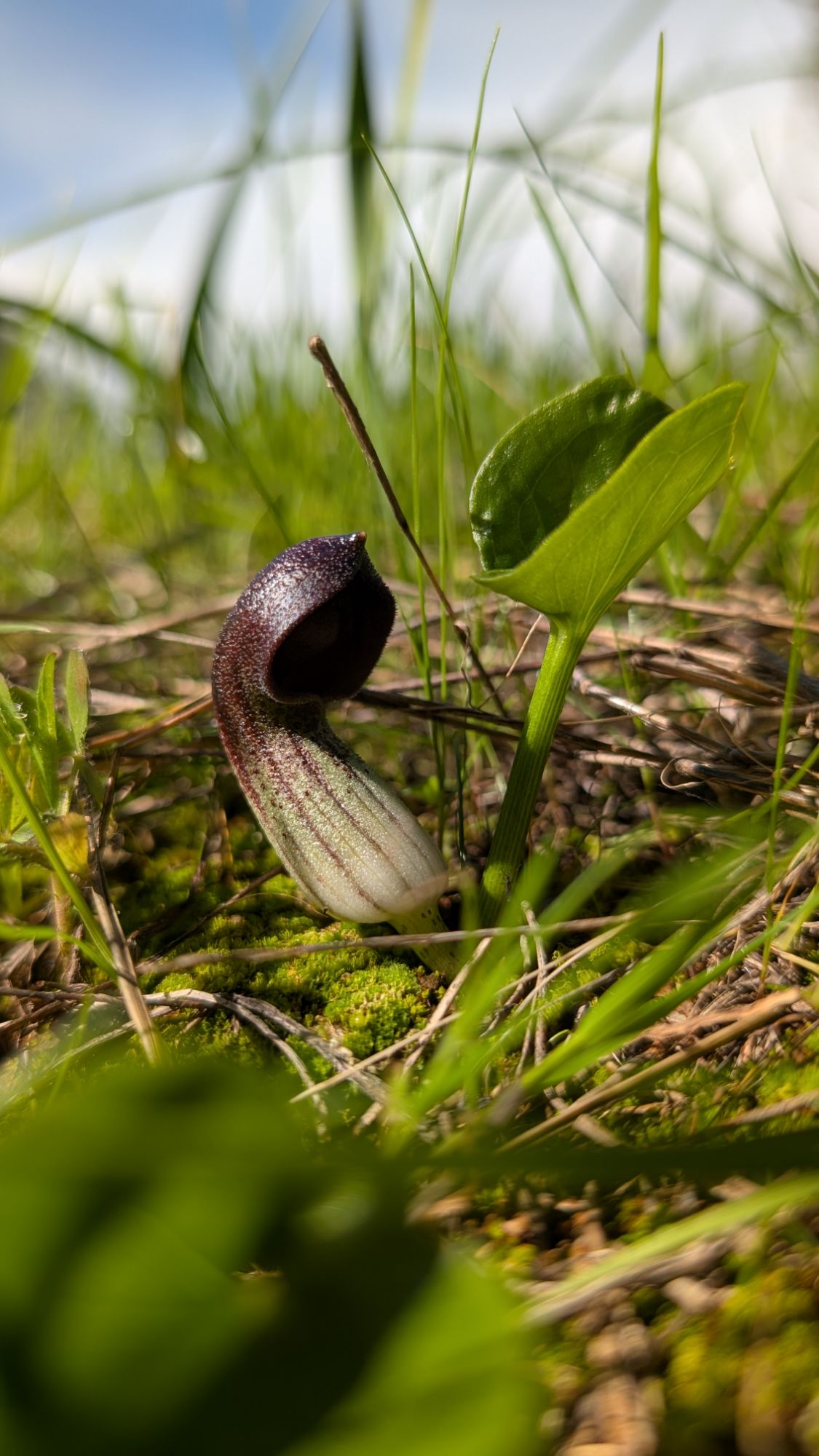
1. Winter IrisIris planifoliais an early flowering species that seems quite content to grow from tracksides, roadsides and spoil heaps alike. Escalera Árabe SL-A 207, El Chorro. 11.02.26.2. White-hoop Petticoat Narcissus cantabricus. A north African and Iberian daffodil relative. This population was growing from a boulder along the SL-A 207 Escaleras Árabes, El Chorro. 11.02.26.3. Gagea lacaitae is a widespread Mediterranean species, related to the Yellow Star-of-Bethlehem. It was locally frequent along the rides through the pinewoods at Sierra Negra, Coín. 13.02.26.4. Andalucian Pipe vine Aristolochia baetica scrambling through Small-flowered Gorse and Rosemary in the pinewoods of Sierra Negra, Coin. 13.02.26.5. Sombre Bee-orchid Ophrys fusca we came across this species in two places. The first, on the verge of the MA-5403. The second, along the forest track way of the Sierra Negra pinewoods. 13.02.26. 6. Grey-leaved Cistus Cistus albidus is a core constituent of the pinewoods of the Málaga province. Its grey-green, tomentose foliage carpets the forest floor in some areas. Sierra Negra, 13.02.26.7. Arisarum simorrhinum – This member of the Arum family was scattered throughout the pinewoods and waysides. We thought the leaves looked like small Arum maculatum, but later saw this cryptic flower. Matagallar, Coín 13.02.26.8. Fan-lipped Orchid Anacamptis collina was the plant that evoked the drop to the floor, camera in hand. We saw only two of these flowering, in grassy clearings between Small-flowered Gorse scrub. Matagallar, Coín 13.02.26.Foreground: The ‘Matagallar’ matorral scrubland supported many of the species above including Anacamptis collina, Ulex parviflorus, Arisarum simorrhinum, Romulea and Cistus albidus. Background: the Sierra de Mijas range.9. Branched Sand Crocus Romulea ramifloras.l. occupied a similar niche to that of Anacamptis collina, between scrub on the Matagallar, Coín. 13.02.26.10. Yellow AnemoneAnemone palmata which we initially thought was a buttercup. Damper areas of the Matagallar, Coín. 13.02.26.
For more photos from my recent trip, see ‘This Week in Photos’ (link to be added).
About
These photos were taken between the 10th to the 14th of February, 2026. Whilst staying at Prolongacion Calle Los Olivos, Coín.
Pendulous Birch – Snow drips – First Primrose – The underworld – Mist at Mount Pleasant – Angels & Spires – Wet hams
Silver Birch Betula pendula, living up to its species epithet; ‘pendulous’ indeed. Hopehouse Farm, Martley. 04.02.26.‘Snow drips’ Galanthus sp. St Peter’s Church, Martley. 04.02.26.Primrose Primula vulgaris are a welcome sign of spring, in rough grasslands, hedge banks and woodlands alike. St Peter’s Church, Martley. 04.02.26.The Underworld. An English Oak Quercus robur stands its ground on the floodplain of the River Stour, Mitton Marsh. 05.02.26.Mist over Mount Pleasant Hotel. Malvern, 06.02.26.Angels and spires at home in the heavy fog. Malvern, 06.02.26.Powick Hams, somewhere there are floodplain grasslands hidden beneath the mighty Severn. 06.02.26.
Peeking periwinkle – Sandstone pick marks – a Stoic tree – Ivy berries – Old rocks with a view – Cliff plants
Lesser Periwinkle Vinca minor, peeking its first flower of the year through a gap in an old fence. St Peter’s Church, Martley. 29.01.26A landslip reveals pick marks in sandstone that were hidden beneath the moss along the Leapgate Old Railway Line, Wilden.A stoic in-field tree, surrounded by arable farmland, which has been artificially brightened by a recent herbicide application. Hopehouse Lane, 29.01.26.Ivy Hedera helix berries glistening after heavy rain. Wilden Top. 30.01.26.At over 600 million years old, these Precambrian rocks are some of the oldest in the county. Worcestershire Beacon, Malvern. 31.01.26.Navelwort Umbilicus rupestris intertwined with Climbing Corydalis Ceratocapnos claviculata on a rocky outcrop. Worcestershire Beacon, Malvern. 31.01.26.
Gorse – English Longhorns – Utility Sycamore – Roots in the Triassic
“When gorse is out of bloom, kissing is out of fashion”
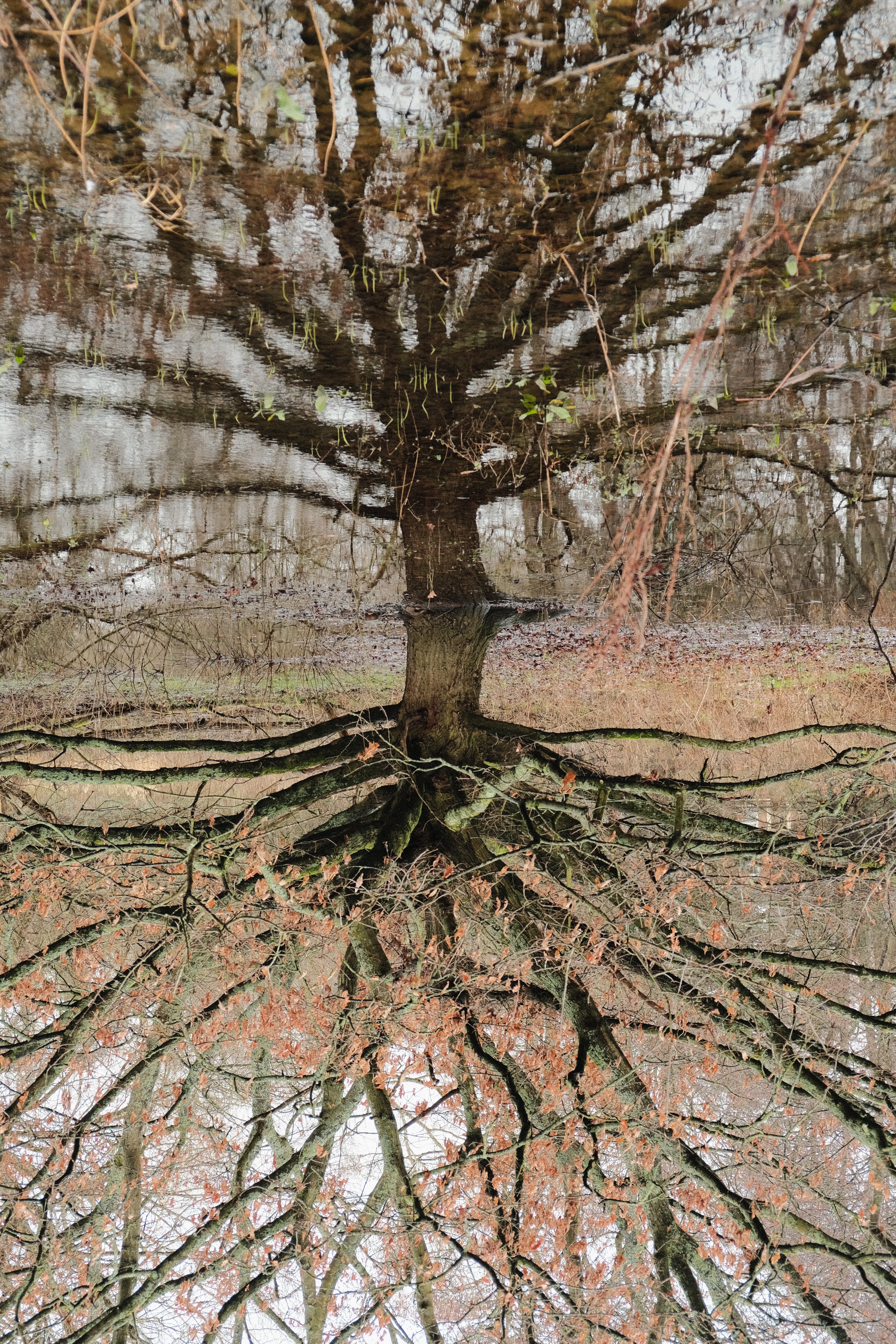
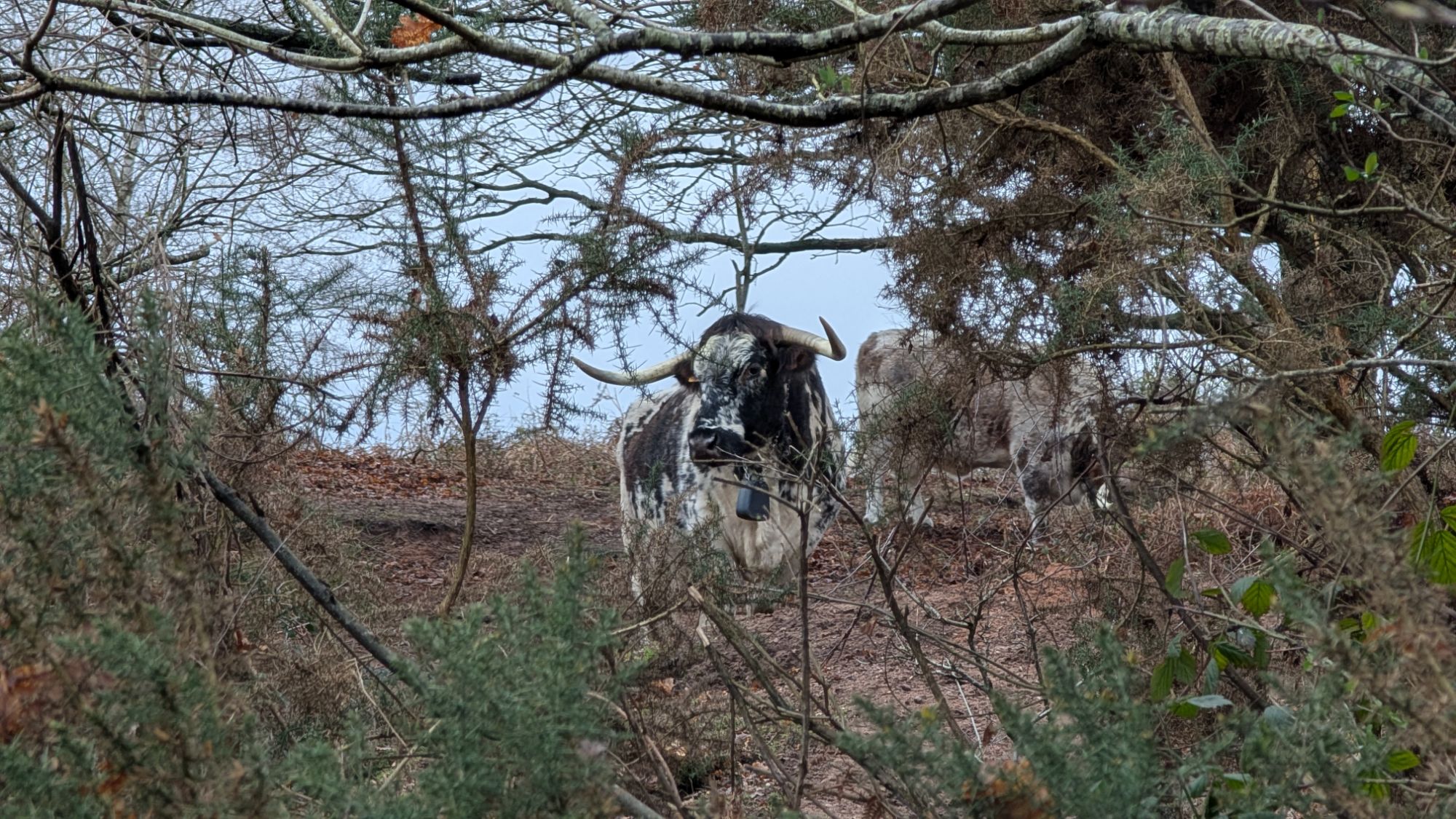
Gorse Ulex europaeus (top) is still in flower, whilst Western Gorse Ulex gallii (bottom) is only in fruit. Hartlebury Common, 22.01.26.An English Longhorn surveys its kingdom. These traditional cattle roam Hartlebury Common SSSI as part of the conservation grazing scheme. 22.01.26.English Longhorns rooting around in the windblown sands. What they are foraging for? Hartlebury Common, Worcestershire. 22.01.26.A sycamore tree that owes its survival to the utility pole, which prevents a flail from getting too close. Hillside, Worcestershire. 23.01.26.The roots of an English Oak Quercus robur seeking anchorage in the sandstone above the Staffordshire and Worcestershire Canal, Wilden. 25.01.26.
A floodplain makes a good fit for willow woodland, naturally regenerating behind the fence. River Severn, Worcestershire. 15.01.26Burdock Arctium spp. showcasing the hooked phyllaries that allegedly inspired George de Mestral to invent Velcro. 14.01.26The sea anemone-like female flower of Hazel Corylus avellana doesn’t need petals, as it’s wind pollinated. 14.01.26Traveller’s-joy Clematis vitalba follows the Birmingham Cross-city Line, where its seeds can be distributed readily by the winds of passing trains. Bournville, 16.01.26A fibrous crack in the bough of a Crack Willow Salix fragilis, living up to its name. 14.01.26
Today I decided to go on a doorstep walk which took me over to Mill Road, crossing the River Stour and onto the Staffordshire and Worcestershire Canal. Once in the canal, I followed the towpath down to the Timber Lane bridge, before turning off towards Wyre Mill Farm.
A Pastoral Scene, All Saints Church, Wilden
After crossing the Stour for a second time, I passed the farm and took the lane back out onto Wilden, which had a quintessential pastoral view of Wilden Church and the cottages along the main road.
The swallows are still here, and as I trundled east, I passed beneath three birds squabbling for a spot on overhead lines.
Squabbling Swallows
I made my way back home along Wilden Lane, underneath the Leapgate Viaduct.
I hadn’t walked Timber Lane before, and rambling along the narrow lane rekindled a sense of child-like adventure for me, the kind that only comes from discovering a place that one has never been.
With a hint of Autumn in the air, leaves on the ground, this short, local walk was surprisingly restorative, and I’ll look forward to seeing how it alters as the seasons unfold.