I decided to take the afternoon off to recharge the batteries in nature, and I was glad that I did.
Wyre is a ‘slow burn’, at the start of the season it feels frustratingly slow to awaken.
But by the end of the season, especially one as dry as this year’s, things seem to be holding up quite well, and may do so for a little while yet.
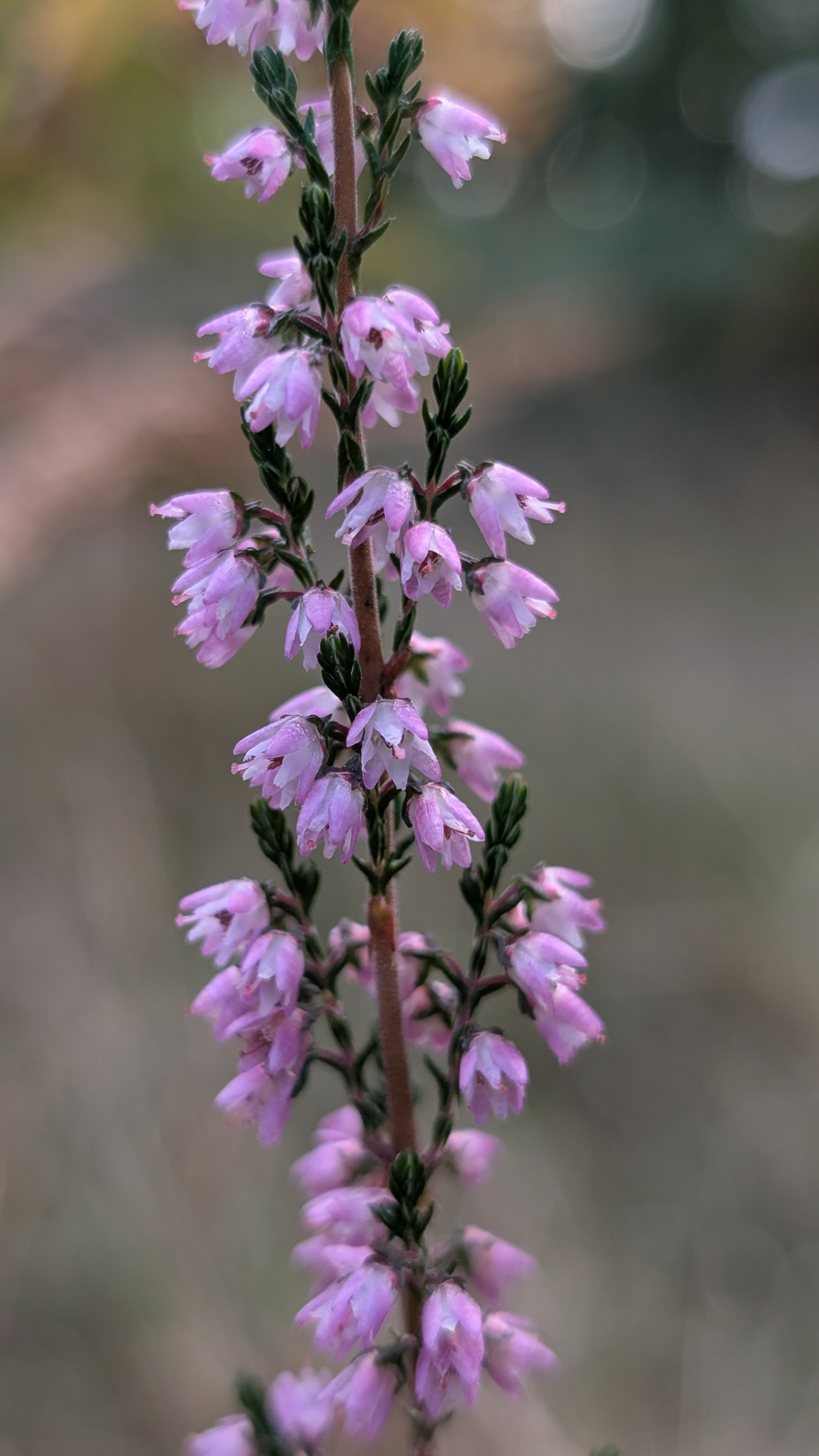
Heather Calluna vulgaris looking at it’s bestOakwood (W10) canopyW10 Quercus-Pteridium-Rubus woodland, Longdon OrchardHemp Agrimony Eupatorium cannabinum along a woodland rideDevil’s-bit scabious Succisa pratensis along the Elan Valley pipeline
I was particularly pleased to see that a patch of bog pimpernel Anagallis tenella has spread considerably since my survey during 2023 for my thesis, despite the dry weather.
Bog pimpernel growing at the margin of a flush, bisected by a forestry track, at SO 7463 7704.
On Sunday, Lauren and I decided to go on a micro-adventure to explore some of the old churches in the Teme Valley. We planned the route around Geocaches located at each site, giving us a goal for the day’s adventure.
Say ‘Geocache’ 📸
Abberley
Our first stop was St. Mary’s Church in Abberley, where we stopped off and had a mooch around the grounds. The search for the geocache took us to the adjacent Millennium Green. After checking four or five potential candidates, Lauren found it lodged in an ivy-covered tree, where the tree had actually started to engulf the container into its bark.
St Mary’s Church, Abberley
Shelsley Walsh
The second stop was St. Andrew’s Church in Shelsley Walsh, a 12th-century church built just above the River Teme’s floodplain. The Shelsley Walsh parish is steeped in history, with local folklore about hauntings at the nearby Court House.
The Court House, Shelsley Walsh
There’s also the legend of Witchery Hole, a patch of woodland South of the church, where it’s said witches were burned and as a result nothing grows.
St. Andrews Church, Shelsley Walsh
Stockton-on-Teme
After having a look around the Court House and old mill pond, we moved on to our third stop at Stockton-on-Teme’s St. Andrew’s Church.
St. Andrews, Stockton-on-Teme14th Century wooden porch
The hint for this cache was ‘Of China, once Berlin’, which led us to guess it was located in the wall, where we found the small geocache, lodged tightly in the dry stone wall of the churchyard.
Clows Top
On our way to the next location, travelling up through Pensax, we decided to stop at The Bell. We had a pint of cider, a pint of Coke, and shared two packets of crisps in the beer garden before heading over to Clows Top.
Here we found a Mission Room, a more recent church from 1895. We found the geocache for this stop in an old yew tree just outside the church on the lane. From the modest church, the view west to Titterstone Clee was spectacular.
Clows Top ‘Mission Room’s Church
‘A Fine Pair’ Bayton Common
Our fifth cache of the day was found back through Bayton Common. The cache, titled ‘A Fine Pair’, referred to the red phone box and red post box standing next to each other. The geocache was placed inside the phone box, on top of the old phone unit which has now been repurposed to house a defibrillator. From there, we drove back through Far Forest, and Callow Hill before heading home.
This week it’s more of a highlights reel, as I was away in Porto and I’m writing this well into week 20. So let’s see what we can do…The weather has been similar, fairly dry, warm, especially in week 19, and the countryside is looking superbly verdant. Grasses are now conspicuous and beginning to flower well.
28th – 4th May (18)
Sites
Hopehouse Lane, Martley
Clent Hills
Teme Valley: Pouk Lane, St. Dunstan’s Lane
Broadway: Fish Hill, Broadway Tower
Stourport-on-Severn, town centre.
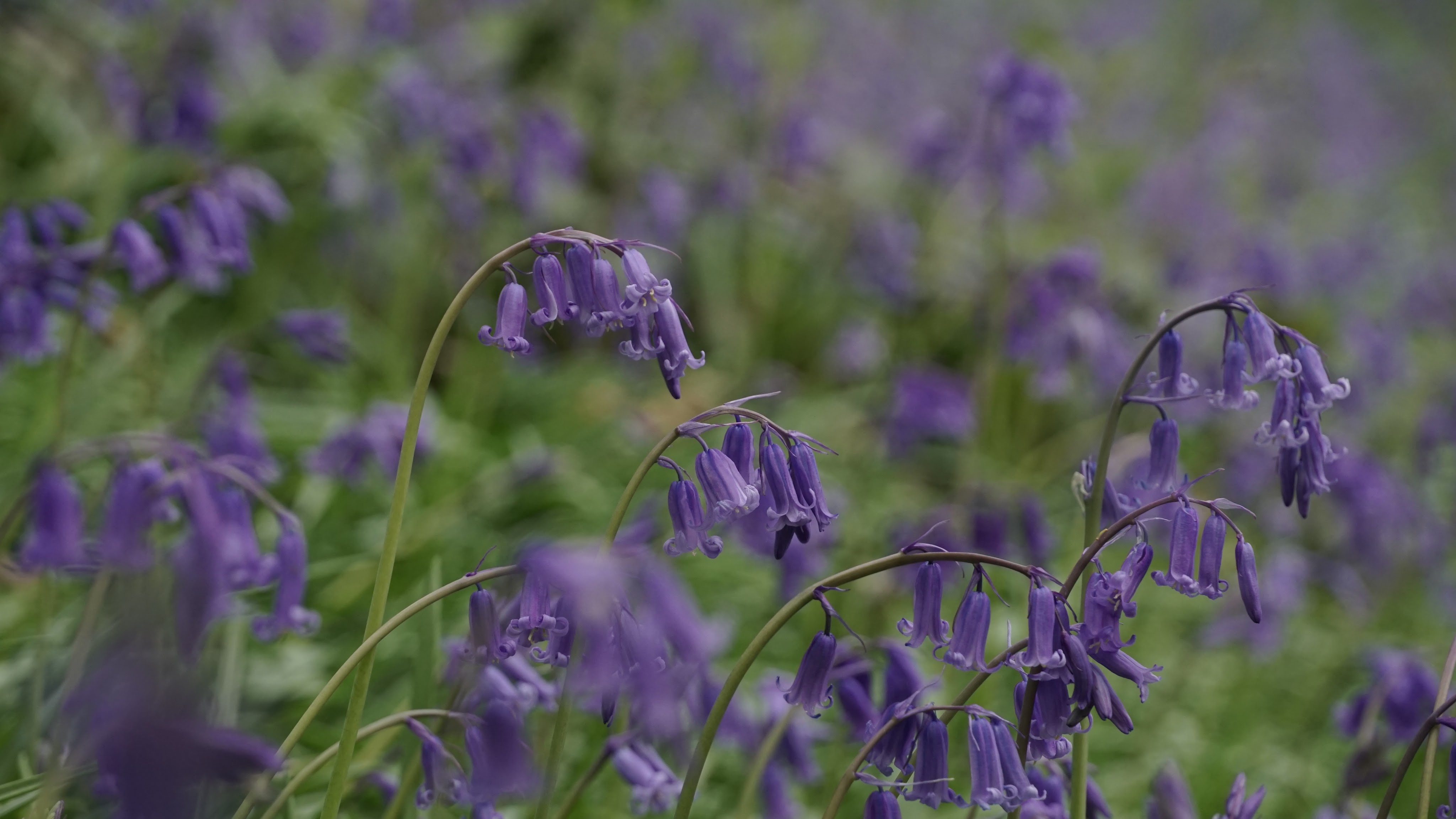
Lepidium campestre Field Pepperwort (?) Hopehouse Lane, Martley.Bluebells Hyacinthoides non-scripta, at Clent HillsWater-cress Nasturtium officinale agg., The Vine Inn, Clent.Sweet woodruff Galium odoratum. Pouk Lane, Teme ValleyHieracium scotostictum. St Dunstan’s Ln.Hieracium scotostictum. St Dunstan’s Ln.Arum maculatum, Fish HillDame’s violet Hesperis matronalis, Fish HillWayfaring Tree Viburnum lantana. Fish Hill, Broadway.Bird Cherry Prunus padus. Fish HillCowslips galore. Broadway Tower. Sanicle Sanicula europaea. Fish Hill.Query?. Broadway,Meadow Saxifrage Saxifraga granulata. Fish Hill woodland.Oxford Ragwort Senecio squalidus. Stourport bridgeSenecio squalidus black tipped phyllariesBeaked Hawk’s-beard Crepis vesicaria. Stourport-on-Severn, B4193.
Featured Find: Viola Hybrid ?
The other find that felt interesting, and is still a query was a violet growing in an arable field in Warwickshire at Elm’s Farm. Initially I thought it was Viola tricolor, but after consulting the BSBI violet handbook I’m considering Viola x contemptadue to the colouration, the longer sepal length and blue-grey pedicel arch. I need to get this checked by the referee. I’ve provided a photo of ‘good’ Viola arvensis for reference below the three potential V x contempta photos.
A highly fertile hybrid, generally occurring with the parents, but occasionally in the absence of one or both. It is found on waste ground, tracksides and particularly the less disturbed margins of cultivated land (Porter & Foley, 2017). Lowland. A spontaneous hybrid (native × native). – BSBI Atlas
TO BE CONFIRMED
Field Pansy Viola arvensis. Leapgate Lane.
5th – 11 May (19)
This week was mostly spent in Porto, Portugal. So I have included some finds from my holiday along with some more UK natives from Titterstone Clee Hill, including a new plant to me, Mountain Pansy Viola lutea.
A perennial herb of extensively grazed, unimproved grassland on upland slopes and banks, and on rock ledges. Although often frequent in limestone districts, it prefers soils from which much of the calcium carbonate has been leached away but, nevertheless, avoids very acidic sites. It also grows on metalliferous soils around disused lead mines.. – BSBI Atlas
The Lists
Week 18
Field Pepperwort (Lepidium sp. campestre?). Hopehouse Lane, Martley
Capeweed (Arctotheca calendula). Foz do Douro, Porto
Trifolium nigrescens. Foz do Douro, Porto
Trifolium nigrescens. Foz do Douro, Porto
Bugweed (Solanum mauritianum). Jardins do Palácio de Cristal
Some kind of cudweed. Jardins do Palácio de Cristal
Silene query (?) Jardins do Palácio de Cristal
Mountain pansy (Viola lutea). Titterstone Clee Hill, Shropshire
Heath bedstraw (Galium saxatile). Titterstone Clee Hill, Shropshire
Queries
What was the small, white-flowered plant in Broadway? Mind-your-own-business Soleirolia solerolii “An evergreen, procumbent, carpet-forming perennial herb, frequently escaping from gardens and greenhouses and found in lawns and on pavements, steps, damp paths, shaded banks, streamsides, sandstone outcrops, by drains, gutters, ditches, roadside walls, and in sheltered places in churchyards and cemeteries.”- BSBI Atlas
Can a return visit to the Lepidium confirm that it is L. campstre – a Near Threatened species.
The potential Viola x contempta would be a very exciting find if it can be confirmed.
It’s really beginning to feel like spring, with hawthorn starting to flower, St Mark’s Fly are abundant over on Hartlebury Common and cow parsley is just getting going. In the woods, wild garlic is in full flower, and the bluebells are beginning to pass their best.
We’ve had some mixed weather, but it has mostly been fair and relatively warm, up to around 19 degrees Celsius. The week was bookended by a trip to Shrawley Woods on Monday with Lauren and another with the flora group on Saturday.
Food for thought: At this time, there are many tree flowers, or blossoms, but why do trees get their flowering out of the way early? I understand wind-pollinated trees getting pollination ‘done’ before leaves are on the trees to prevent obstruction, but why do blossoms that are insect-pollinated occur early in the year? (eg. Apples?).
Sites
Shrawley Woods
Stratford Park, Stroud
Hartlebury Common
Hartlebury Castle
Wilden Lane and Leapgate Railway
Mitton Marsh
Shrawley Woods
Wood Melick Melica uniflora, Shrawley WoodsWood Spurge Euphorbia amygdaloides, Shrawley WoodsBugle Ajuga reptans, Shrawley WoodsScaly Male-fern Dryopteris affinis agg.Moschatel Adoxa moschatellinaPendulous sedge Carex pendulaWood Speedwell Veronica montanaHerb Paris Paris quadrifoliaBog Stitchwort Stellaria alsineThyme-leaved Speedwell Veronica SerpyllifoliaYellow Archangel Lamium galeobdolon subsp. montanumRamsons Allium ursinumRedcurrent Ribes rubrum abundant along the Dick Brook valleyHerb Robert Geranium robertianumToothwort Lathraea squamaria, Dick Brook area.A curious, robust violet growing with both Viola riviniana and V. reichenbachiana nearby.
Other sites
Stratford Park, Stroud; Hartlebury Common; Hartlebury Castle; Wilden Lane and Leapgate Railway.
A rhizomatous, perennial herb of moist, calcareous, usually ancient ash woodland, […]. It flowers and fruits most freely in the early open stages of a traditional coppice cycle, but persists in deep shade, and is well adapted to such conditions in managed woodland. It disappears following clear-felling, probably mainly through desiccation. Seedling recruitment and colonisation of new sites appear to be rare. – BSBI Atlas
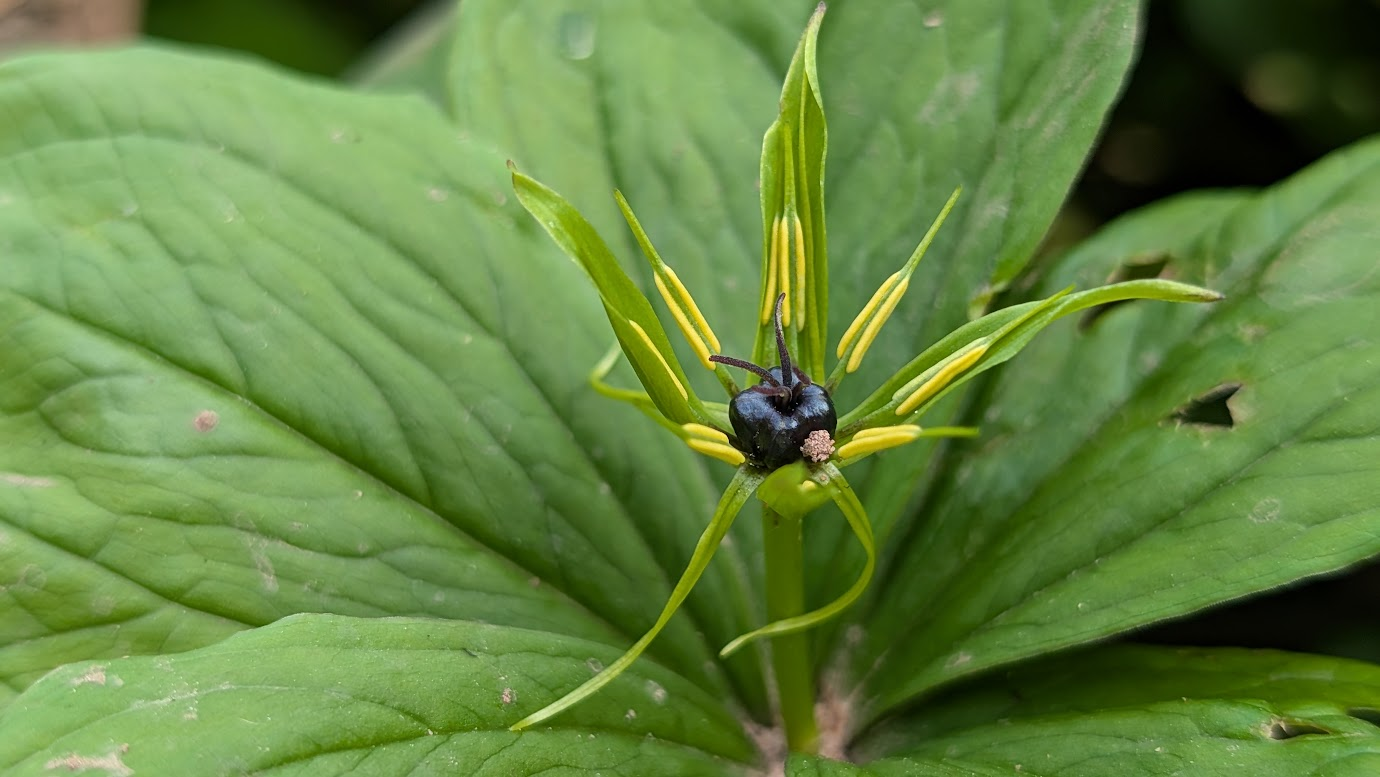
There are a few finds this week that I could feature, but I think my favourite was the herb parisParis quadrifolia that was found during our flora group meeting on Saturday 26th April at Shrawley Woods at SO80576679.
Around ten plants were growing right on the footpath south of the Dick Brook, in a fairly open area with wild garlic Allium ursinum. It seemed to be enjoying the light recently fallen trees had allowed to reach the forest floor, but was precariously close to the footpath.
The plant photographed above was particularly interesting as the name Paris quadrifolia, roughly means ‘four foliate’ or four leaves, but this individual decided it wanted to have five leaves, so is it better referred to as Paris cinquifolia?
The List
Shrawley Woods
Wood melick Melica uniflora. Shrawley Woods.
Wood spurge Euphorbia amygdaloides. Shrawley Woods.
This week, It was generally a wet and cold, but the botanising was augmented by my birthday trip to North Wales. We visited the Nannau estate for the Precipice walk and then the Torrent Walk – both near Dolgellau.
I suppose the most conspicuous thing is still the bluebells, but the wild garlic and hawthorn isn’t far behind now. Ferns are beginning to unfurl, and spikes of bugle are flowering along woodland rides and in our back garden.
This week, I was happy to see the tree mallow Malva arborea along Pier Road, Tywyn (SH58070066). It was growing on a rough verge and was already quite a height. According to the BSBI atlas:
It usually grows in shallow, nutrient-enriched soils, occurring most frequently amongst vegetation in seabird roosts, and on ground enriched by garden waste. Plants are killed by severe frost and the species is therefore restricted to mild micro-climates near the sea.
It was warm this week, with highs up to 19 degrees Celsius. Bluebells have started to fill the air with their distinctive fragrance in woodlands and hedgerows alike. We have reached peak Cuckoo-flower, which is springing up along hedge banks and damp grassy places all over the county, along with Jack-by-the-hedge.In arable fields, rapeseed is in full-flower, turning vast swathes of the countryside golden yellow.
Rapeseed field opposite the The Masons Arms, Worcestershire. 09.04.25.
Apple trees are in full blossom, and they’ve caught up with the pears from which they will soon take the baton. Blackthorn is also out in full-swing, taking over almost completely from cherry plum.
Wild cherry has become quite conspicuous, with its pom-poms of blossom and bronze young foliage. Oak trees have finally burst into leaf and flower (sorry hayfever sufferers), and are like beacons of hope across the landscape. Grass-wise, I have seen sweet vernal-grass (Martley) and meadow foxtail (Stourport Basins) both in flower this week.
Pedunculate oak Quercus robur catkins
Featured Find
I was particularly excited to see the false oxlipPrimula x polyantha, which is a hybrid that occurs between the primrose and cowslip, where they grow together, in this case along Hopehouse Lane (see below).
False oxlip Primula x polyantha. Hopehouse Lane, Martley.
The List
HonestyLunaria annua at sunset. Great Witley.
PearPyrus sp. St. Peter’s Church, Martley
Greater CelandineChelidonium majus. St. Peter’s Church, Martley
Green alkanetPentaglottis sempervirens. St. Peter’s Church, Martley
Sweet vernal grassAnthoxanthum odoratum. St. Peter’s Church, Martley
Field horsetailEquisetum arvense. Hopehouse Lane, Martley
A selection of (mostly) flowers from the first week of April 2025. The date is given on the first record of that day only. Location is given on the first occurrence, then only if the location or the day changes.
Hairy whitlowgrassErophila majusucula still flowering on Hartlebury Common (01.04.25), where I met Paul Sterry and Andrew Cleave who were looking to photograph it for their book.
Wood spurgeEuphorbia amygdaloides subsp. amygdaloides along the roadside at Monkwood NR. 01.04.25.
JuneberryAmelanchier lamarckii which is a neophyte of wood borders and dry heaths, it is locally frequent on Hartlebury Common. 03.04.25
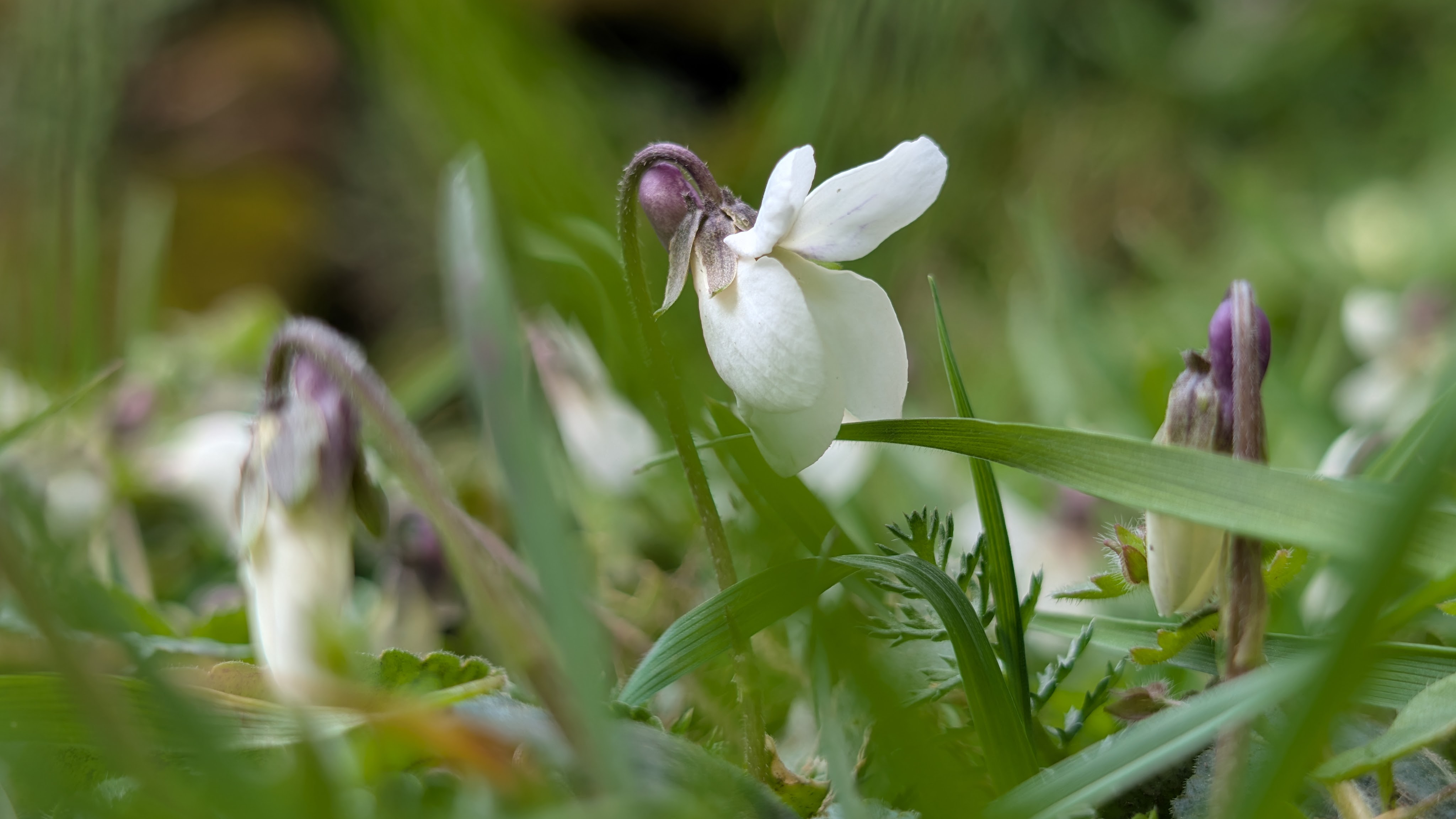
Sweet violet Viola odorata var. imberbis (white form with mauve spur). Hartlebury Castle. 03.04.25
Lambs – what is the scientific name for sheep? It’s Ovis aries. Hartlebury Castle.
I think I had this down as Annual wall-rocketDiplotaxis muralis, but I want to check this as I’m not overly familiar with it. Scrubby road verge, Hartlebury Common. 04.04.25.
Greater stitchwortStellaria holostea along the woodland edge leading to Lincomb Lock along the River Severn.
BlackthornPrunus spinosa now flowering and replacing P. cerasifera in hedgerows. Notice the dull brown twigs, spines and non-reflexed sepals.
Cuckoo flowerCardamine pratensis along the banks of the Severn.
Common fumitoryFumaria officinalis subsp. officinalis. This was growing directly out of a recently rebuilt sandstone wall on Lincomb Lane. With small flowers, fruits wider than long and sepals around 1.5mm, I decided this was F. officinalis. As it had around 37 flowers to a raceme, I believe it’s subspecies officinalis – which usually has 20-40 flowers.
Spring sedgeCarex caryophyllea on Castlemorton Common. This species can be confused with Pill sedge Carex pilulifera, but C. caryophyllea has a sheathing lower bract and flowers slightly earlier. 05.04.25.
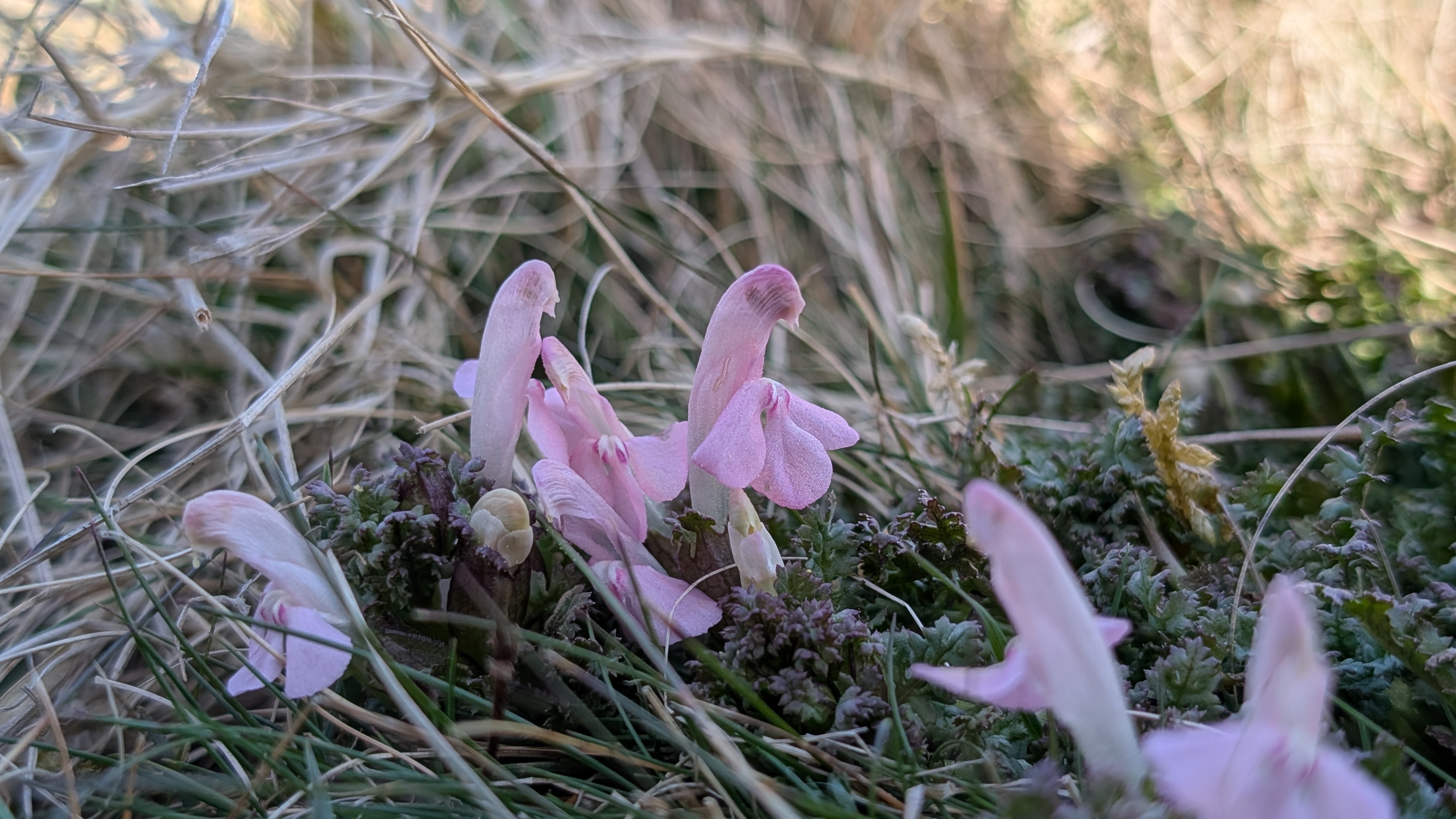
LousewortPedicularis sylvatica. I saw this species a few times on Castlemorton, but only found one plant that was actually in flower.
A suspect violet. I wanted to see Heath violetViola canina, and came across these plants on Hollybed Common which had a yellowish spur but didn’t have stipules to match (16). I believe they are common dog-violet V. riviniana but would like to check again later in the season.
The countryside is waking up, the lanes and woods are decorated with lesser celandine, wood anemones, violets, dog’s mercury and primroses.
For most of March I have been racing to get out before the sun goes down at around 6:30. But now that the clocks have changed, every evening presents an opportunity to get out exploring and botanising. It is worth noting, that we have had very little rain this month, and that we could really do with a wet April to bring us back in order.
Talking of which, I am eager to discover what April has in store… But before that, here are some plants that have brightened my March, along with some of my favourite finds this month.
Favorite Finds
Grey field-speedwellVeronica polita at St. Peter’s Church in Martley, where it grew with common field-speedwell V. persica.
Shepherd’s cressTeesdalia nudicaulis, which is having a bumper year on Hartlebury Common.
ToothwortLathraea squamaria and Yellow star-of-BethlehemGagea lutea which Cesca Beamish and I relocated from an old record, growing along the Corn Brook.
30.03.25. Wilden Top Meadow. “Three large clumps growing on anthills, Grassland fairly rank so possibility of becoming swamped out. Patches c. 50cm x 50cm. Plenty of flowers SO82857243” “Another small patch c. 20cm x 20cm at SO82797242 with Rumex acetosa”
Cerastium arvense at Wilden Top Meadow. 30.03.25. SO82857243
I can’t recall ever seeing this plan in Worcestershire. The only record I have of this species on iNaturalist is from a work site in Catterick, North Yorkshire, dated July 2023.
While cycling on Sunday afternoon, I decided to visit a rough grassland area known as Wilden Top Meadow, where C. arvense had been previously recorded by W.A. Thompson in 1993 and most recently by C. Beamish in 2024.
I was pleased to find three clumps of the plant thriving on a series of anthills in what is otherwise quite overgrown grassland, which is reportedly owned by Wilden Industrial Estate. There were two distinct populations: one near the entrance at SO82857243 and another further into the site near the broom scrub at approximately SO82797242.
I believe the plant’s survival can be attributed to localised disturbance occurring on the anthills and pathways used by local residents, as most of the population was found on hummocks adjacent to the main path running through the site and I didn’t find any more in the wider grassland.
What does the future look like for this diminutive, relatively scarce county plant, if the site continues to be ungrazed and the bracken marches ever further forwards?
Rough Horsetail Equisetum hyemale, near pool at Chaddesley Woods NNR
On Saturday (22.03.2025) we held a North Worcestershire Flora Group meeting at Chaddesley Woods NNR. We had set out to record along the main rides, but also to search for two rarities: Marsh violet Viola palustris and Rough Horsetail Equisetum hyemale.
We failed to refind the marsh violet after a fruitless 30 minutes searching the ditch where it was last recorded as ‘a few plants’ in 2010 by R. Maskew.
Although, there was a lot of leaf litter, and a large fallen tree which may have been covering them, it was also fairly early in the year. It was noted that there were no Sphagnum moss which would normally be expected associates.
Following this we walked to the pool located at SO 91053 73648 and began our search for Rough Horsetail Equisetum hymale. With only 44 all time records of this species in the county, and only known from two tetrads post-1987, it’s one of our rarer species. It was originally found at this location by previous county recorder Fred Fincher during 1978.
We stood a good chance of re-finding this record, as it was a known population most recently seen in 2016 by R. Maskew, where there were ‘400 stems, poolside’.
After a lap of the pond and Typha swamp, we eventually spotted a few stems protruding from the bank.
Upon close inspection it was a large patch, in a marshy area adjacent to the Typha beds, on the western bank of the pool. It was mostly abundant along the bank top and reached approximately 2m from the waters edge for a 5m length. It was located the edge of the original concrete dam wall, as mentioned in previous records.
There were hundreds of stems still, as per 2016 and associated species included Carex pendula, Arum maculatum, Mercurialis perennis and Urtica dioica.
NWFG members marking out the extent of E. hyemale
Overall a successful day, but I’d still love to see Viola palustris in VC37. One for a future search…