It’s really beginning to feel like spring, with hawthorn starting to flower, St Mark’s Fly are abundant over on Hartlebury Common and cow parsley is just getting going. In the woods, wild garlic is in full flower, and the bluebells are beginning to pass their best.
We’ve had some mixed weather, but it has mostly been fair and relatively warm, up to around 19 degrees Celsius. The week was bookended by a trip to Shrawley Woods on Monday with Lauren and another with the flora group on Saturday.
Food for thought: At this time, there are many tree flowers, or blossoms, but why do trees get their flowering out of the way early? I understand wind-pollinated trees getting pollination ‘done’ before leaves are on the trees to prevent obstruction, but why do blossoms that are insect-pollinated occur early in the year? (eg. Apples?).
Sites
- Shrawley Woods
- Stratford Park, Stroud
- Hartlebury Common
- Hartlebury Castle
- Wilden Lane and Leapgate Railway
- Mitton Marsh
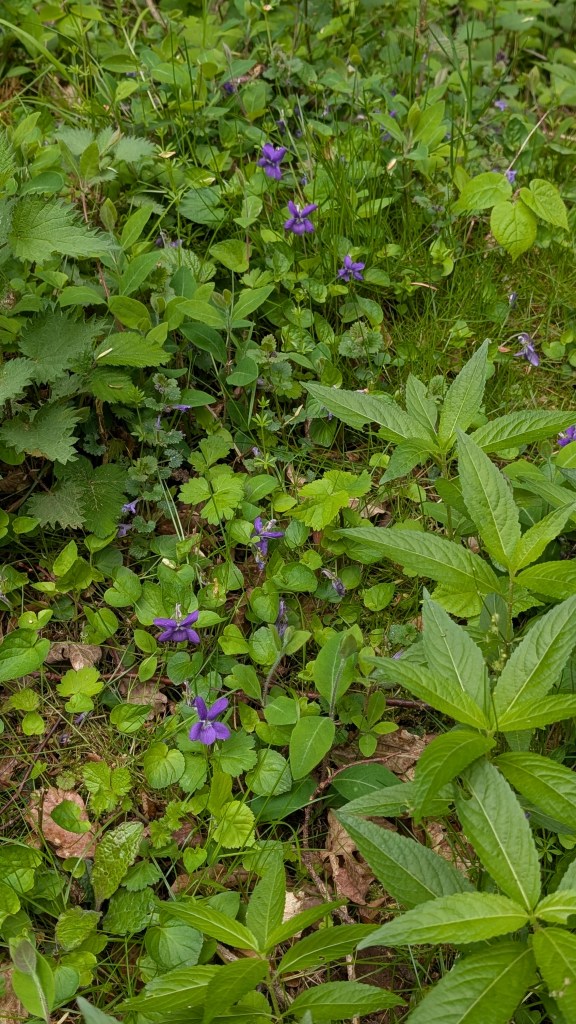
Shrawley Woods
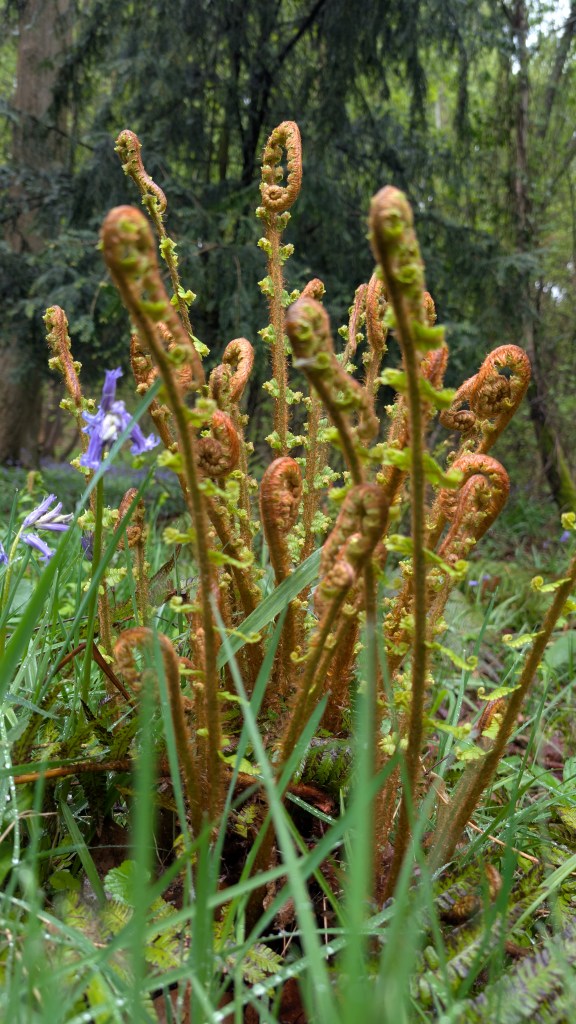
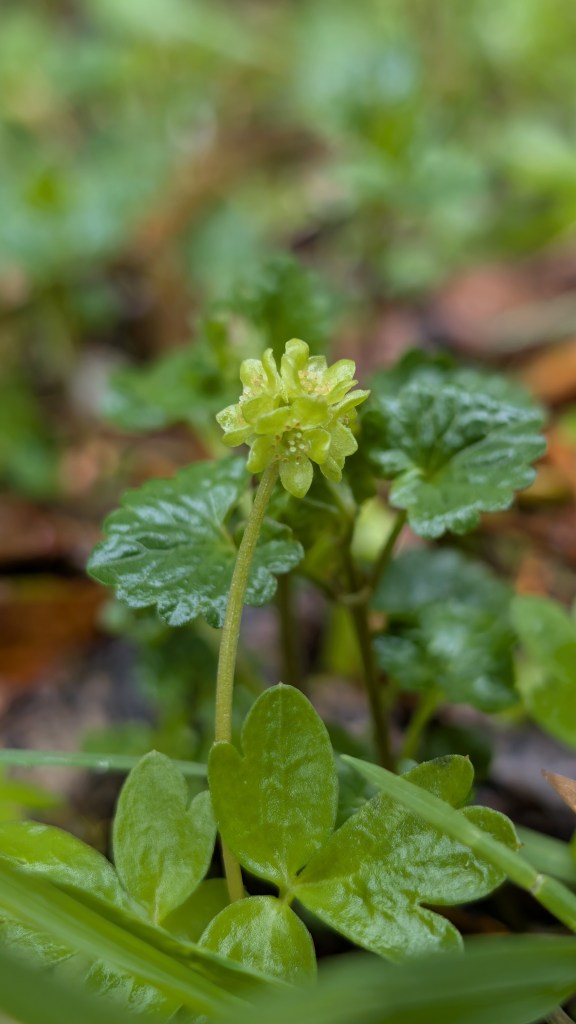
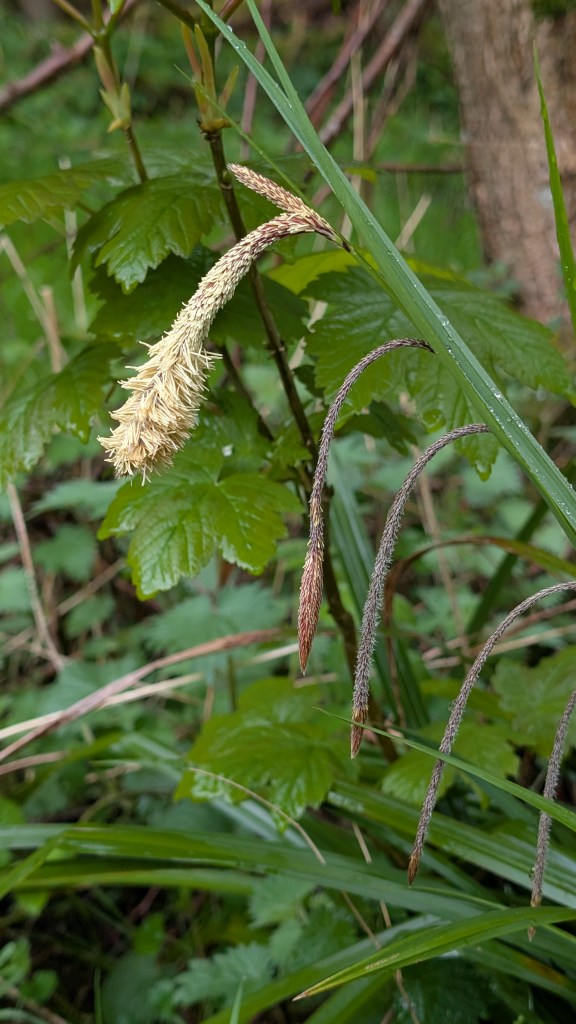
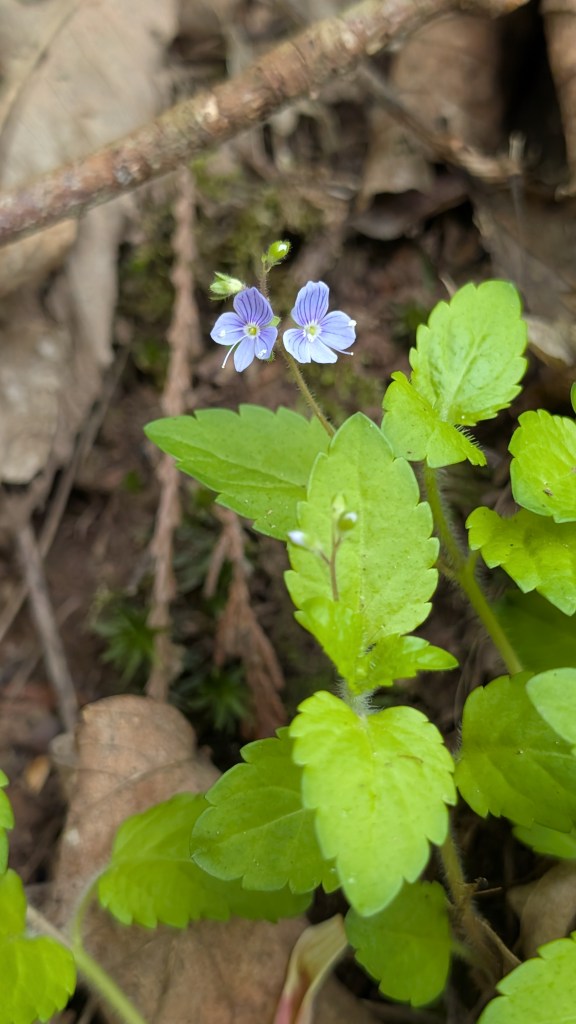
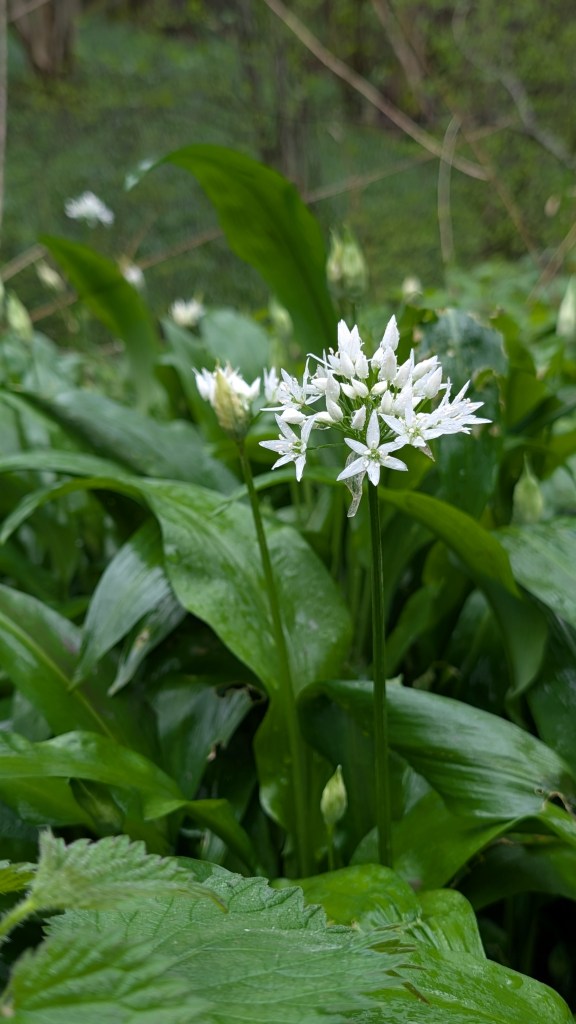
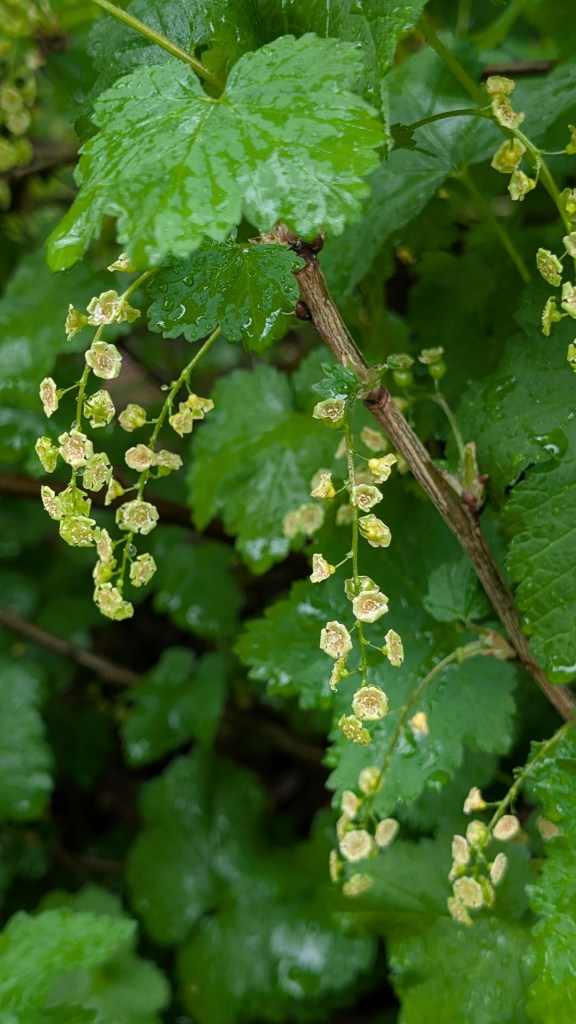
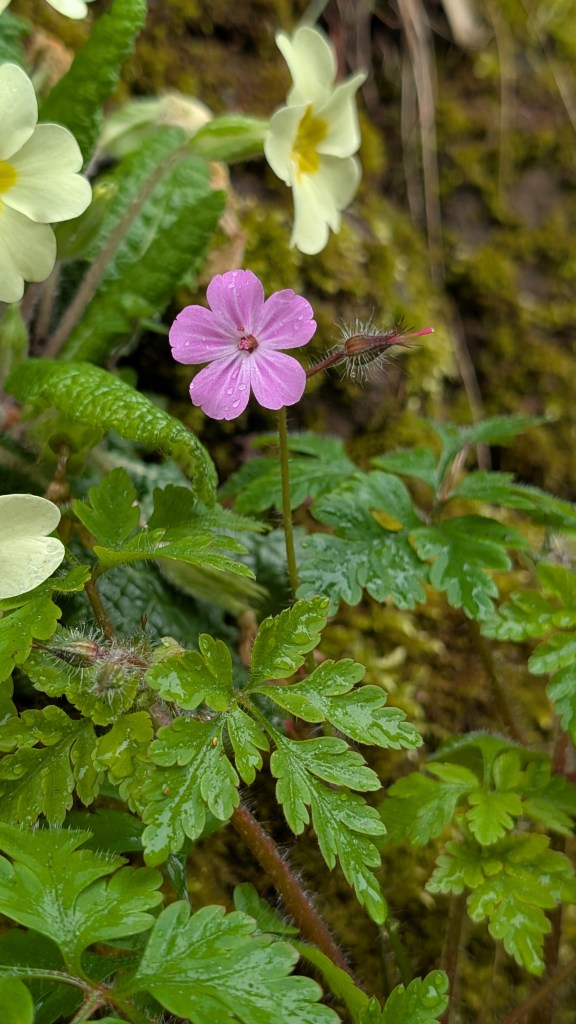
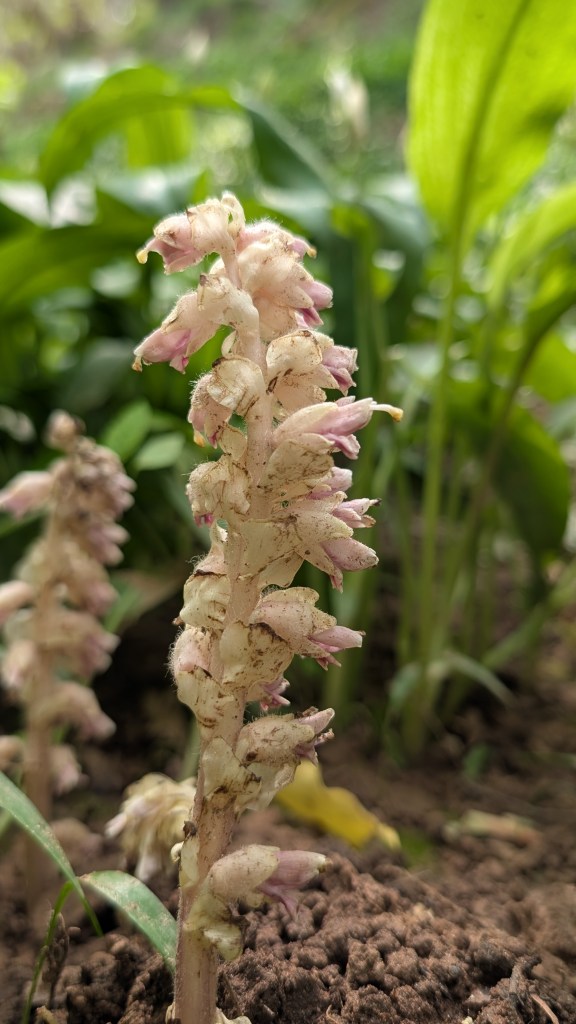
Other sites
Stratford Park, Stroud; Hartlebury Common; Hartlebury Castle; Wilden Lane and Leapgate Railway.
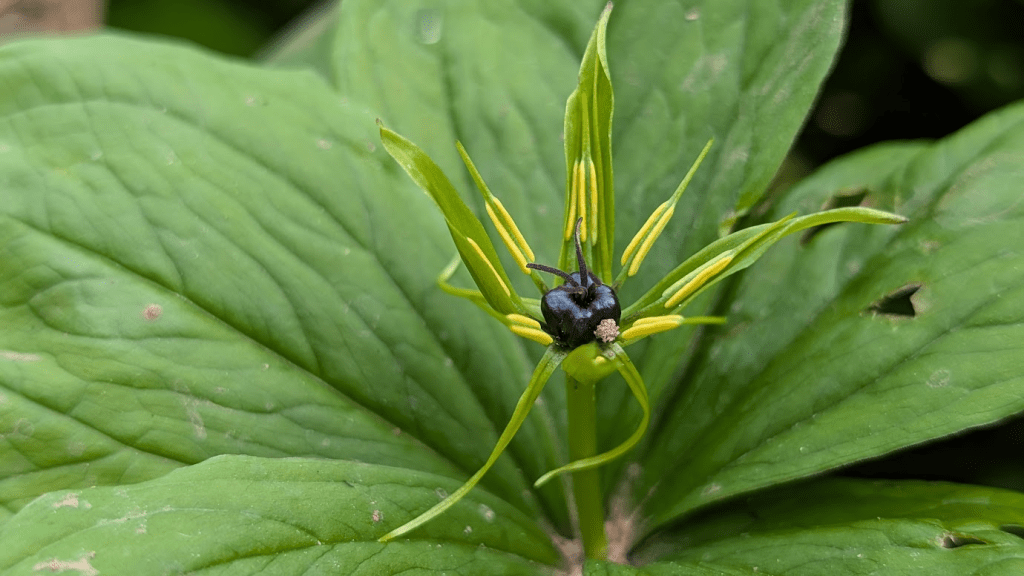
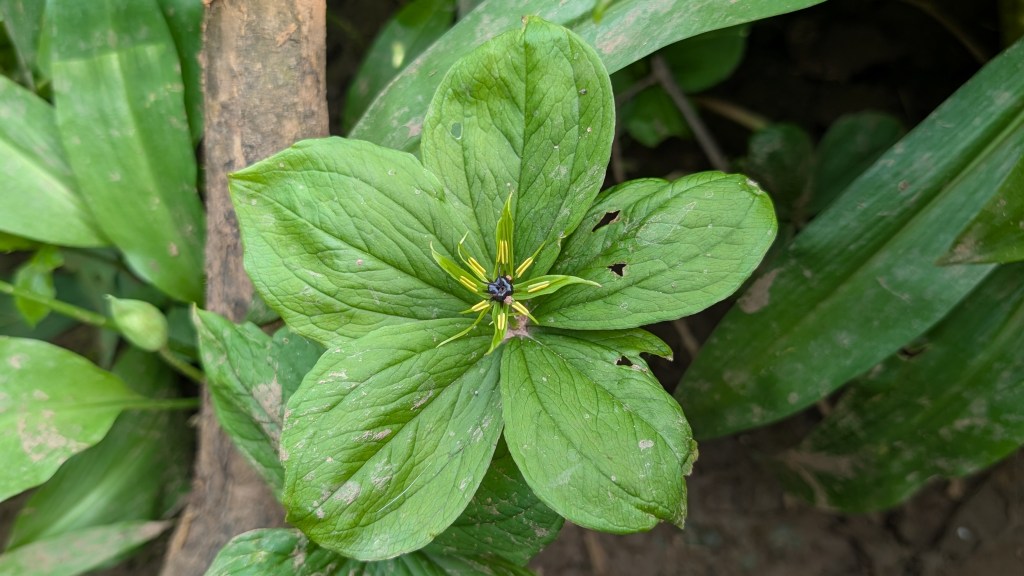
Featured Find: Herb Paris
A rhizomatous, perennial herb of moist, calcareous, usually ancient ash woodland, […]. It flowers and fruits most freely in the early open stages of a traditional coppice cycle, but persists in deep shade, and is well adapted to such conditions in managed woodland. It disappears following clear-felling, probably mainly through desiccation. Seedling recruitment and colonisation of new sites appear to be rare. – BSBI Atlas
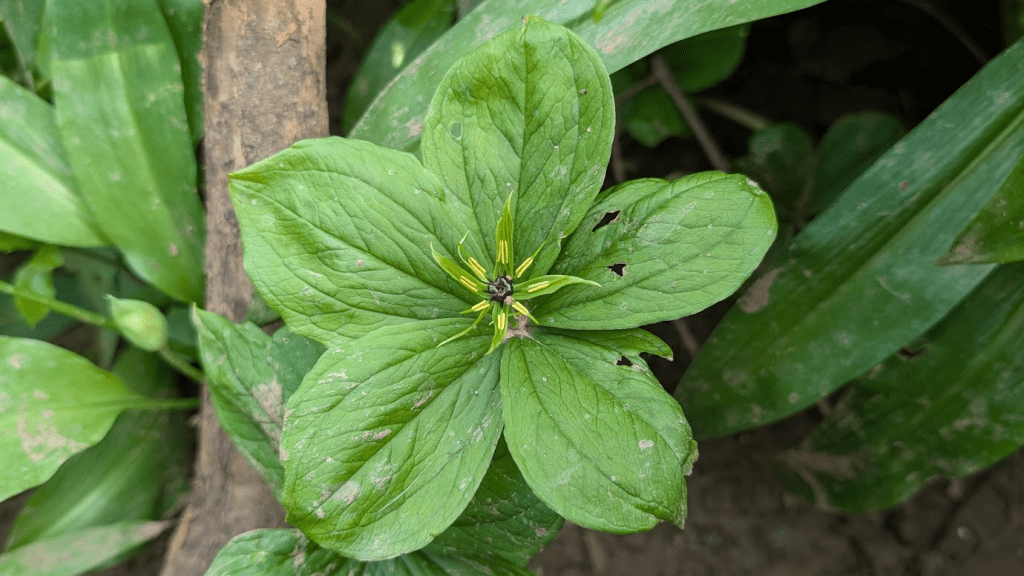
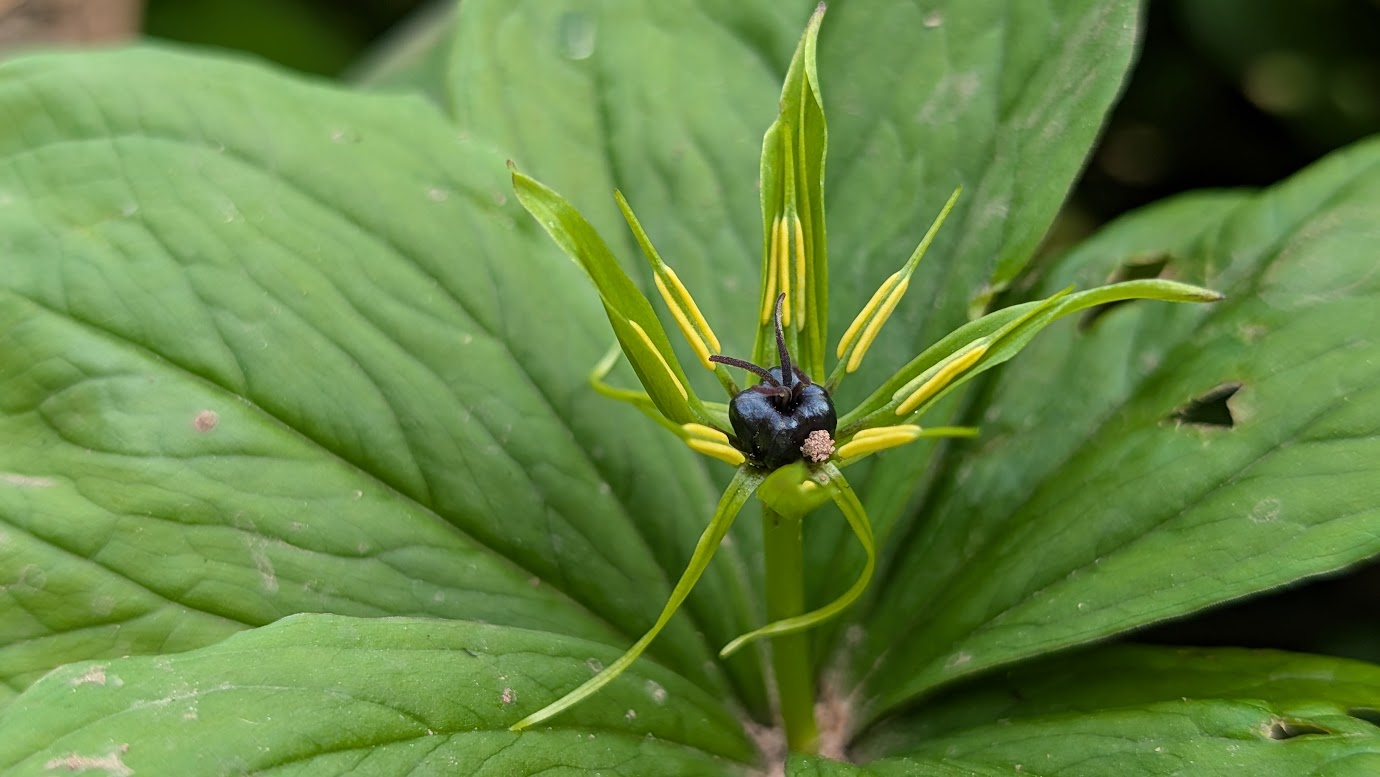
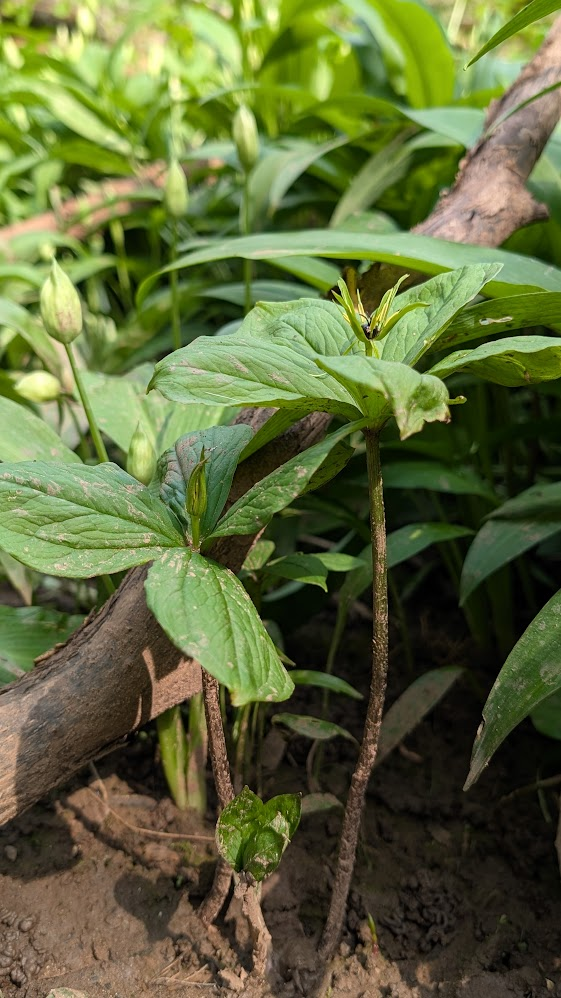
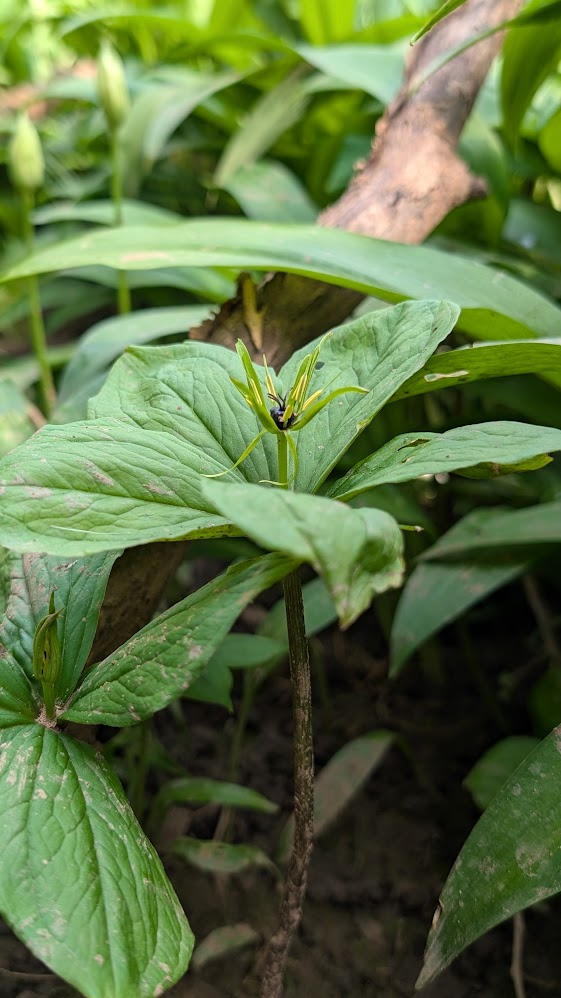
There are a few finds this week that I could feature, but I think my favourite was the herb paris Paris quadrifolia that was found during our flora group meeting on Saturday 26th April at Shrawley Woods at SO80576679.
Around ten plants were growing right on the footpath south of the Dick Brook, in a fairly open area with wild garlic Allium ursinum. It seemed to be enjoying the light recently fallen trees had allowed to reach the forest floor, but was precariously close to the footpath.
The plant photographed above was particularly interesting as the name Paris quadrifolia, roughly means ‘four foliate’ or four leaves, but this individual decided it wanted to have five leaves, so is it better referred to as Paris cinquifolia?
The List
Shrawley Woods
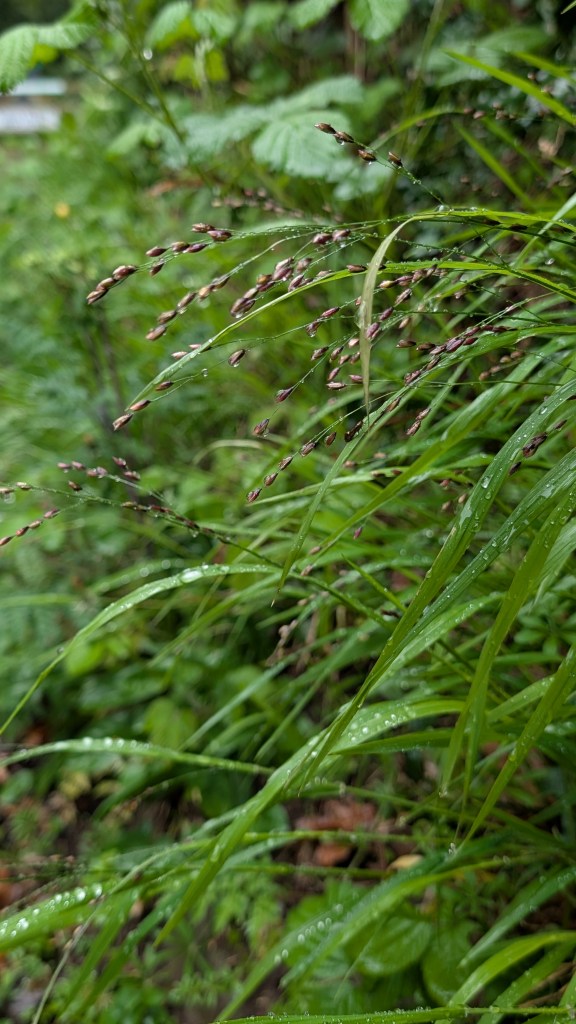
- Wood melick Melica uniflora. Shrawley Woods.
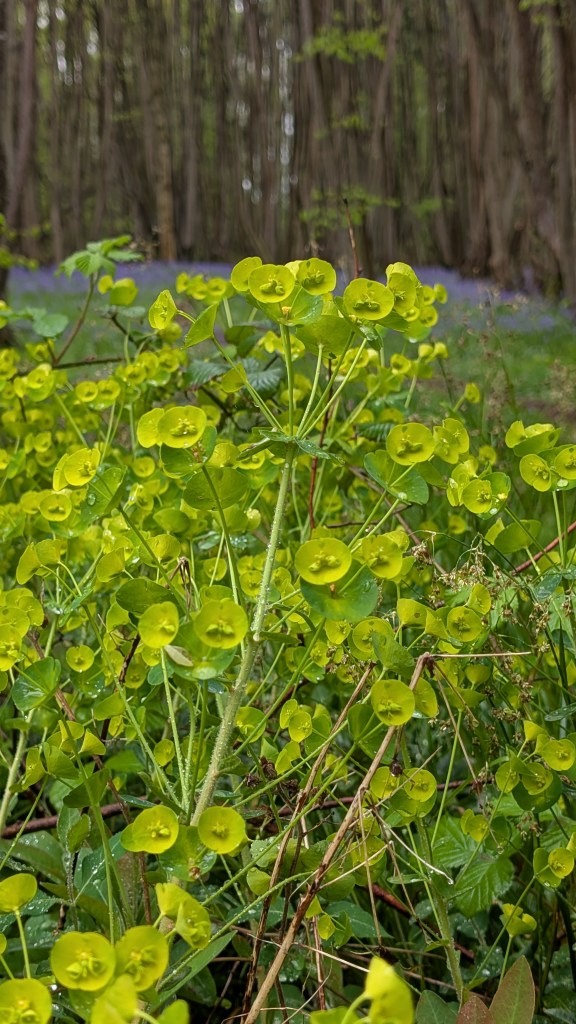
- Wood spurge Euphorbia amygdaloides. Shrawley Woods.
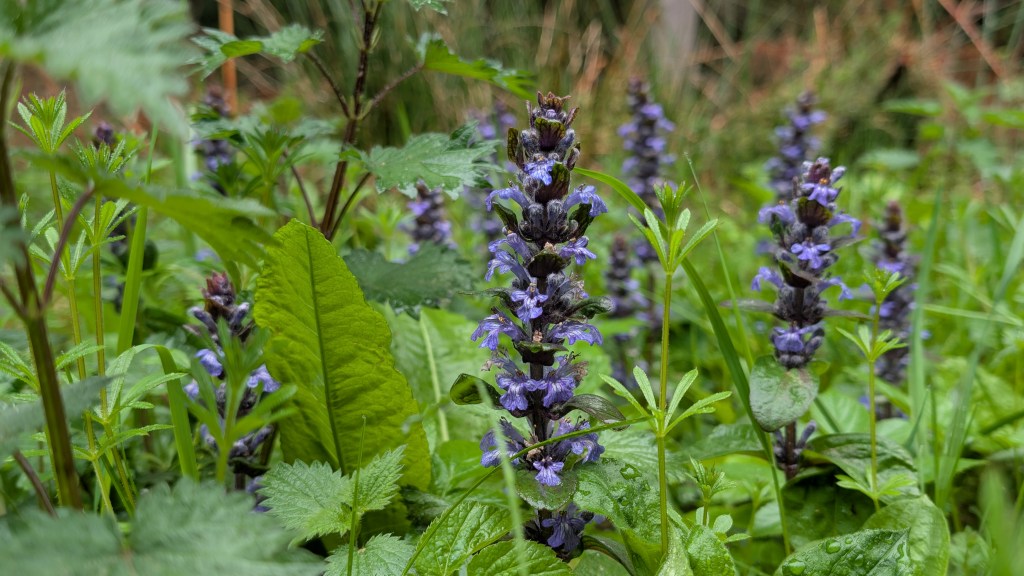
- Bugle Ajuga reptans. Shrawley Woods.
- Scaly male-fern Dryopteris affinis agg. Shrawley Woods.
- Moschatel Adoxa moschatellina. Shrawley Woods.
- Pendulous sedge Carex pendula. Shrawley Woods.
- Wood speedwell Veronica montana. Shrawley Woods.
- Herb Paris Paris quadrifolia. Shrawley Woods.
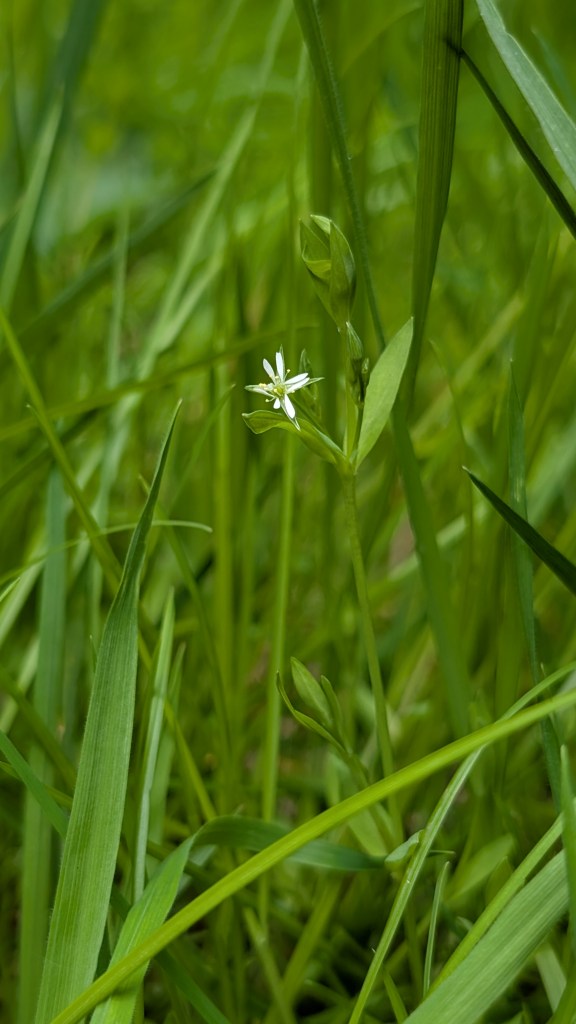
- Bog stitchwort Stellaria alsine. Damp ground, Shrawley Woods.
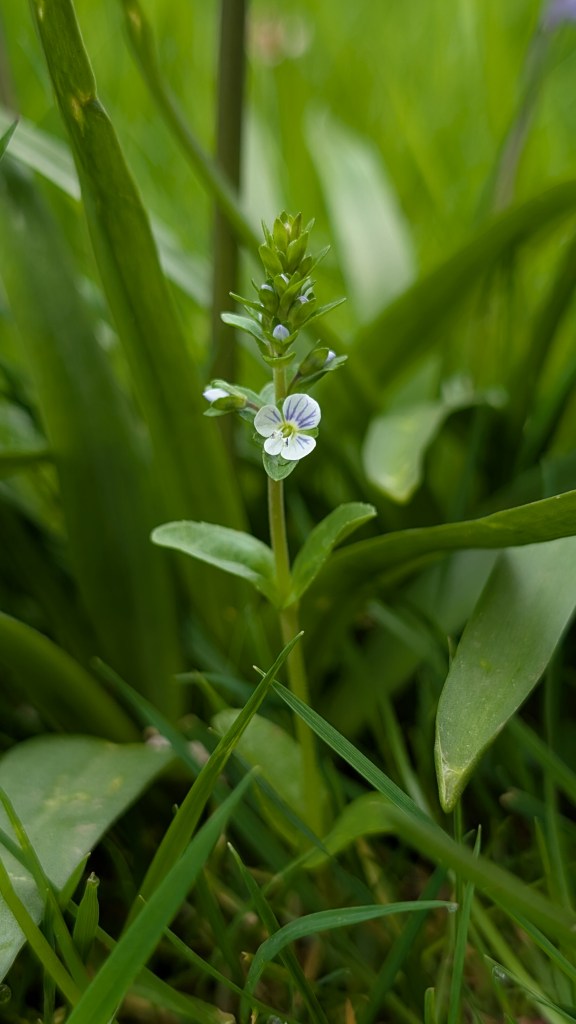
- Thyme-leaved speedwell Veronica serpyllifolia. Shrawley Woods.
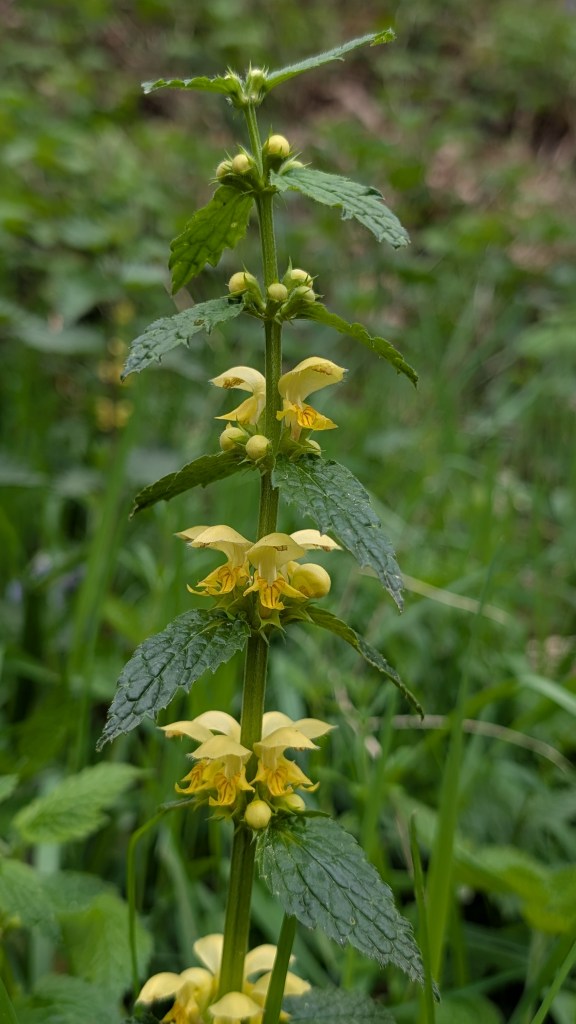
- Yellow archangel Lamium galeobdolon subsp. montanum. Shrawley Woods.
- Ramsons Allium ursinum. Shrawley Woods.
- Redcurrant Ribes rubrum. Abundant along the Dick Brook valley.
- Herb-Robert Geranium robertianum. Shrawley Woods.
- Toothwort Lathraea squamaria. Dick Brook area.
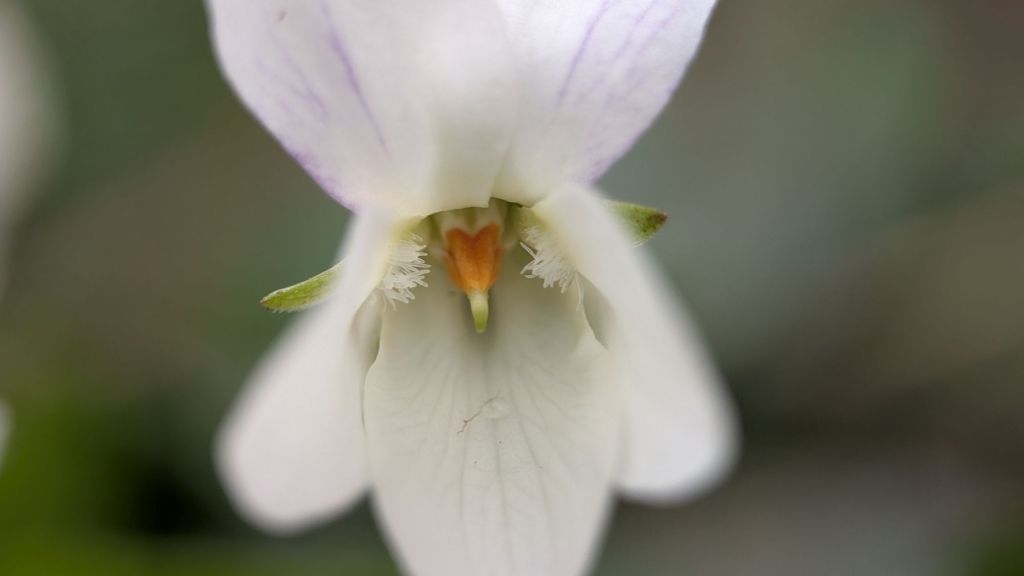
- A curious, robust violet. Growing near Viola riviniana and V. reichenbachiana. Shrawley Woods.
Other sites
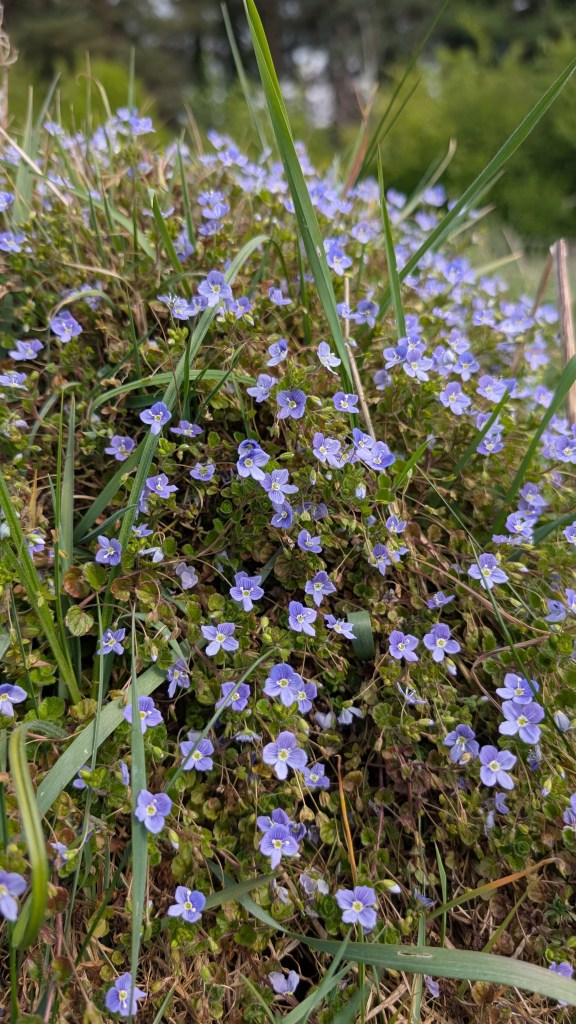
- Slender speedwell Veronica filiformis. Stratford Park.
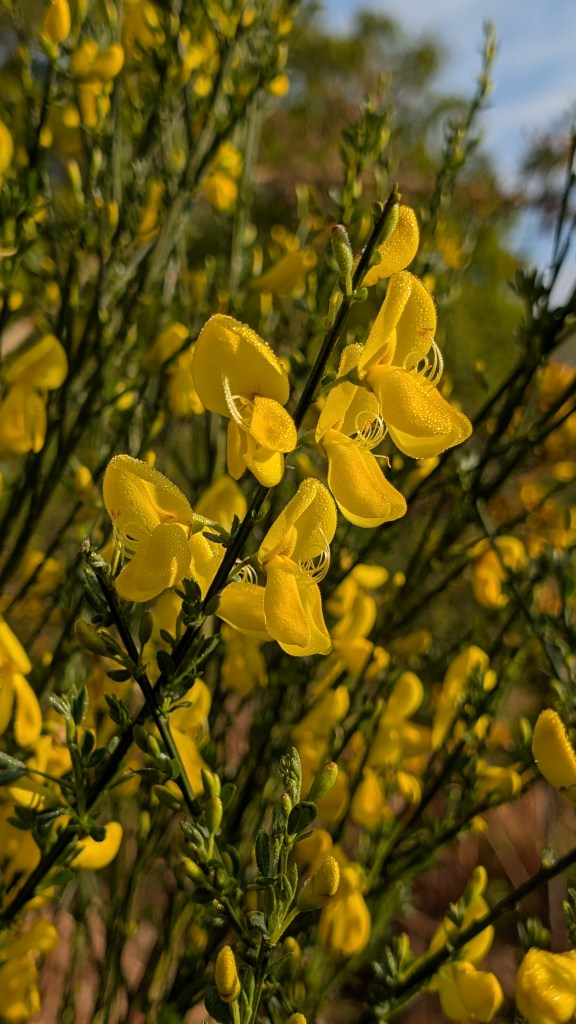
- Broom Cytisus scoparius. Hartlebury Common.
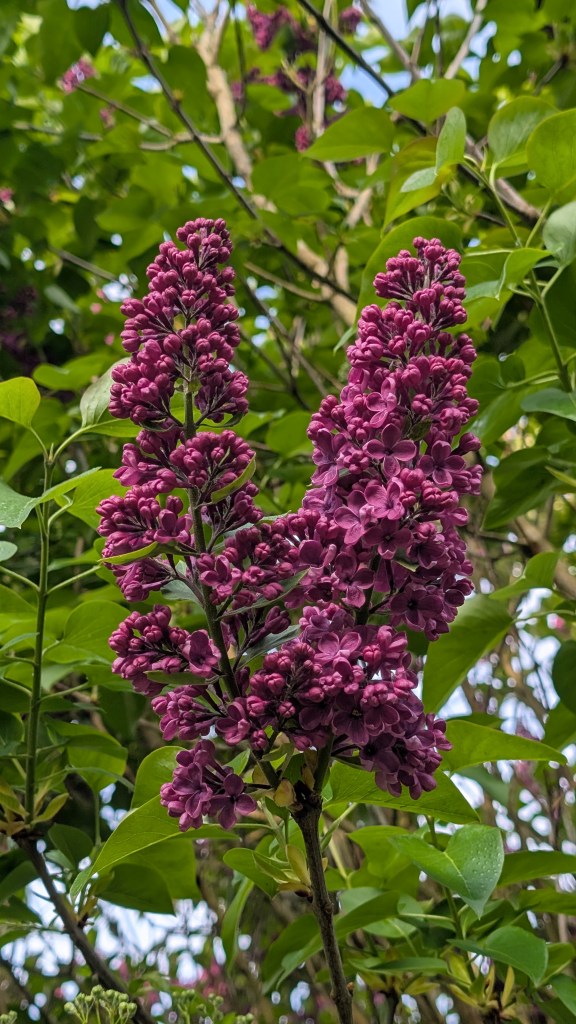
- Lilac Syringa vulgaris. Hartlebury Common.
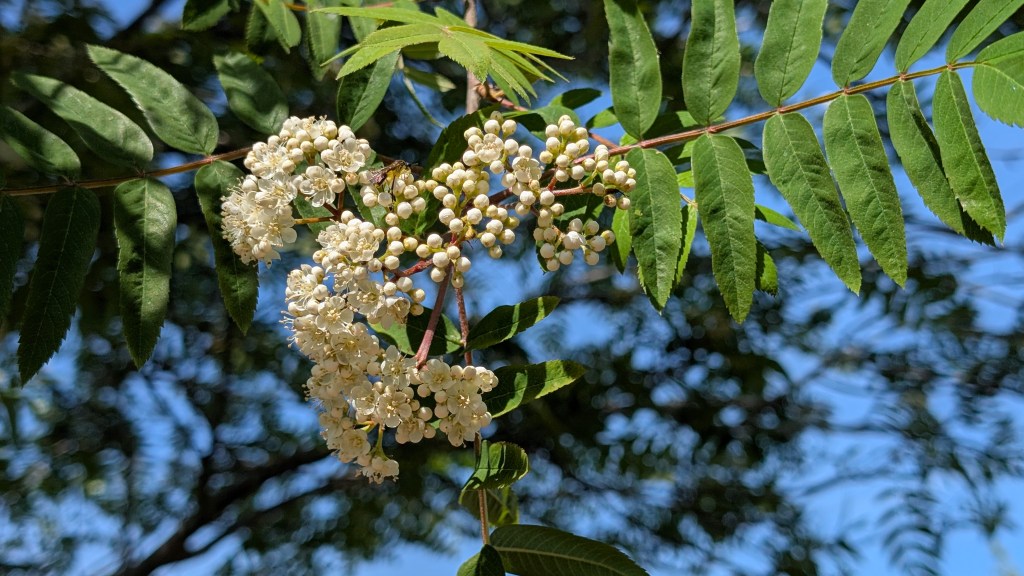
- Rowan Sorbus aucuparia. Hartlebury Common.
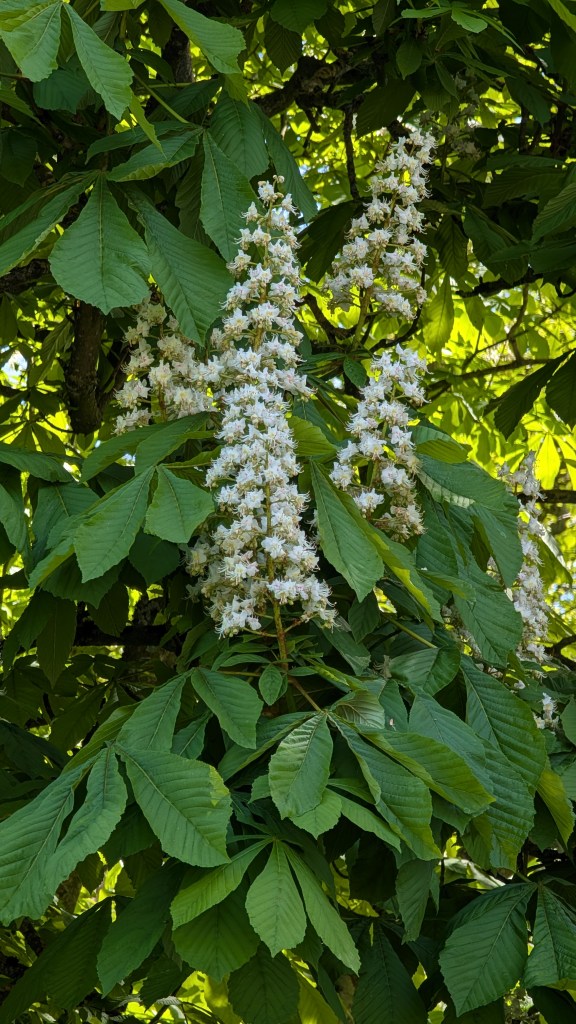
- Horse chestnut Aesculus hippocastanum. Hartlebury Castle.
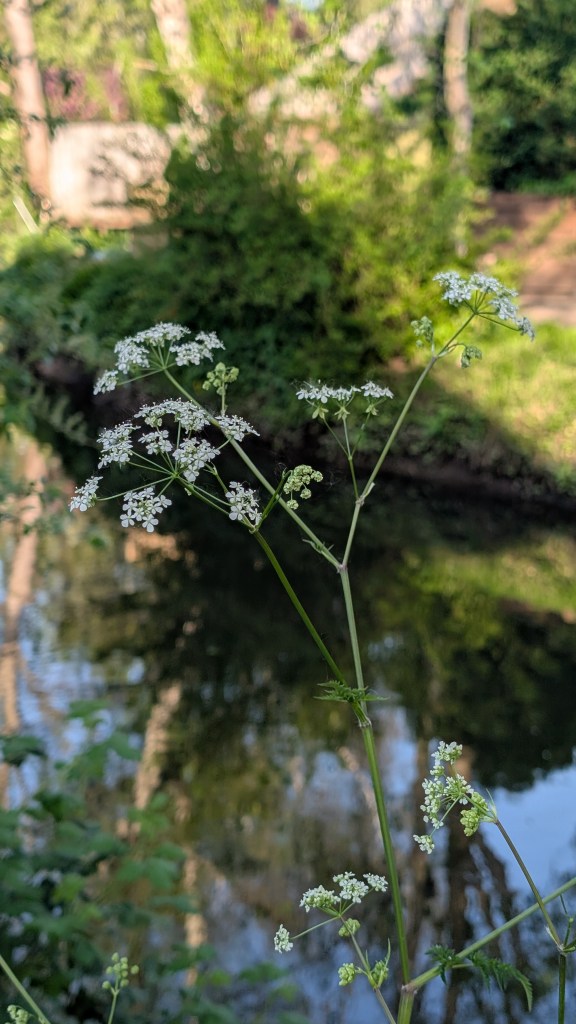
- Cow parsley Anthriscus sylvestris. Mitton Marsh.
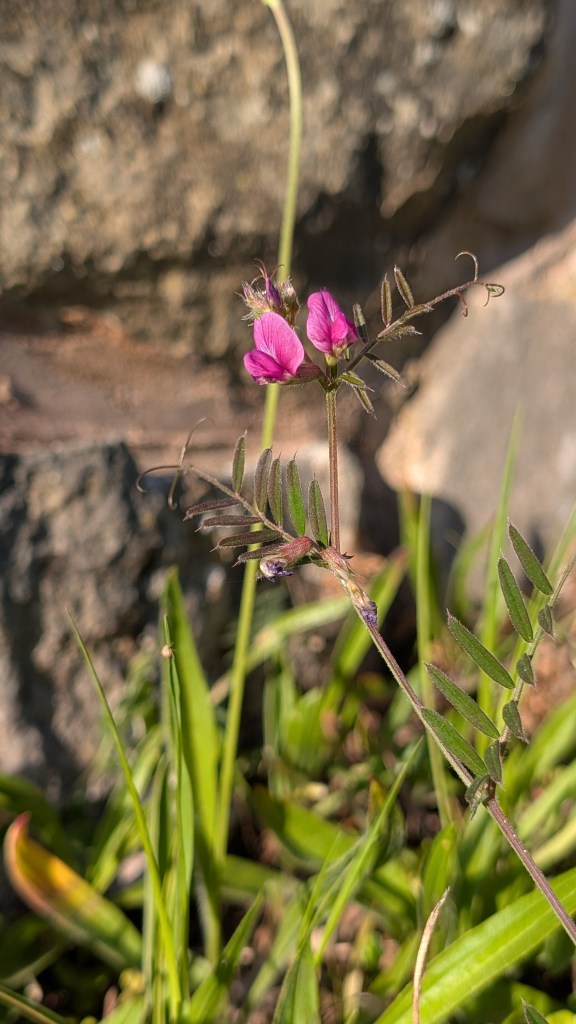
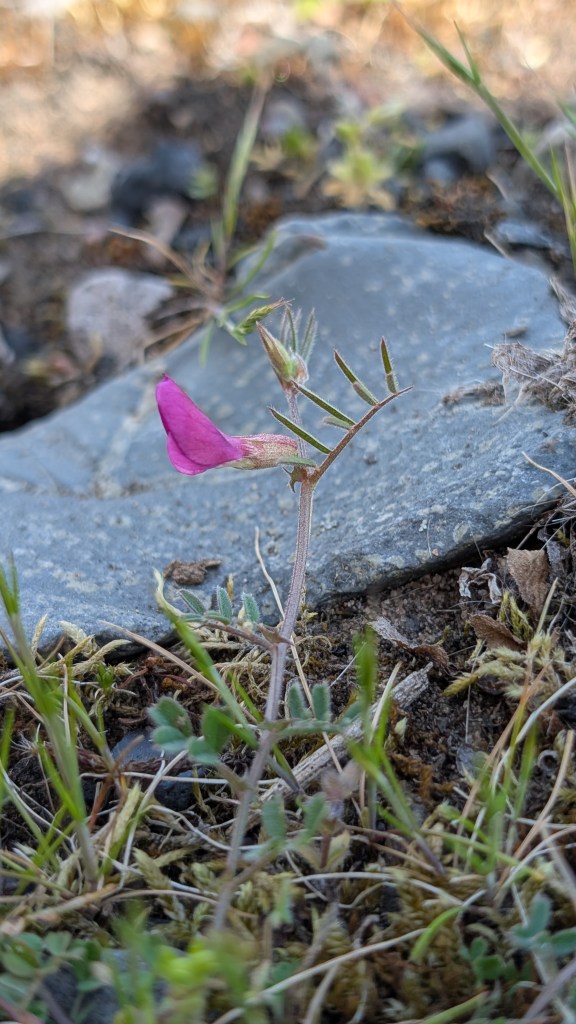
- Common vetch Vicia sativa. Wilden Lane.
- Common vetch Vicia sativa. Hartlebury Common.
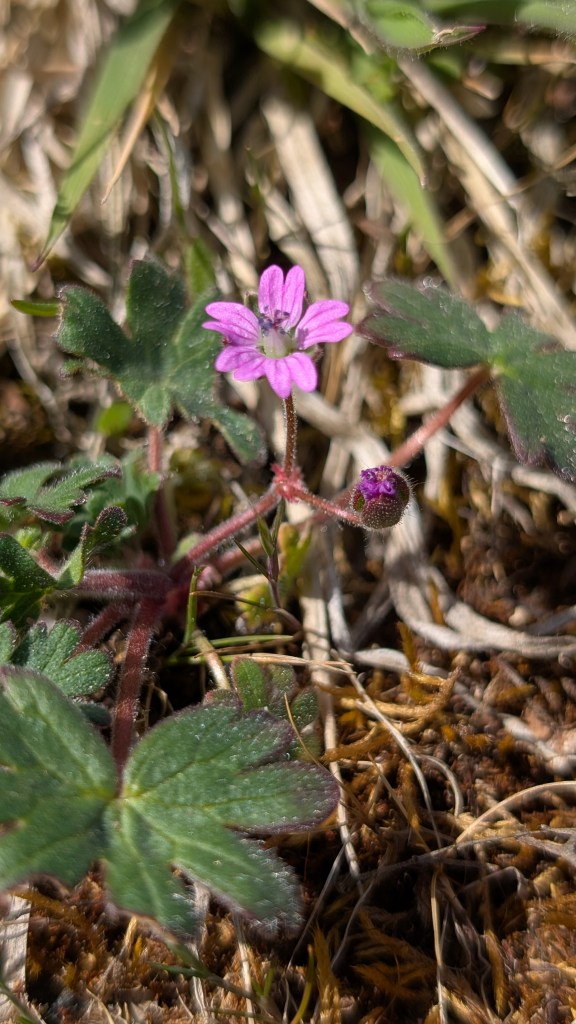
- Geranium sp. Hartlebury Common. (Query.)
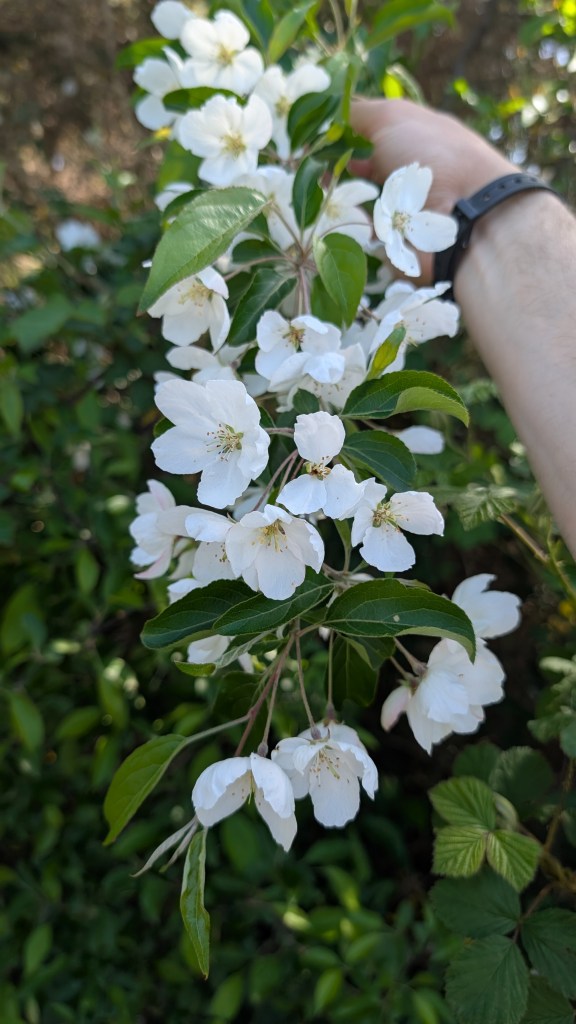
- Malus sp. Hartlebury Common. (Query.)
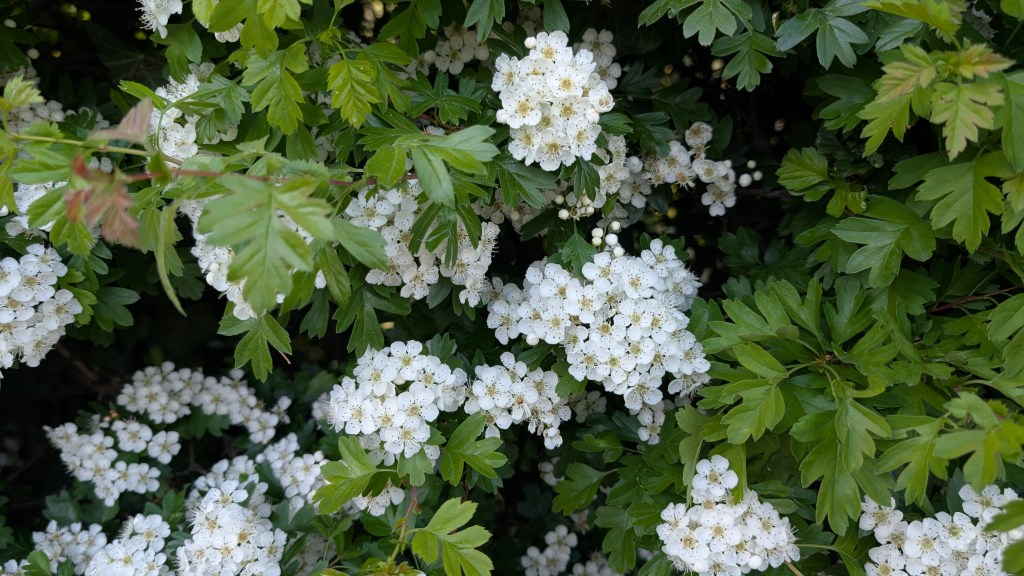
- Hawthorn Crataegus monogyna blossom. Various hedgerows.
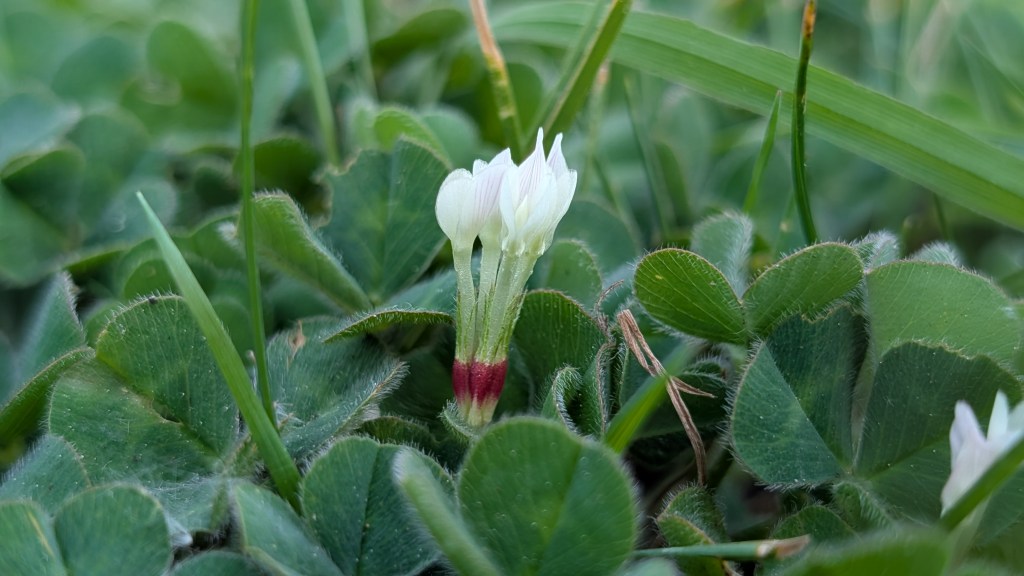
- Subterranean clover Trifolium subterraneum. Wilden Lane.
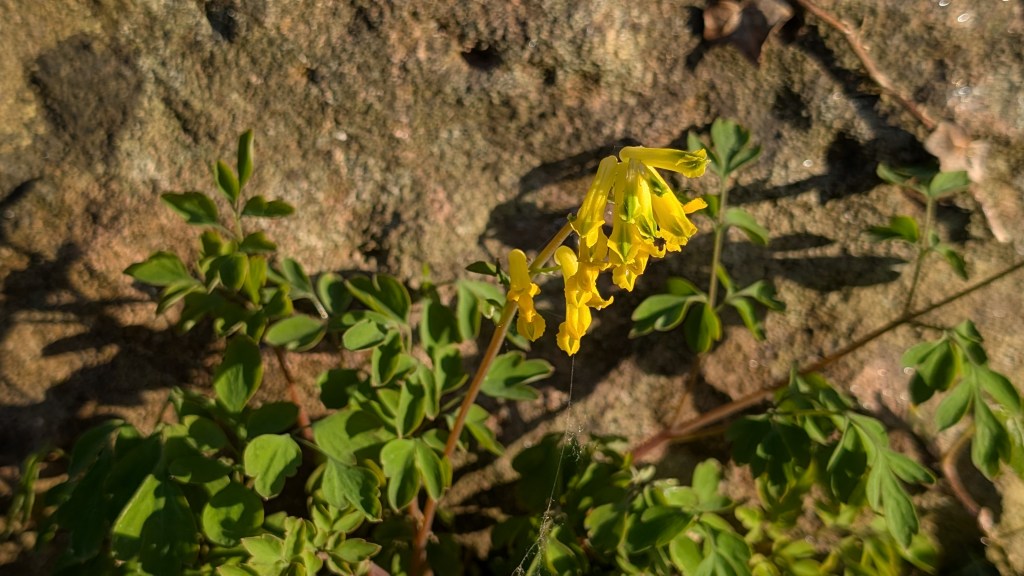
- Yellow corydalis Pseudofumaria lutea. Wilden.
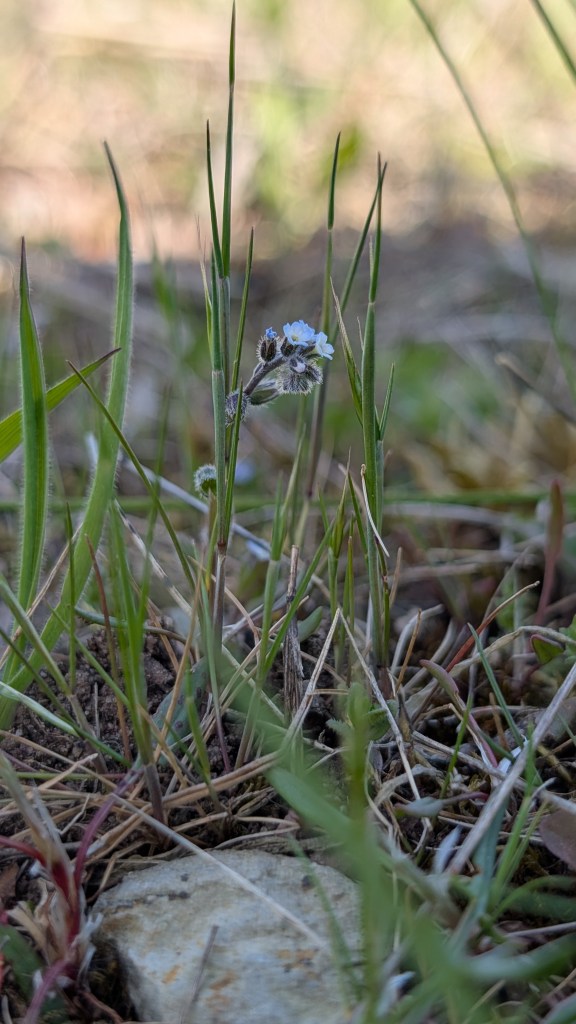
- Myosotis sp. (Query.) Wilden area.
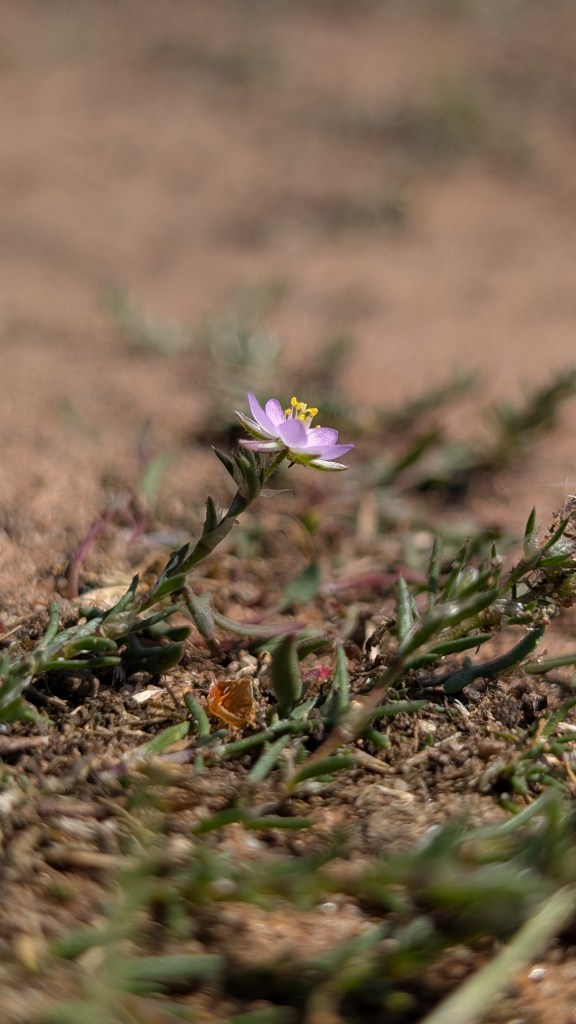
- Sand spurrey Spergularia rubra. Hartlebury Common.
Queries
- What is the strange large violet species? Is it a hybrid, or a cultivar perhaps?
- How does Vicia lathyroides differ from V. sativa?
- What is the Geranium, is it G. pusillum?
- What was the large-flowered Malus?
- Is the Myosotis ramosissima or discolor?

 Tom the Botanist
Leave a comment