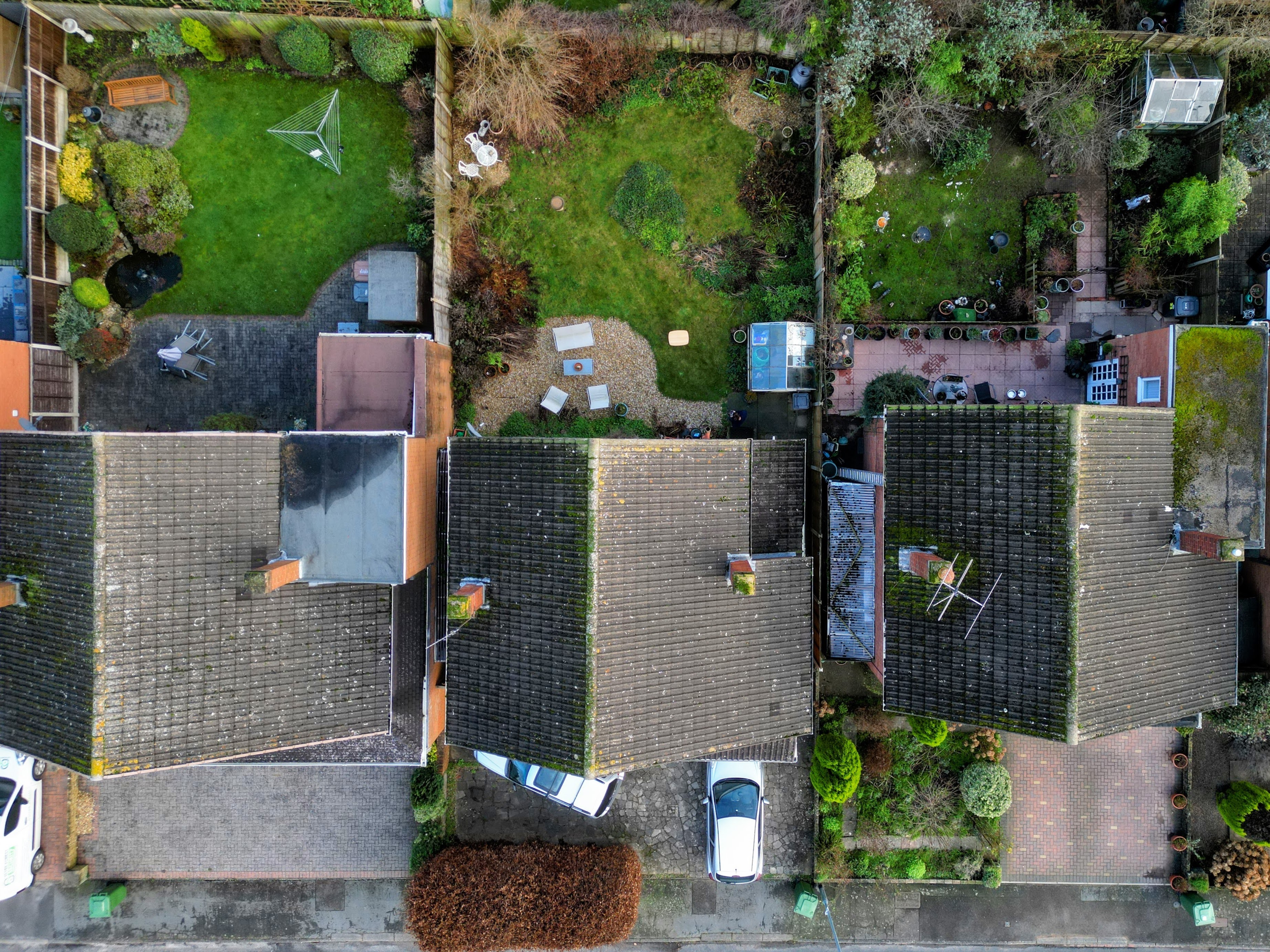
As we have now been recording observations of garden birds for 12 weeks, I thought it would be the perfect time to summarise our observations made during our first few months living on The Grove.
Casual Records
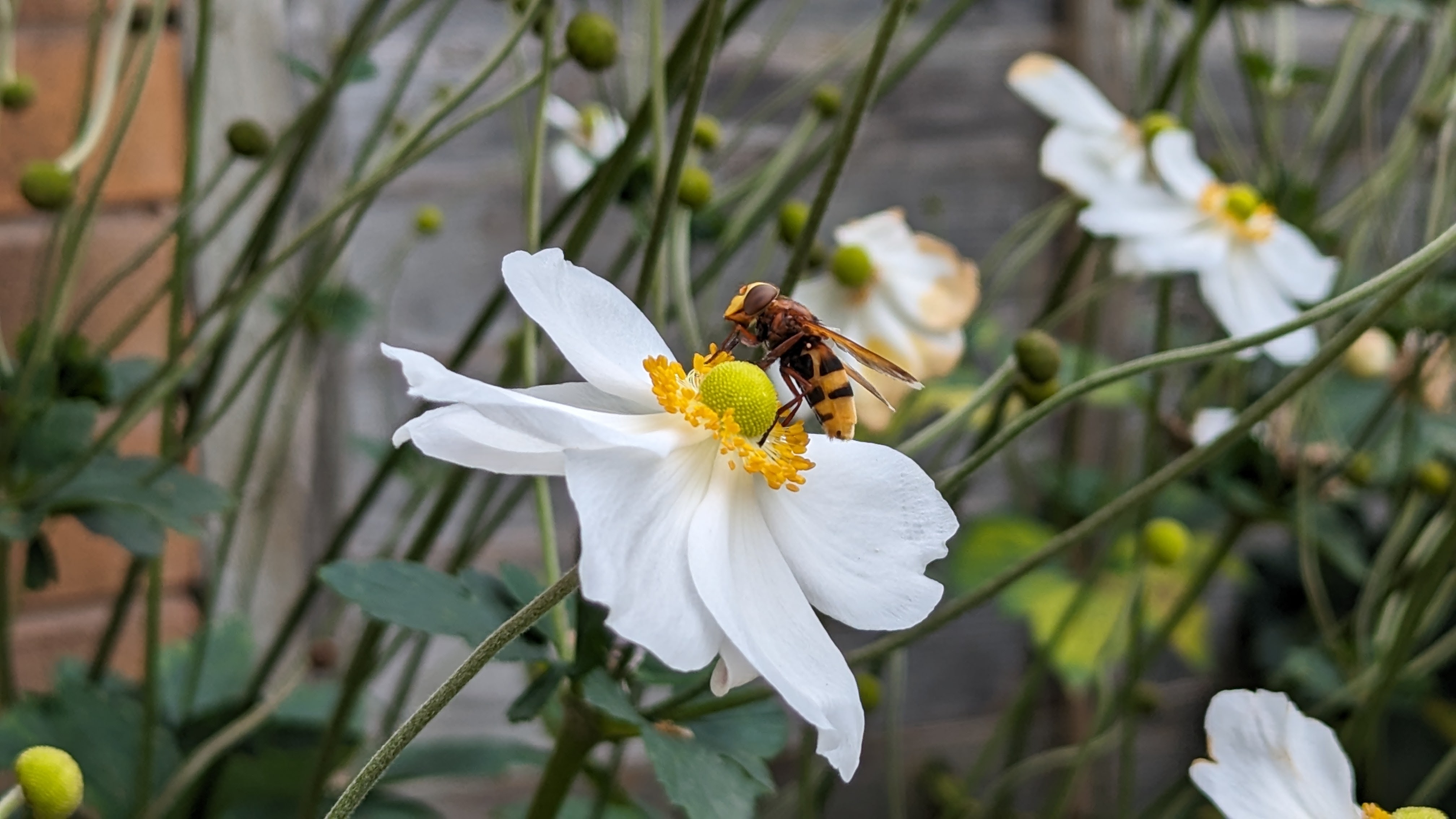
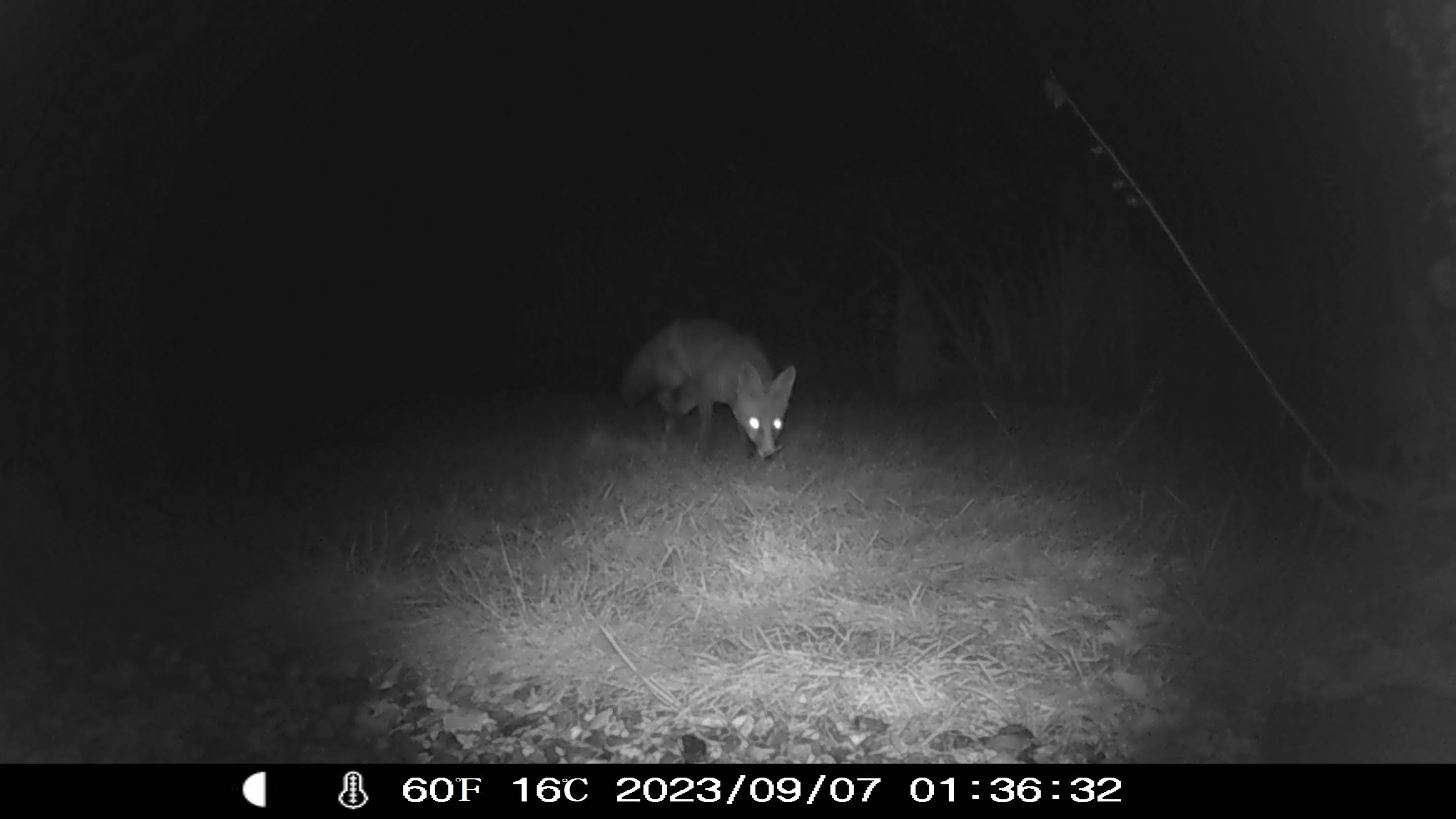
Whilst moving in, we made exciting initial discoveries such as; a petrified Newt in the garage; the Lesser Stag Beetle outside the lean-to (is this where wood has been stored in the past?) and we used the camera trap to find a bushy-tailed Fox passing through the garden. But the defining characteristic of the new house is the abundance of birds, especially the host of House Sparrow that quietly share our home with us. We also observed a couple of bats (most likely pipistrelles) at the end of the summer, dive-bombing the garden for insects and a Hornet Mimic Hoverfly enjoying the Japanese Anemones. We have also had a single grey squirrel passing through the garden on the same route, but it don’t seem to bother much with the bird feeders. Also, whilst making turf inversions we found some Yellow Meadow Ants in the soil!
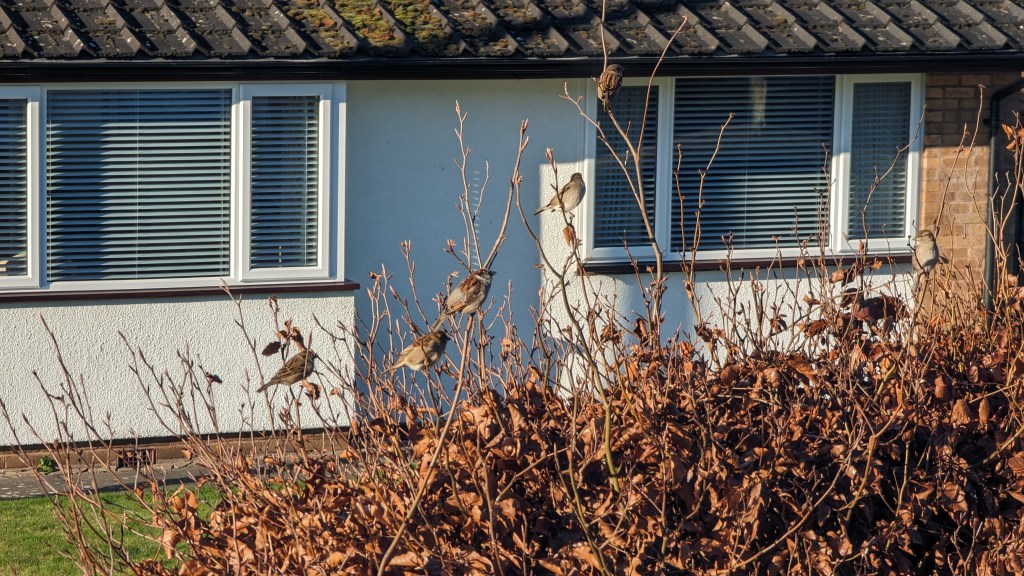
AboveLeft: Hornet Mimic Hoverfly (2nd October 2023) AboveRight: House Sparrows defrosting on the Beech hedge (18th January 2024)Above: The Fox was first recorded on the 7th of September 2023. Visiting frequency is currently unknown.
Bird Recording: Weeks 1-12
Methods
We put the bird feeder up around the 22nd of October (Sunflower hearts, followed by Peckish ‘Extra Goodness Energy Balls’; Peckish ‘Peanuts’ and Nyjer Seed from 20.01.24 only).
Started recording the bird species on the 30th of October.
All species that were observed visiting within a calendar week were recorded on a casual basis (presence & absence).
A ‘visit’ is defined as a bird landing within the back garden limits, either on the fence or within and having been seen by either Lauren or I.
Abundance ‘Grove Style’ DAFOR
Percentage of Weeks
Dominant
90-100
Abundant
70-89
Frequent
40-69
Occasional
15-39
Rare
1-14
Abundance classes ‘Grove Style’
Results
Overall we have recorded 19 unique bird species over a twelve week period from October 30th 2023 to January 21st 2024.
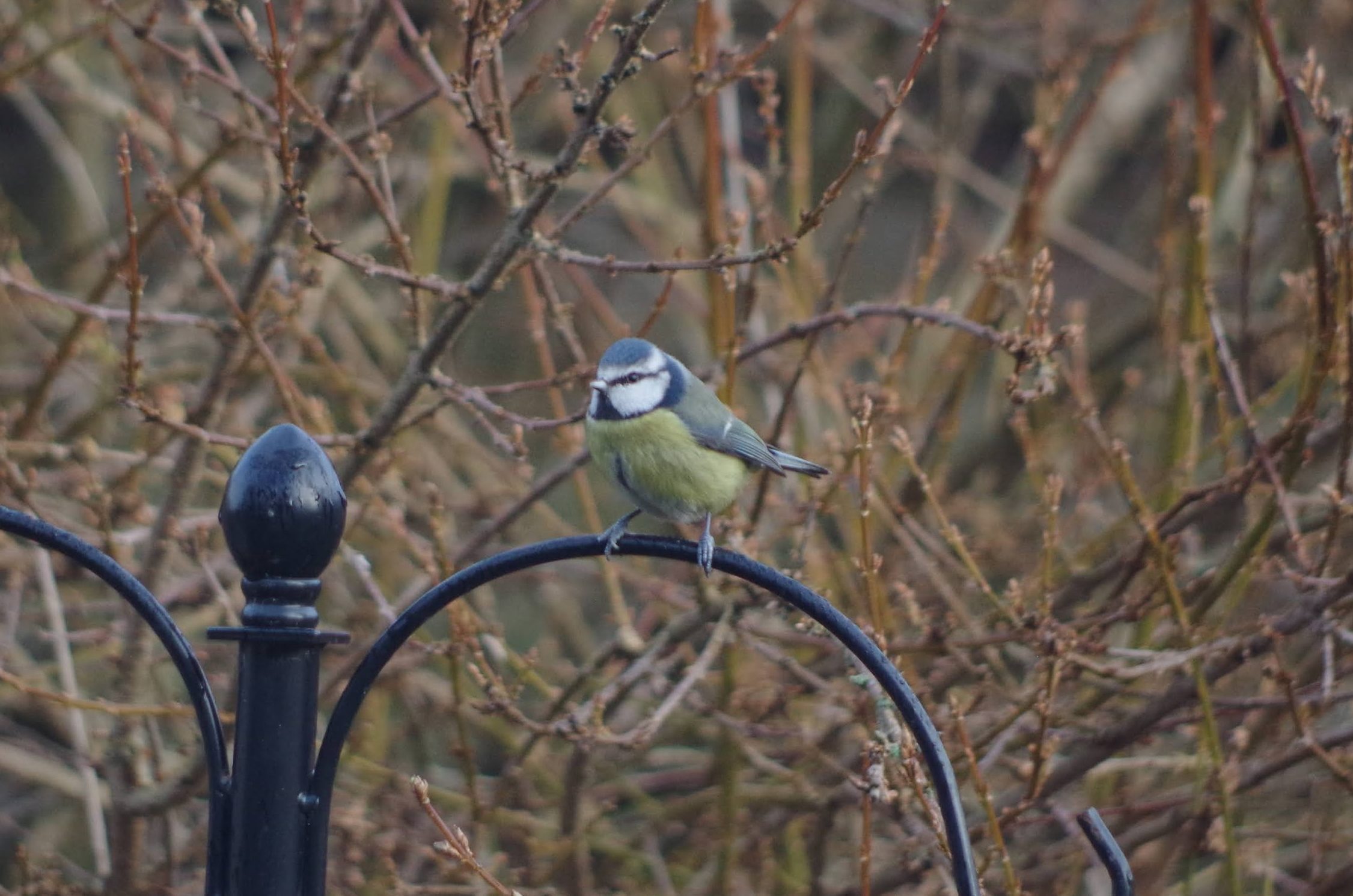
The dominant species were Blue tit, Blackbird, Wood Pigeon and Robin; observed in 11 to 12 weeks out of 12. Abundant species were Magpie, House Sparrow, Starling and Great tit; being observed on 9 to 10 weeks out of 12.
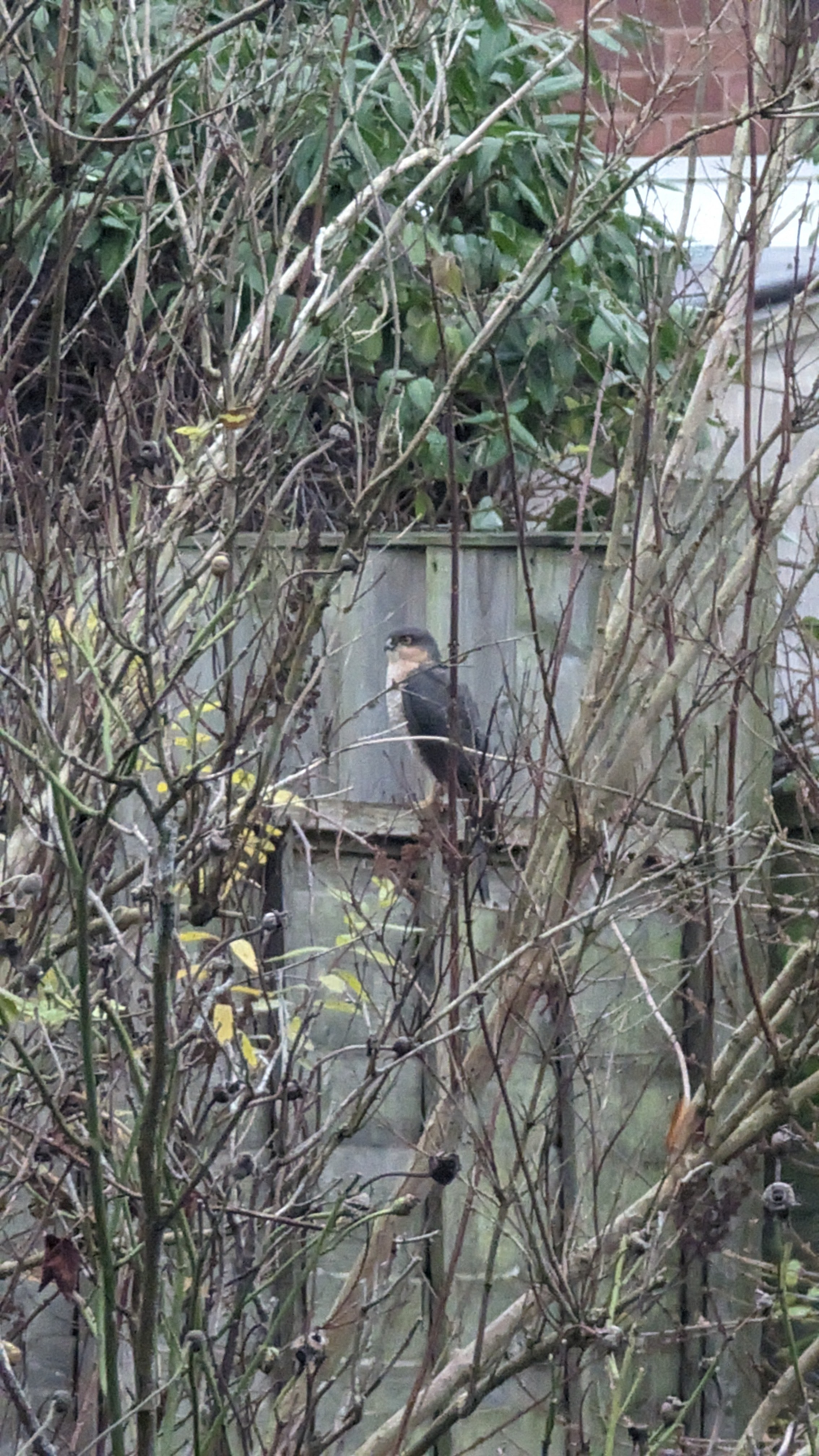
Rare visiters to the garden included a Sparrowhawk on the 14th of December and a Redwing that stopped breifly to rest in the Forsythia on the 19th of January 2024.
Above: The Sparrowhawk perched on the northern fence as the garden fell silent.
Ubiquitous. Almost always in the garden, either on the feeder or waiting patiently for larger birds to finish eating. They have checked out the bird box, but not yet started nesting. Recently they have started to make use of the bird bath and have also been ground feeding beneath the feeder.
Favourite Food
Peckish ‘Extra Goodness’ Balls.
Blackbird
Abundance
Dominant – Observed every week.
Behavior
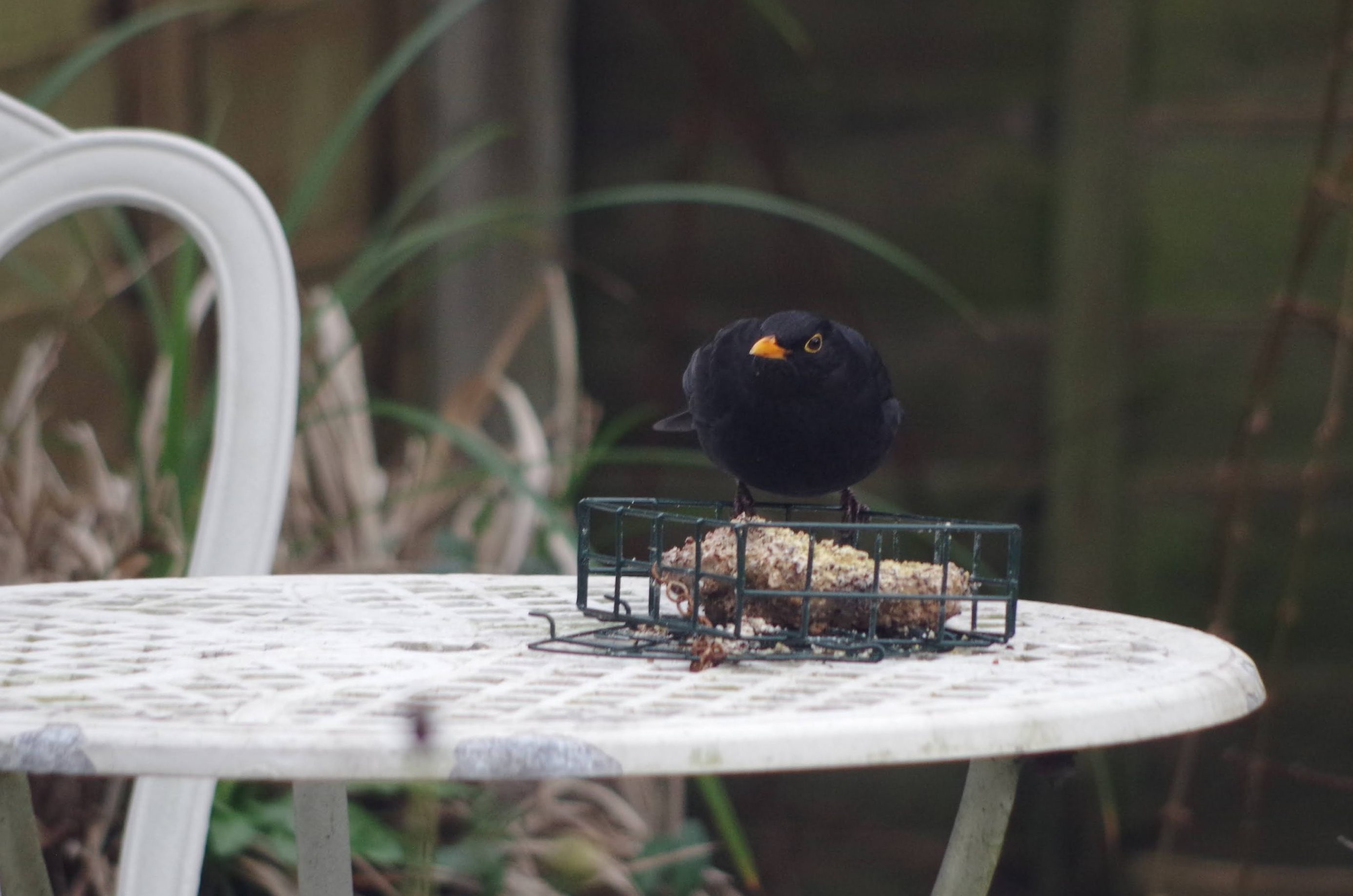
Frisky. Often flying into the garden at high speed and making use of the entry and lean-to, flying between the front and back gardens. Have a habit of going around in a group of three, tolerating each other but we’re not sure if they’re friend of foe. Frequently use the bird bath for drinking.
Favourite Food
They have been making use of the suet block on the garden table, but devoured sliced apple and bread when scattered across the garden.
‘Who wants a piece of me?’
Also see blackbirds banging on lean-to roof.
Wood Pigeon
Abundance
Dominant – Observed every week.
Behavior
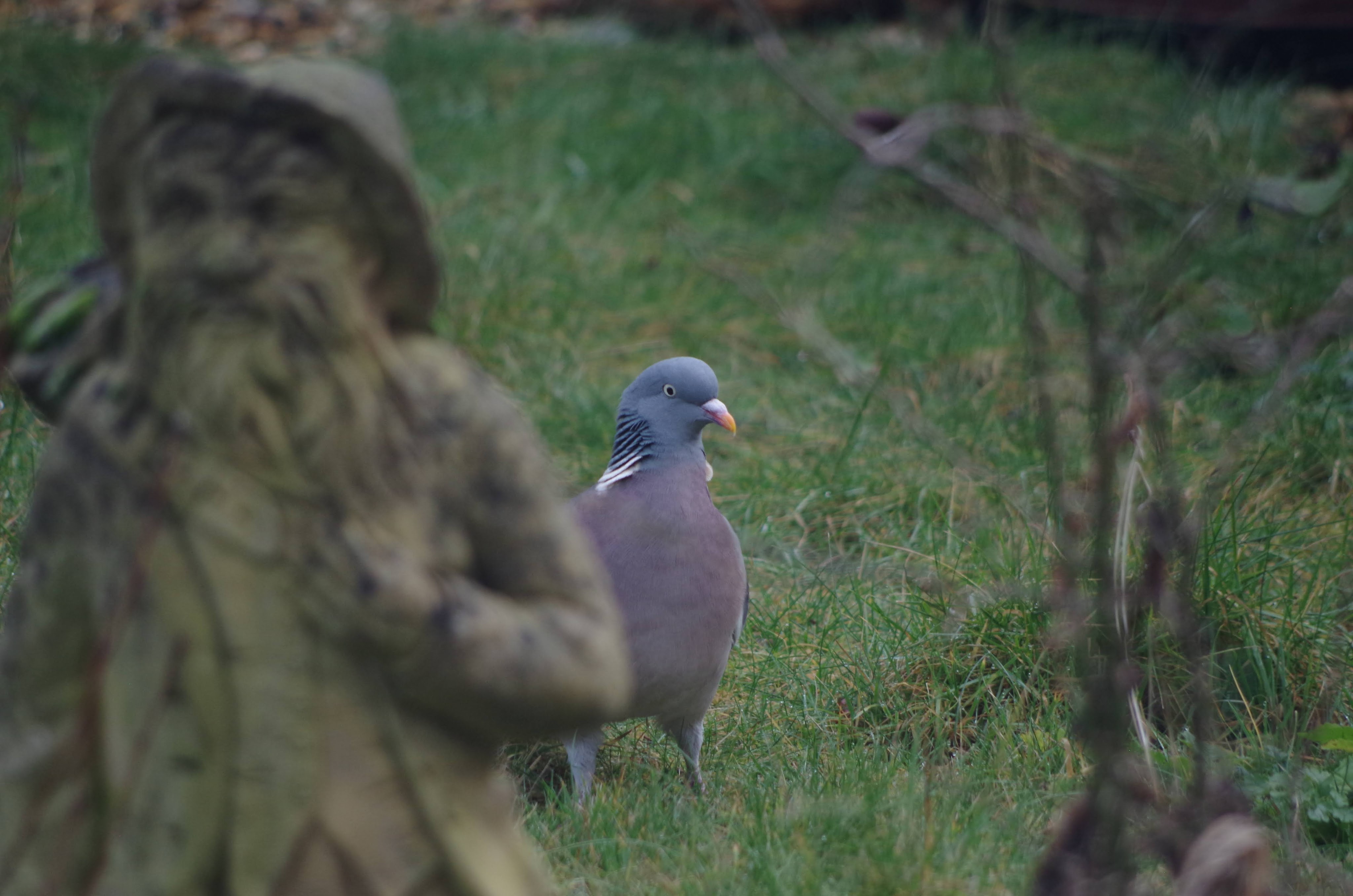
Docile. Almost always sitting on the roof tops opposite and flying clumsily into the garden, and into our windows TWICE leaving pigeon shaped marks of despair.
Favourite Food
Bread when scattered.
‘‘Nice windows, be a shame if I FLEW INTO THEM‘
Robin
Abundance
Dominant – Observed on 11 out of 12 weeks.
Behavior
Territorial, we often see more than one chasing each other. Frequently seen rummaging in the Japanese Anemones.
Favourite Food
Occasionally use the sunflower feeder, but most frequently seen feeding on the sunflower windowbox feeder at the front of the house.
Magpie
Abundance
Abundant – Observed on 10 out of 12 weeks.
Behavior
They sometimes grip onto the fat balls and peck them until chunks fall onto the floor. Use the birdbath too. We witnessed one collecting as many pieces of bread as possible in its beak before making a run for it.
Favourite Food
Bread; Peckish Energy Balls
House Sparrow
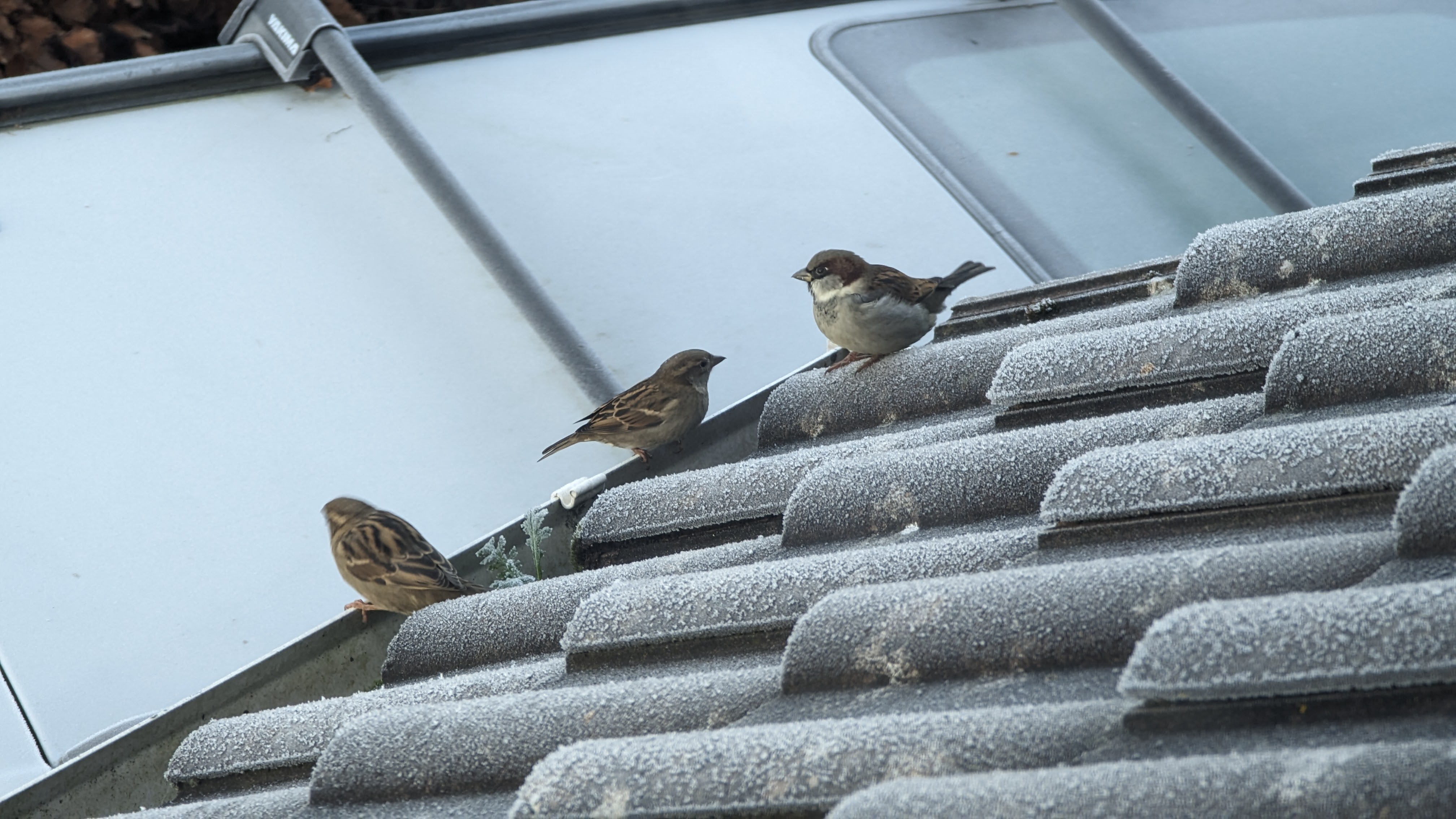
Above: House Sparrows emerging from the porch roof tiles on a frosty morning.
Abundance
Abundant – Observed on 9 out of 12 weeks.
Behavior
We have probably observed House Sparrow on every week, but just not in the back garden. We have the honour of not only sharing a roof with these brown fluff balls, but we get to share both rain or shine with them. A sweet little song is never too far away and a little morning scratch blesses our ears most mornings. Although they offer no money to stay at 31, we are paid with their ever comforting presence and sun kissed flecks – L. Havins. They frequent the beech hedge in the front garden and have a tendency to sit on the twiggy outgrowths at the top.
Favourite Food
We’re not entirely sure about this – good question… (Do we need to put out a bird table?). Have a video of them on the sunflower hearts on the 12th of November 2023.
Starling
Abundance
Abundant – Observed on 9 out of 12 weeks.
Behavior
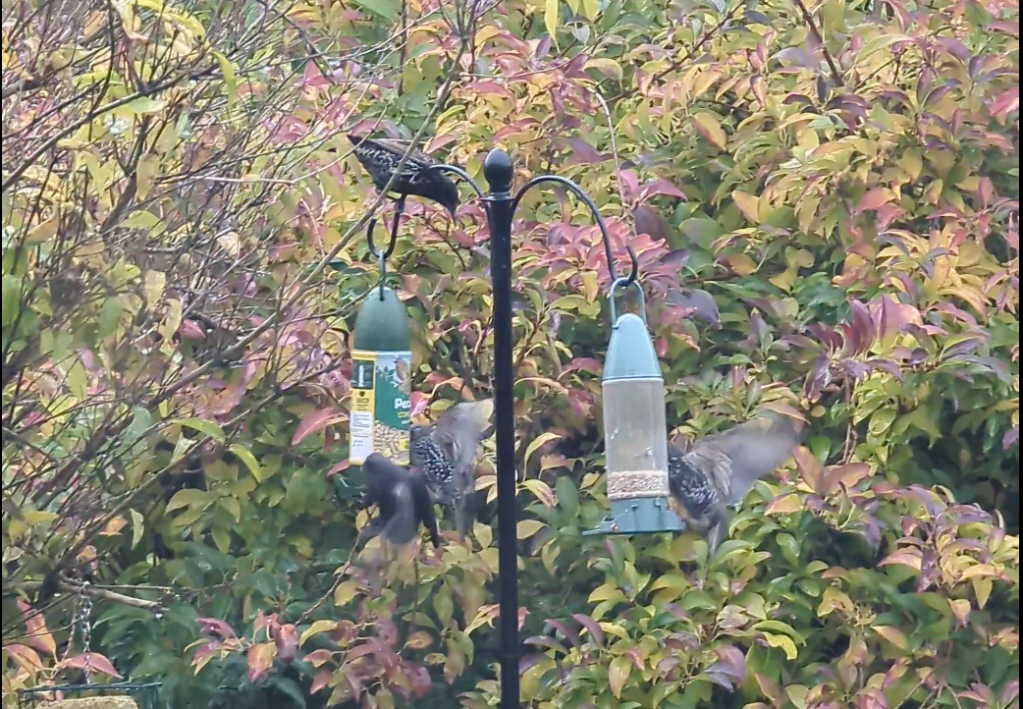
One or two birds are occasionally seen in the garden, however on November 12th, four birds descended onto the Peckish nuggets, raided the entire feeder, had a bath and then departed. Barbaric!
Favourite Food
Peckish Energy Balls; Peckish Suet Nuggets
Above: A still from a video on the 12th of November, showing four Starlings raiding the Peckish suit nugget feeder.
Great Tit
Abundance
Abundant – Observed on 9 out of 12 weeks.
Behavior
We didnt observe Great Tits until week four but after that they were a constant species in the garden. They are happy on the energy balls and frequently use the bird bath.
Favourite Food
Peckish Energy Balls; Sunflower hearts
Dunnock
Abundance
Frequent – Observed on 7 out of 12 weeks.
Behavior
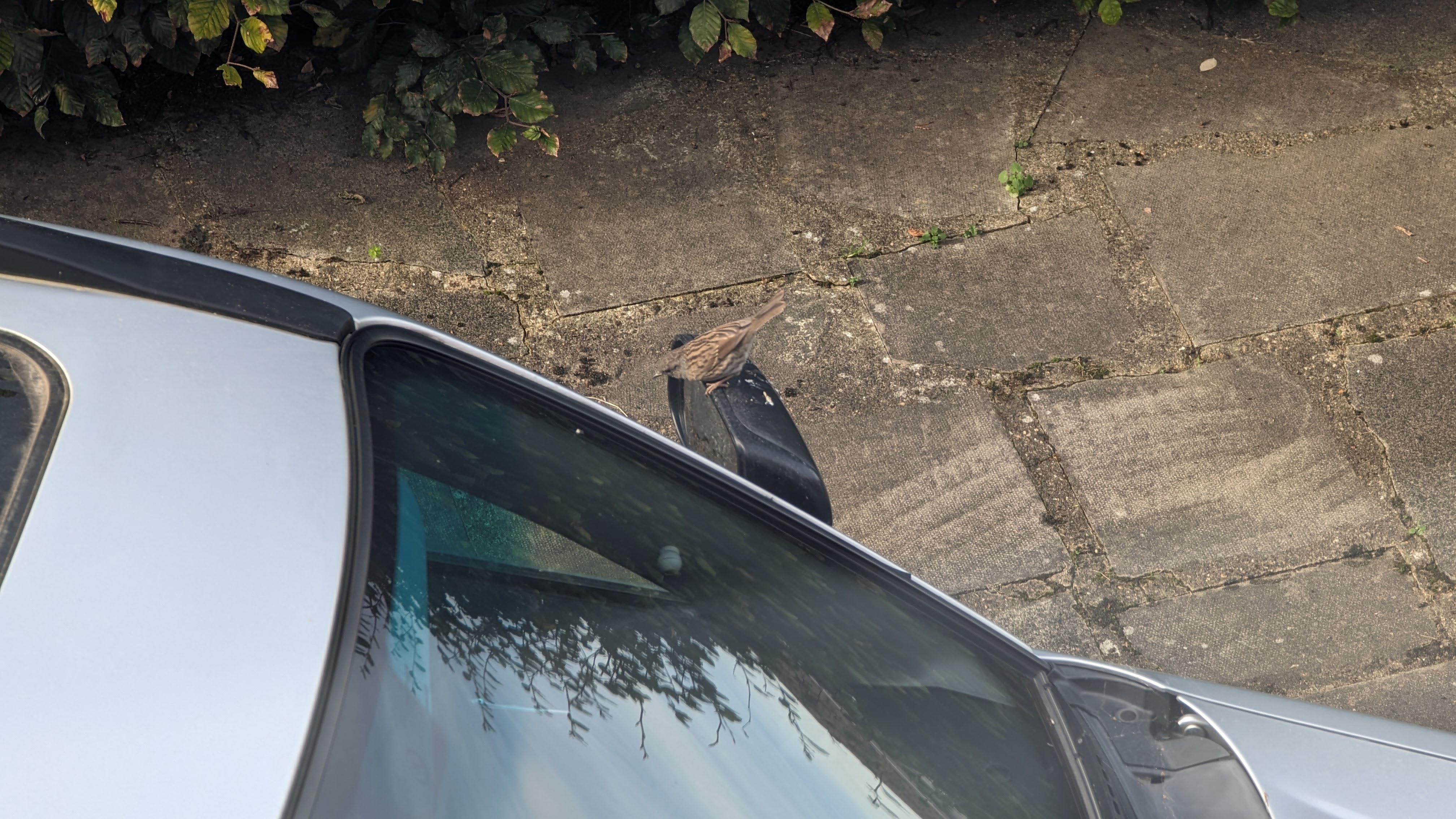
Often seen in the front garden picking insects off the cars and fighting with its reflection in car wing mirrors. Captured once on our animal camera, rummaging before approaching the camera underneath the Hydranga for a little nosey at the new device.
Favourite Food
Unknown.
Above: The Dunnock is often seen being acting territorial, by pecking at its reflection in my car wing mirror.
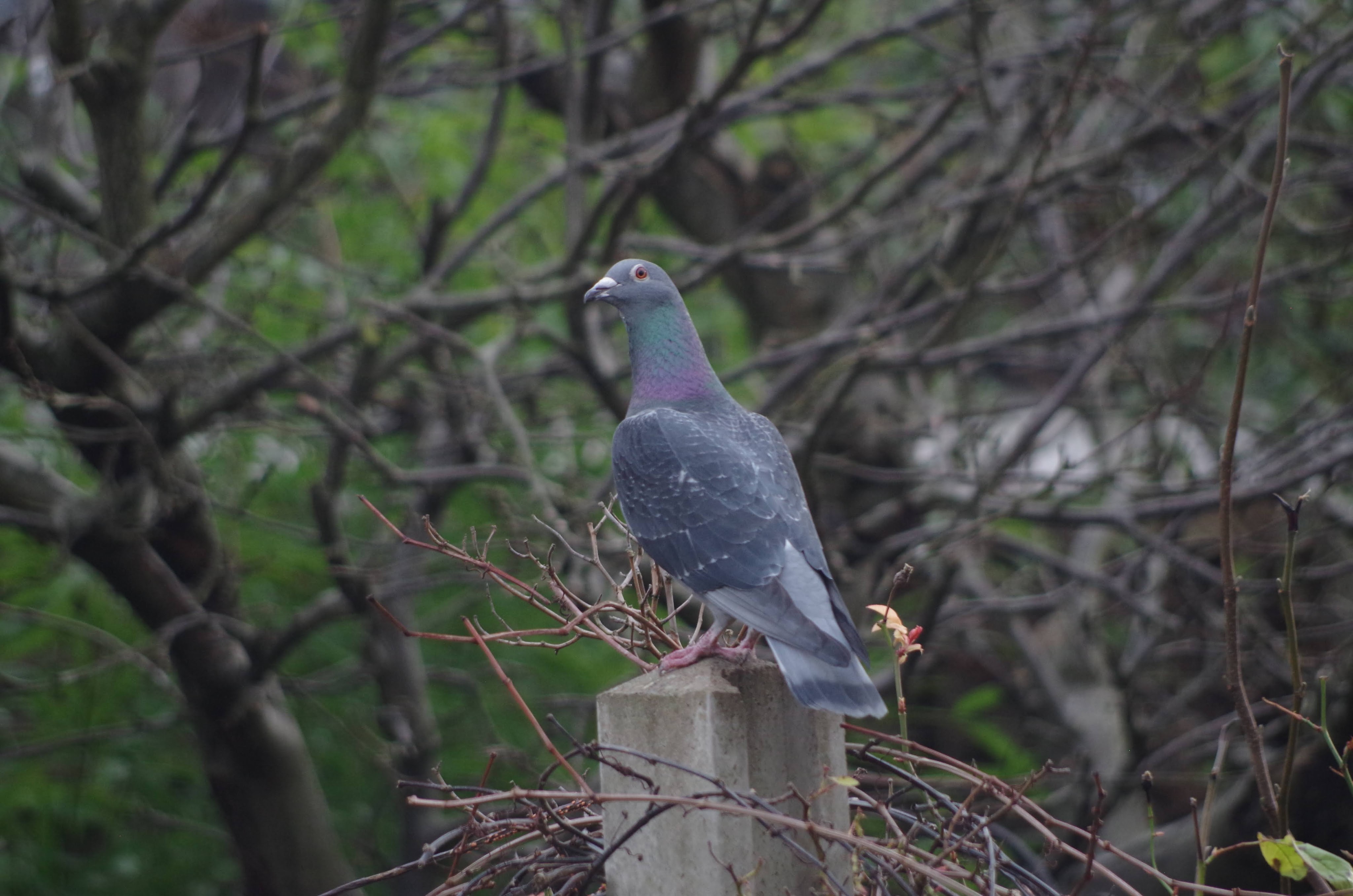
Feral Pigeon
Abundance
Frequent – Observed on 7 out of 12 weeks.
Behavior
Sometimes we see a large group of these ill-treated pigeons flying together so assume that garden visitors are individuals from this group? Mostly visit by landing on the fences and having a mooch on the grass.
Favourite Food
Bread, bird feeder scraps.
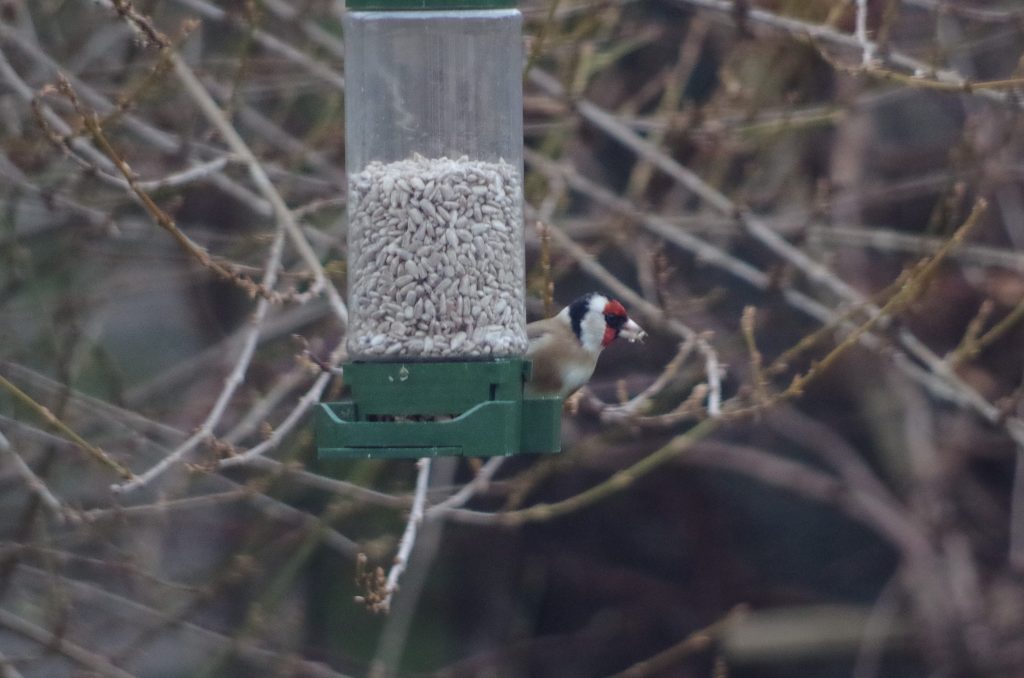
Goldfinch
Abundance
Frequent – Observed on 5 out of 12 weeks.
Behavior
Usually just a single bird passing through and perching in the Forsythia. Sometimes stopping to feed for a while on the sunflower hearts. Two birds observed at the same time on the 20th January.
Favourite Food
Sunflower hearts; but Nyjer seed feeder added on the 20th of January.
Above: Goldfinch eating sunflower hearts
Carrion Crow [?]
Abundance
Occasional – Observed on 2 out of 12 weeks.
Behavior
Mostly hang around on the roof tops of the houses opposite and dip into the garden to collect bread when we put it out on the grass.
Favourite Food
Bread
Long Tailed Tit
Abundance
Occasional – Observed on 2 out of 12 weeks.
Behavior
Only observed twice, once on the first week (30th October) and once on the sixth week. A fleeting visit. More information required.
Favourite Food
Unknown.
Wren
Abundance
Occasional – Observed on 2 out of 12 weeks.
Behavior
Not often seen but this could be lack of observations. May be nestled within the undergrowth hiding nicely.
Favourite Food
Unknown
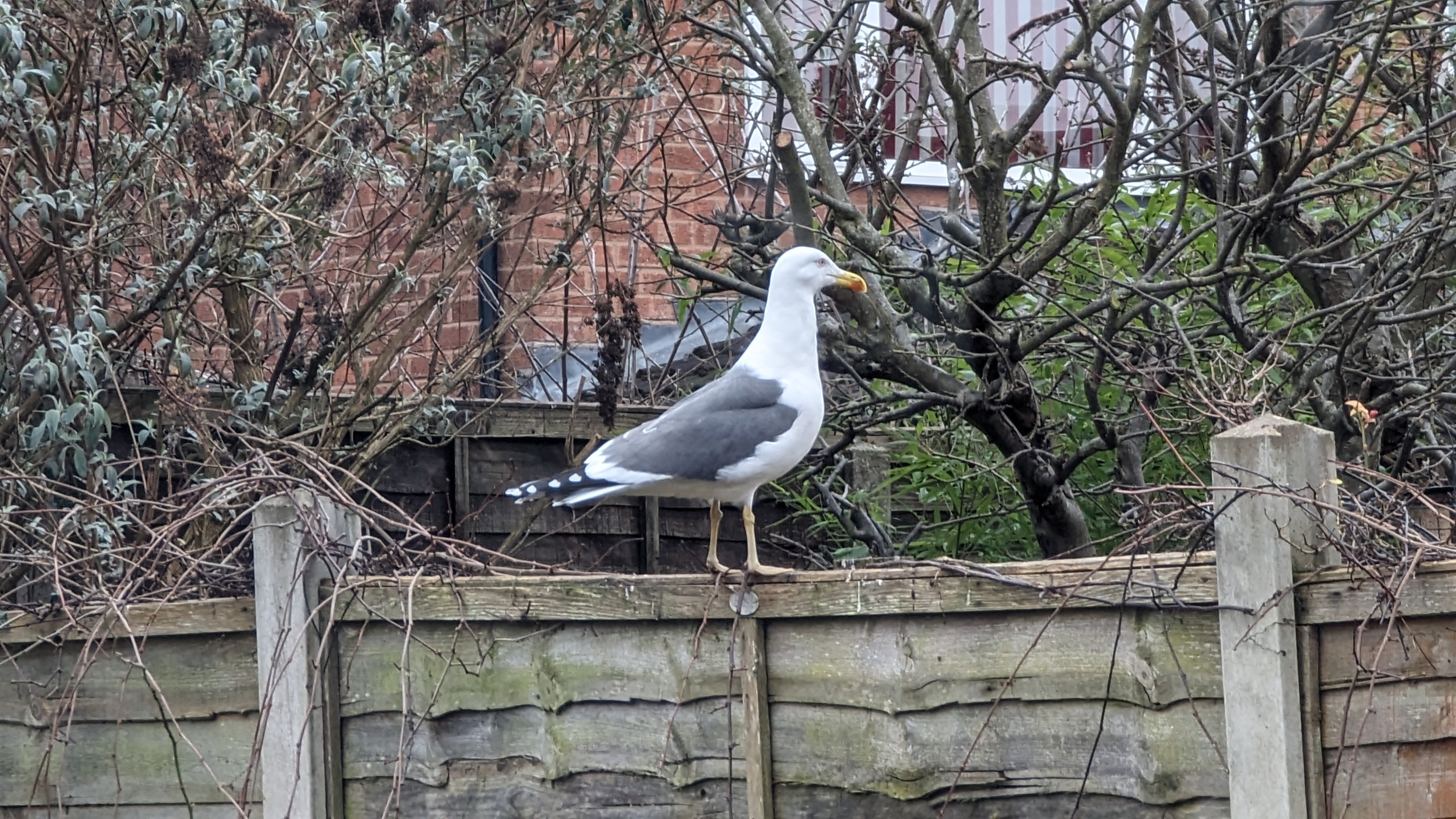
Lesser Black-backed Gul
Abundance
Occasional – Observed on 2 out of 12 weeks.
Behavior
Often seen flying overhead but occasionally come down to land on the fence.
Favourite Food
Bread / Unknown.
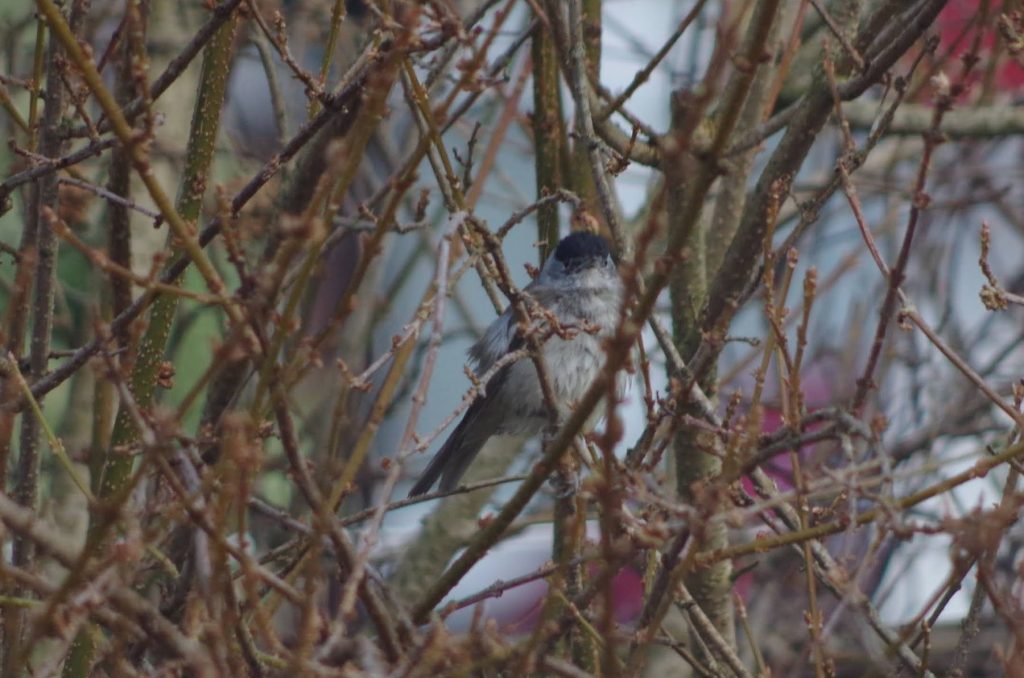
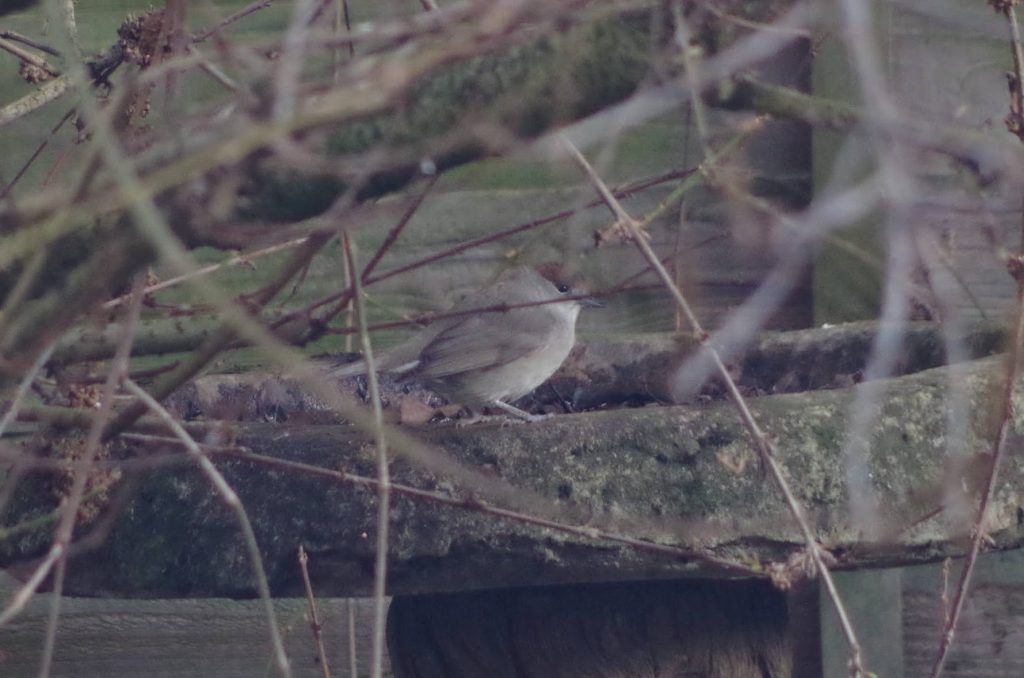
Blackcap
Abundance
Occasional – Observed on 2 out of 12 weeks.
Behavior
A male bird was first observed on week 11, and in the following week we saw a female. Mostly perched deep within the forsythia. Yet to be seen using the feeders.
Favourite Food
Unknown.
Male BlackcapFemale Blackcap
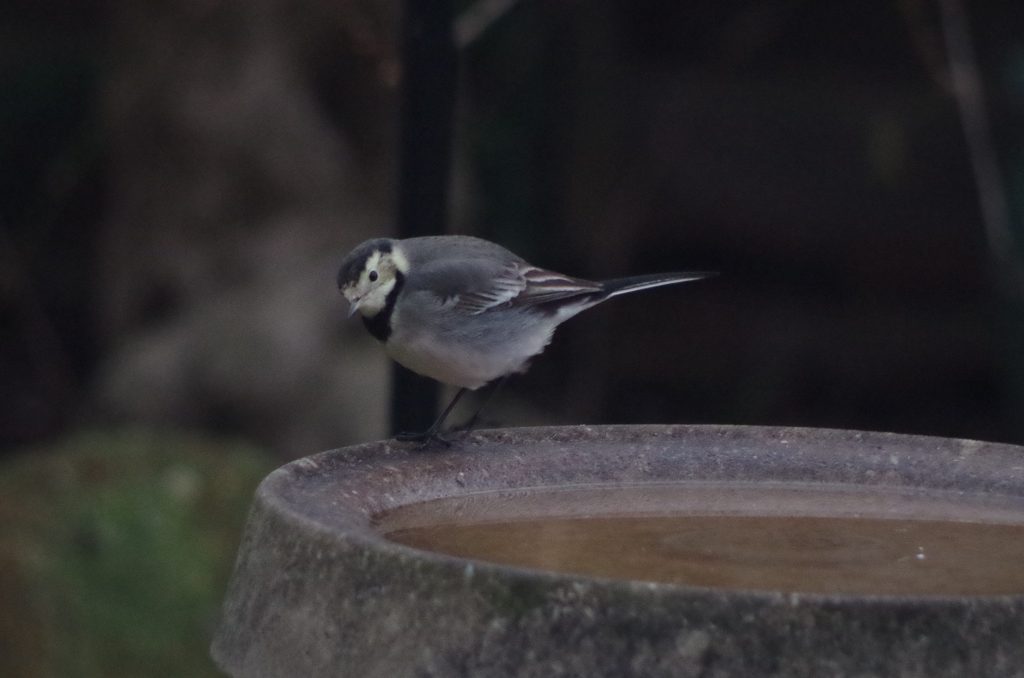
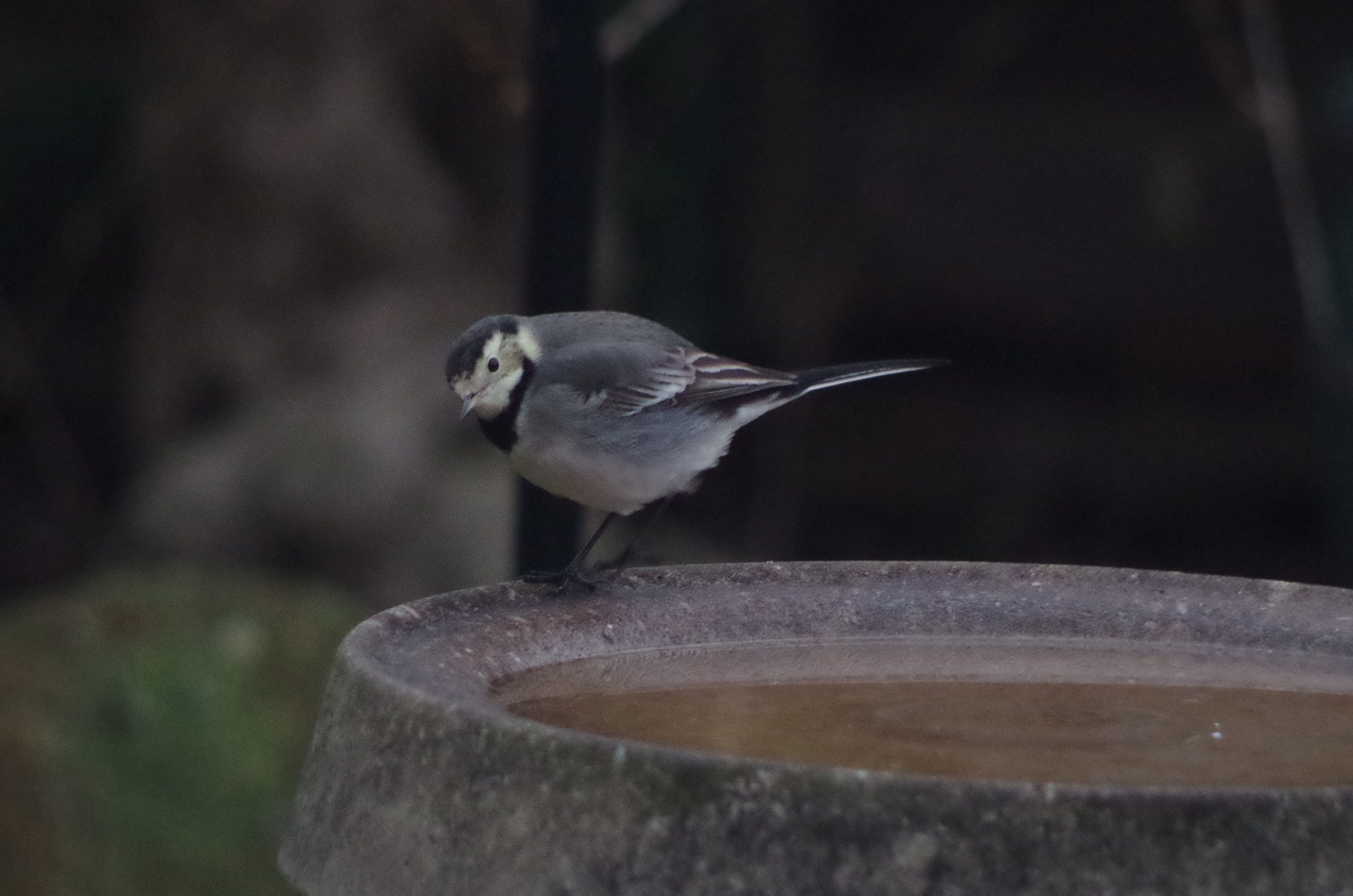
Pied Wagtail
Abundance
Occasional – Observed on 2 out of 12 weeks.
Behavior
Since first being observed in the garden on week 11 we have seen it most days. It can be seen on roof tops and will dip into the garden via the fences, where it will spend several minutes at a time picking up scraps from beneath the bird feeder. Has also started using the bird bath for drinking. 22.01.24 update: have been seen foraging (?) on the bare soil made by the turf inversions.
Favourite Food
Bird feeder scraps?
Greenfinch
Abundance
Rare – Observed on 1 out of 12 weeks.
Behavior
Only observed once, on the last day (21st January) of the 12th week when mom was staying with us. A single bird landed on the top twigs of the Forsythia and passed through to next door. No photograph but we later confirmed it by hearing the call on Merlin.
Favourite Food
Unknown.
Goals for 2024
Plant a native hedgerow; with the aim to see birds perched on or using hedge area for cover.
Make a pond with associated wetland; see any amphibian in the garden; a dragonfly over the pond; or bird interact with the pond.
Grow some pollinator friendly plants and distribute around the garden. Species such as Cosmos, Echinacea, Calendula, Nasturtiums. Also Use native plants such as Teasel and Hemp Agrimony (from mom’s garden), Broom, Heather, Honeysuckle, Rushes, Hypochaeris glabra, Ornithopus perpusillus, Flag Iris, Marsh Marigolds to enhance garden habitats.
Plant three native trees; we would like to see birds perched or interacting with the trees whilst moving through the garden; see different tiers of height develop in the garden (already planted the Birch!)
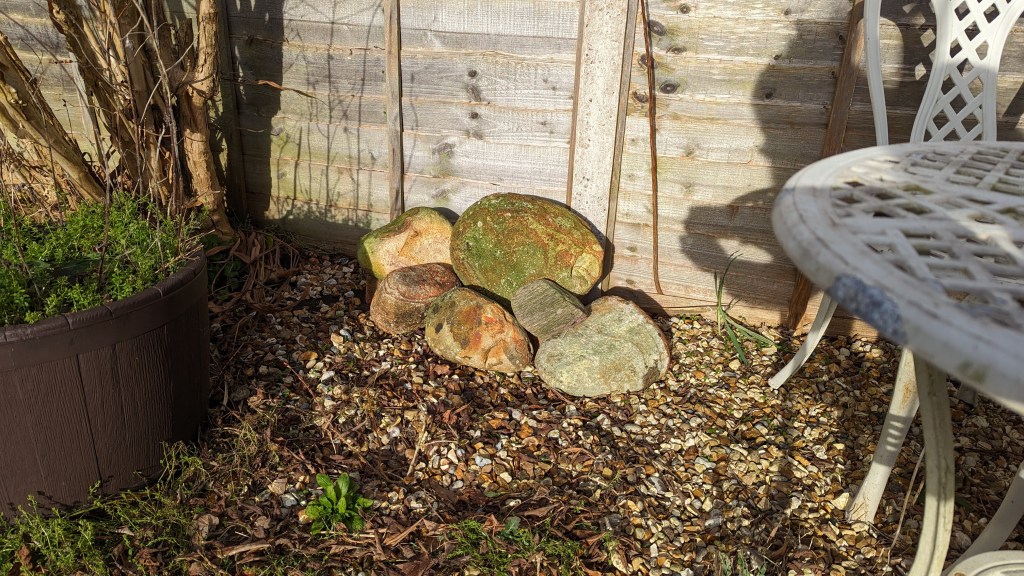
Make the garden appealing to reptiles; wish to see any reptile in the garden – be sure to check the compost heap in the summer for slow worms; put out some refugia to check.
Record a total of 40 species of birds within the garden.
Inverts; begin to record butterfly species that visit the garden.
Make a list of plants within the garden; introducing suitable natives inkeeping with the flora of Hartlebury Common; using non-natives to extend the flowering season.
Have a master spreadsheet that records all species from the garden such as birds; plants; inverts; amphibians etc on different tabs and link to this blog.
Additional Notes from 21st January 2024
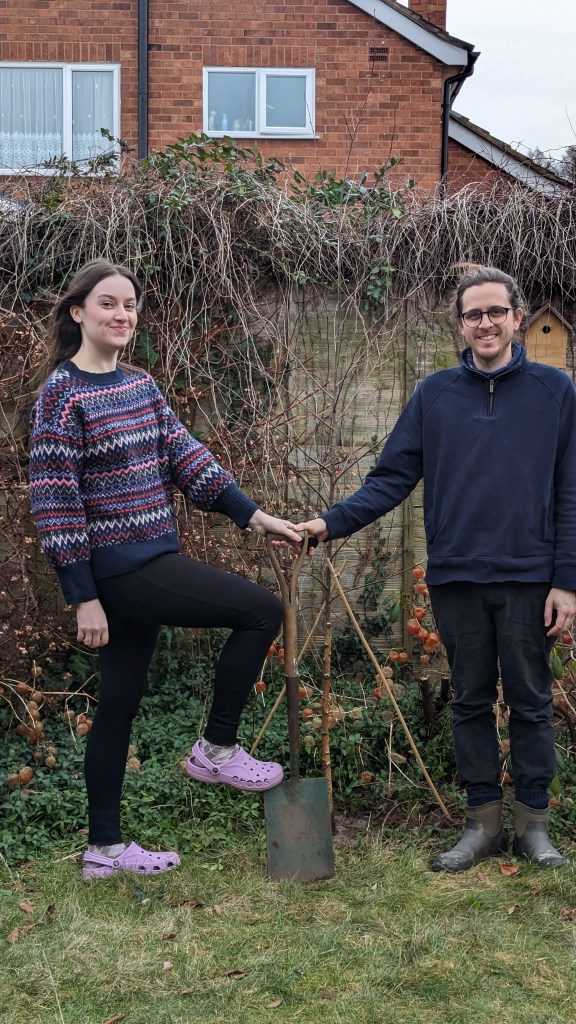
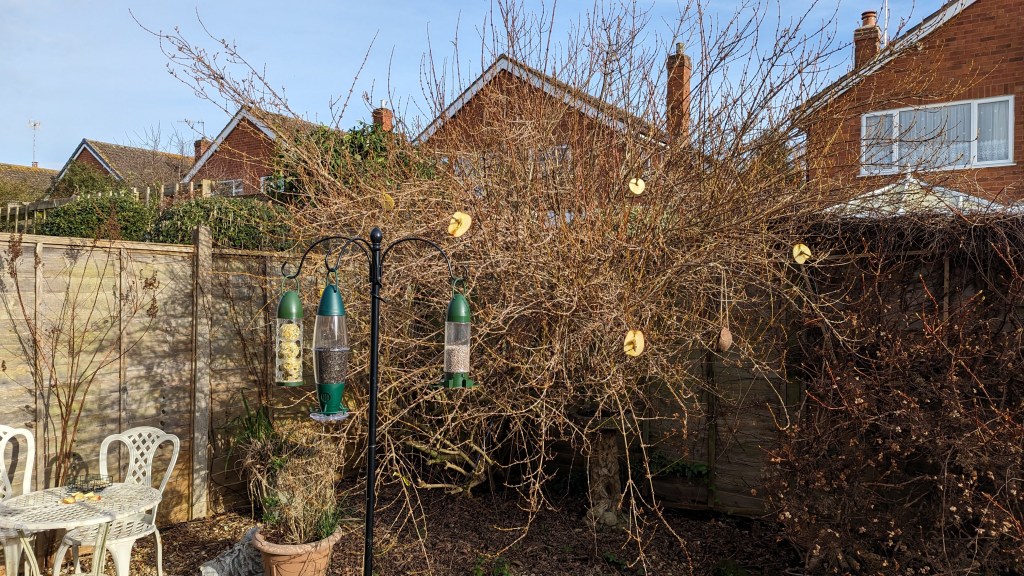
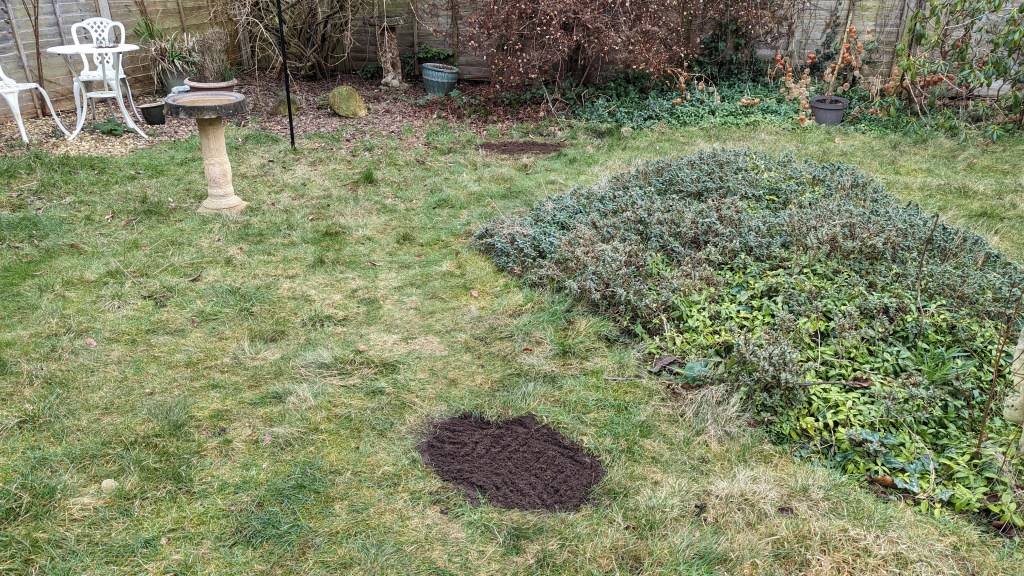
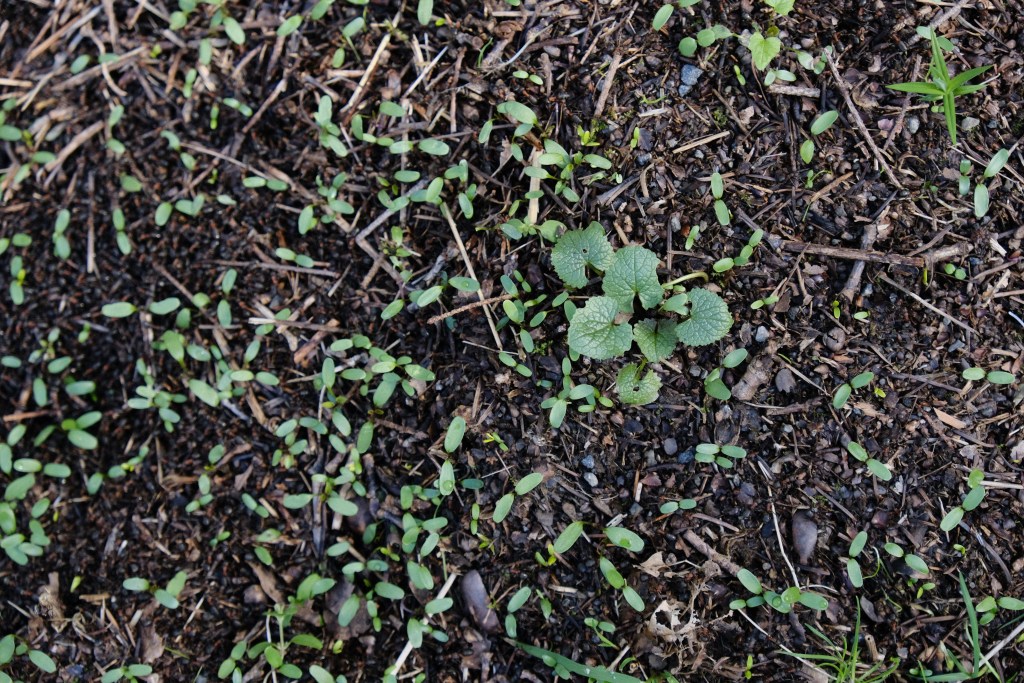
Today we carried out a few tasks that work towards our goals above. We made a start on the log pile beneath the Forsythia, piled up some rocks in a sunny spot that will hopefully be suitable for reptiles; potted up some Echinaceas; planted the Birch tree; made some turf inversions and put some apple pieces on the Forsythia to try and attract Redwing – a productive day.
Planting the Silver Birch on the 21st January 2024Rock pile on southern boundaryApple slices on ForsythiaTurf inversion locations

 Tom the Botanist
Leave a comment